

Discover why kids love character parties! Unlock imaginative play, build friendships, and create unforgettable memories at your child's next celebration.
Why kids love character parties: a parent’s guide
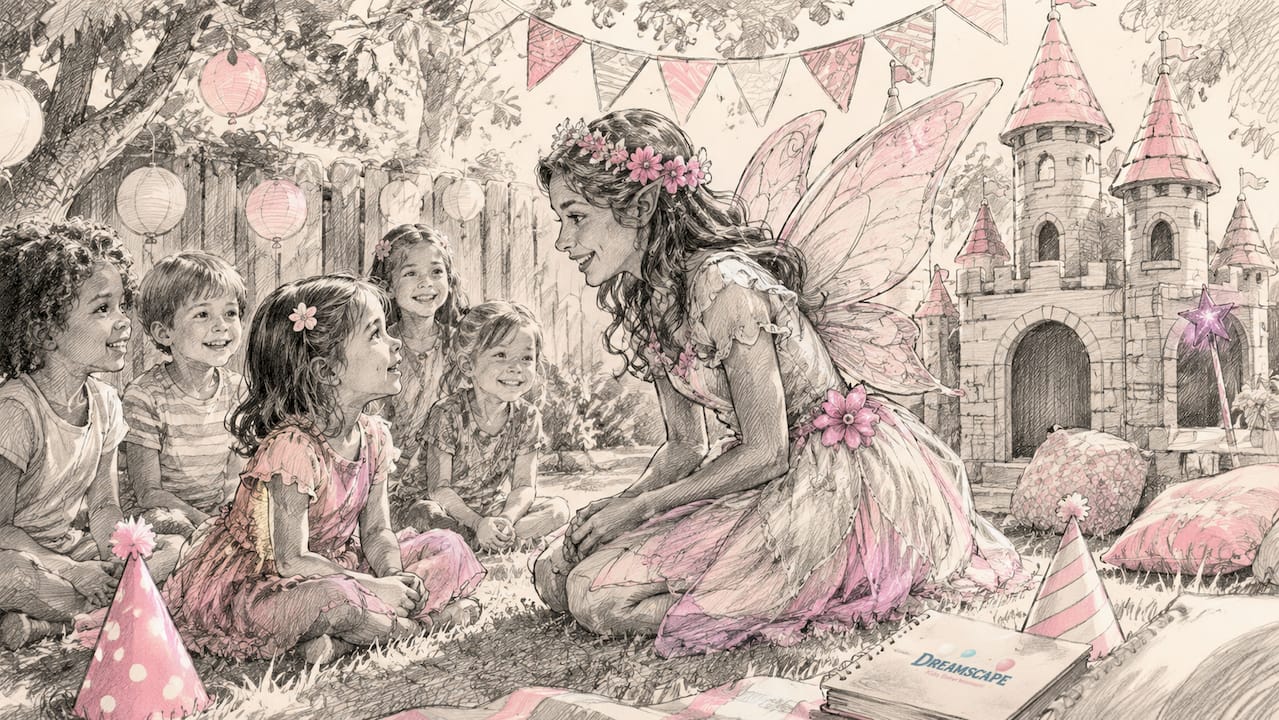
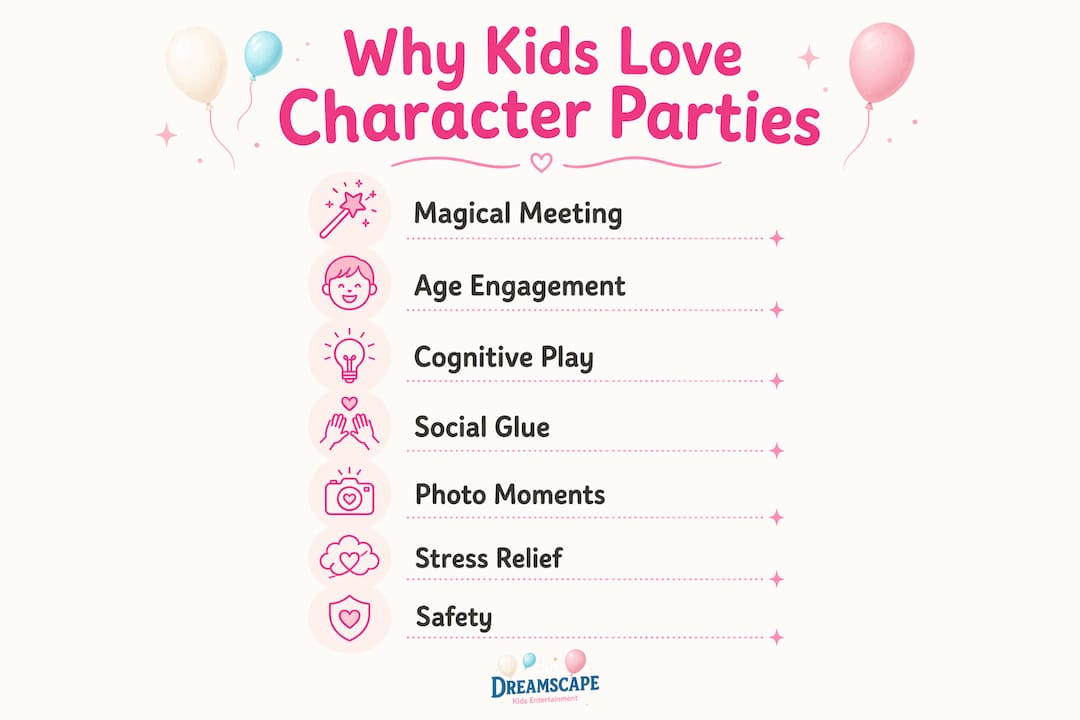
Kids love character parties because a favourite hero stepping into the room turns a one-sided media relationship into something real, interactive and deeply personal. That moment of recognition, when a child sees their beloved princess or superhero standing in their living room, is genuinely unlike anything else at a birthday party.
Here is what drives it:
- Parasocial bonds made real: children already feel they know these characters from screens and books, so meeting one in person validates that emotional connection.
- Imaginative play unlocked: a character gives every child an instant role, a script and a reason to join in.
- Social glue: shared enthusiasm for a theme lowers the awkwardness between kids who barely know each other.
- Sensory spectacle: costumes, music, props and movement hit multiple senses at once, which is genuinely exciting for young children.
- Photo-worthy memories: the authentic expressions children make in these moments are impossible to stage.
- Reduced planning stress for parents: one theme decision cascades into activities, décor and entertainment in one go.
The sections below unpack each of these with developmental research, age guidance and a practical safety checklist for Australian families.
Table of Contents
- 1. Meeting a favourite character in real life feels genuinely magical
- 2. How characters keep children of different ages engaged
- 3. Character-led play supports real cognitive and social development
- 4. Characters act as social glue for young guests
- 5. Character interactions produce the best party photos
- 6. How character parties save parents time and reduce planning stress
- 7. Safety checklist: what to verify before hiring a character entertainer in Australia
- Key takeaways
- The part most parents overlook
- Dreamscape brings the magic to Melbourne birthday parties
- FAQ
1. Meeting a favourite character in real life feels genuinely magical
When a character walks through the door, children do not see a performer in a costume. They see the princess, the superhero. Research on parasocial relationships shows that children aged 4-5 form strong one-sided emotional attachments to media characters they encounter frequently, and those attachments are surprisingly deep. A live visit does not just entertain; it confirms that the character the child has been talking to through the screen actually exists and cares about them.
The moments that land hardest are the personal ones: a character crouching down to ask a child’s name, inviting them into a mini quest, or singing a familiar song directly to them. These small, scripted interactions feel enormous to a four-year-old. Costume play also carries its own developmental pull: dress-up and role play promotes empathy, narrative skills and sensory satisfaction in ways that passive watching simply cannot replicate.
Pro Tip: Book the character’s arrival for about 20-30 minutes after guests arrive, so children are settled and excited rather than distracted by arrivals. Ask the entertainer to greet the birthday child first, then work outward to the group - that sequence feels natural and keeps the magic intact.
2. How characters keep children of different ages engaged
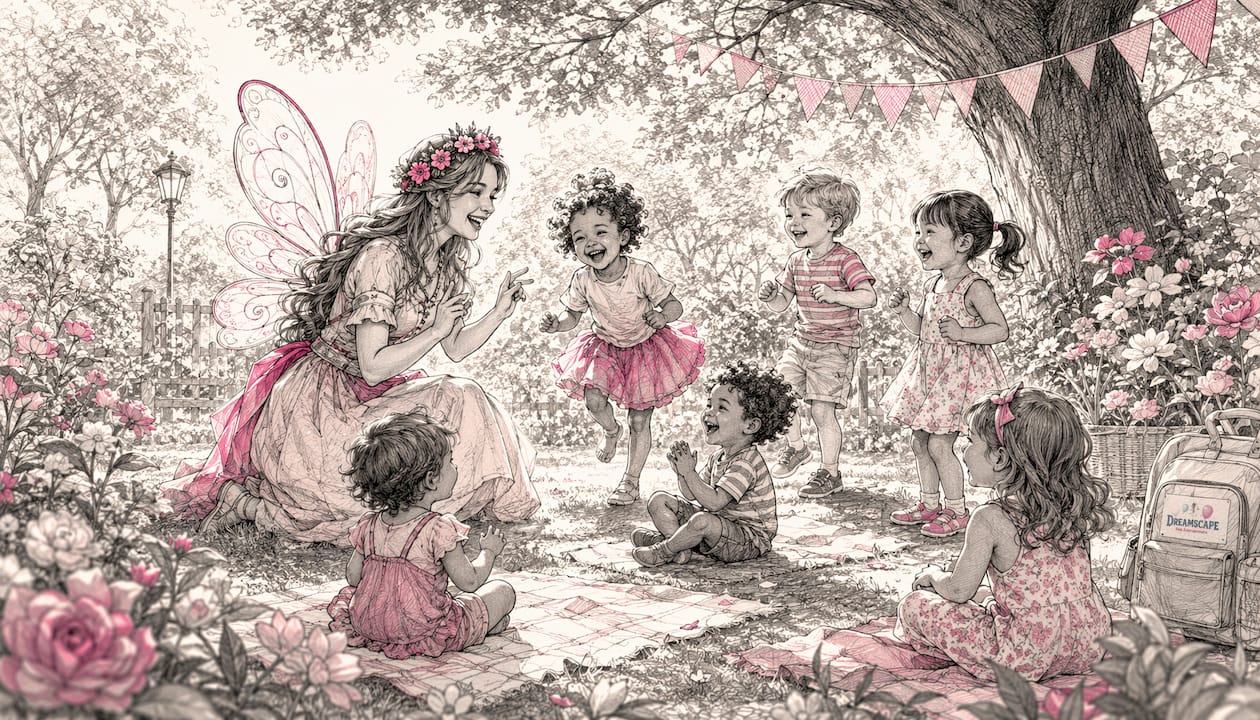
Characters map easily onto simple, repeatable routines that suit wildly different attention spans, which is why a room of two-year-olds and eight-year-olds can both be genuinely absorbed at the same time.
Age guidance for planning:
- Ages 2-4: Keep interactions short, physical and repetitive. Songs, clapping games and a simple “find the magic item” task work well. Attention spans are brief, so 30-45 minutes total is plenty.
- Ages 4-7: This is the sweet spot for character visits, with princesses among the most requested character types. Children this age can follow a storyline, take on roles and sustain imaginative play for 45-60 minutes.
- Ages 8-11: Older children engage best when given agency. Interactive games, trivia about the character’s world, or a short “mission” they lead keeps them from feeling like the activity is babyish.
For mixed-age groups, a good entertainer structures the visit in layers: an opening song or game that pulls everyone in, a middle section with age-split activities, and a closing moment (group photo, certificate, farewell) that reunites the whole group. A well-chosen party theme makes this layering much easier to plan.
3. Character-led play supports real cognitive and social development
Fantasy play with familiar characters does more than entertain. A randomised controlled trial of 110 children aged 3-5 found that a five-week fantastical pretend-play intervention improved executive functions, specifically working memory and attention shifting, compared with non-imaginative play or controls. The gains appeared only in the fantastical pretend-play group.
A separate study found that familiar characters increase the time children spend exploring a novel toy: mean exploration time was significantly longer in the character condition than in the colour control. Put simply, a beloved character makes children more curious and more persistent.
Research snapshot: A 5-week fantastical pretend-play intervention with preschoolers produced gains in working memory and attention shifting that did not appear in the non-imaginative play control group.
| Study | Sample | Age range | Key outcome |
|---|---|---|---|
| Fantastical pretend-play RCT (ScienceDirect) | 110 children | 3-5 years | EF gains (working memory, attention shifting) vs controls |
| Character exploration study (Louisville) | Experimental groups | Preschool age | Mean exploration time 220.3s (character) vs 152.7s (colour control) |
For parents planning activities, this research points toward structured but open-ended tasks: a character-led scavenger hunt, a short role-play scenario or a collaborative “rescue mission” all scaffold the same executive functions the studies measured. The science behind why themes excite kids explains how to build these moments into a party structure.
4. Characters act as social glue for young guests
A shared favourite character creates instant common ground, which matters enormously when you have a room full of children who may barely know each other.
Themed play simplifies peer interaction in several concrete ways:
- Ready-made scripts: every child already knows the character’s world, so there is no awkward negotiation about who does what.
- Clear roles: “you be the villain, I’ll be the hero” is a complete social contract for a five-year-old.
- Conflict-reducing rules: the character’s story provides a framework that naturally resolves disputes (“that’s not what Elsa would do”).
- Low-stakes entry points: a shy child can join by simply following the character’s lead rather than initiating play themselves.
Research on pretend play and social competence in children aged 3-8 supports a positive relationship between social pretend play and social skills, with social pretend play showing stronger associations than solitary play.
Pro Tip: If you notice a quieter child hanging back, ask the entertainer to direct a small task specifically at them, such as “I need a special helper for this mission.” It gives them a role without requiring them to self-advocate.
5. Character interactions produce the best party photos
The expressions children make when they first see a favourite character are completely unguarded. No amount of posing produces the same result, which is why parents often say the character photos are the ones they actually print and frame.
Pro Tip: Shoot from the child’s eye level, not standing height. The character’s face and the child’s face in the same frame, both in focus, is the shot. Burst mode on your phone handles the unpredictability.
A few simple preparations make a real difference:
- Designate one adult as the photographer so parents are free to be present in the moment.
- Charge your phone the night before and clear storage space.
- Plan a brief “official photo moment” near the end of the visit when children are relaxed and the excitement has settled into joy rather than overwhelm.
- Dress the birthday child in something that photographs well against the character’s colours.
6. How character parties save parents time and reduce planning stress
A character theme does the heavy lifting that generic party planning cannot: it answers the décor question, the activity question and the entertainment question in one decision. That is the practical case for character parties, and it is a strong one.
Typical cost components to budget for:
- Performer fee: covers the entertainer’s time, usually charged by the hour or by a set visit length.
- Travel: most Melbourne providers charge a travel fee outside a set radius.
- Costume care and props: quality costumes require maintenance; reputable providers factor this into pricing rather than cutting corners.
- Activity materials: bubbles, craft packs, certificates and similar props are sometimes included, sometimes add-ons.
A practical booking timeline:
- 6-8 weeks out: lock in the date, especially for popular characters on weekends.
- 4 weeks out: confirm the entertainer’s Working With Children Check (WWCC), public liability insurance and running order.
- 1 week out: send a brief about the birthday child (name, favourite moment from the character’s story, any children who may need extra reassurance).
- Day of: have a quiet space ready for the entertainer to prepare, and brief one adult to manage the group so the entertainer can focus on the children.
Industry guidance consistently recommends booking 4-8 weeks ahead for popular dates. A stress-free party checklist can help you track all of this without things slipping through the cracks.
7. Safety checklist: what to verify before hiring a character entertainer in Australia
Always confirm a Working With Children Check and public liability insurance before any money changes hands. These are non-negotiable in Australia, and any reputable entertainer will provide proof without hesitation.
| What to check | What to ask for |
|---|---|
| Working With Children Check (WWCC) | Card number and expiry; verify online via your state’s check register |
| Public liability insurance | Certificate of currency (minimum $10 million is standard in the industry) |
| Performer experience | How many children’s events have they performed at? Any specialist training? |
| Costume condition | Are costumes professionally cleaned between bookings? |
| Behaviour management policy | How do they handle a distressed or overwhelmed child? |
| Backup plan | What happens if the performer is ill on the day? |
| Travel and cancellation terms | Are fees clearly stated in writing before booking? |
Ask this before you book: “Can you show me your current WWCC card and certificate of insurance, and what is your process if a child becomes upset during the visit?” A confident, specific answer tells you everything about how professional the operation is.
For a full list of vetting questions, the questions to ask before booking guide covers the detail. In Victoria, WWCC cards are issued by the Department of Justice and can be verified online at no cost.
Key takeaways
Children love character parties because a familiar hero transforms a birthday into an immersive, emotionally resonant experience that supports play, social connection and genuine developmental gains.
| Point | Details |
|---|---|
| Emotional connection drives the magic | Children’s parasocial bonds with media characters make an in-person visit feel personal and validating. |
| Sweet spot ages are 4-7 | Character visits suit this age group best; adapt activity length and complexity for younger or older guests. |
| Real developmental benefits | A 5-week pretend-play RCT with 110 children showed gains in working memory and attention shifting. |
| Always verify WWCC and insurance | Confirm the entertainer’s Working With Children Check and public liability certificate before booking. |
| Dreamscape for Melbourne families | Dreamscape brings WWCC-verified performers, 25+ years of experience and 1,900+ five-star reviews to Melbourne birthday parties. |
The part most parents overlook
There is a tendency to treat character entertainment as pure spectacle, a nice-to-have that keeps kids busy for an hour. The research tells a more interesting story. The executive function gains from fantastical pretend play, the social scaffolding that a shared character provides, the way a familiar face makes a hesitant child more willing to explore - these are not incidental. They are the reason the experience sticks.
What I find most compelling is the parasocial relationship piece. Children are not pretending to be excited when their favourite character walks in. That emotion is completely genuine, built over hundreds of hours of watching, imagining and caring about a fictional world. A well-run character visit honours that investment rather than trivialising it. The practical implication for parents is simple: the quality of the entertainer matters far more than the elaborateness of the decorations. A performer who genuinely engages with children, adapts to the room and handles the unexpected with warmth will produce a better party than the most beautifully themed venue with a disengaged entertainer.
Safety checks are not bureaucratic box-ticking either. A WWCC and insurance are the baseline, but the real signal is how an entertainer answers your questions before the booking. Specificity and confidence in those answers is what separates professionals from people who bought a costume last week.
Dreamscape brings the magic to Melbourne birthday parties
Dreamscape has been running character party entertainment in Melbourne for over 25 years, with a team of performers who hold current Working With Children Checks and bring more than 1,900 five-star reviews behind them. The difference from a generic hire is the detail: Dreamscape’s entertainers are briefed on the birthday child before they arrive, the costumes are maintained to a professional standard, and the pricing is transparent so there are no surprises on the invoice.
Whether you are planning a princess party, a superhero adventure or something more unexpected, Dreamscape handles the entertainment so you can actually be present at your child’s party rather than managing it. Check availability and book your character visit directly on the Dreamscape website.
FAQ
At what age do kids stop enjoying character parties?
Most children remain genuinely engaged with character visits up to around age 8; after that, interest shifts toward activity-based parties. Adapting the format, such as adding trivia or a mission-style game, can extend the appeal for older children.
Why do kids love superheroes so much?
Superheroes offer children a sense of power and agency in a world where adults control most things. The parasocial bonds children form with these characters are emotionally real, which is why meeting one in person produces such a strong reaction.
What age is best for a character party visit?
Ages 4-7 are the most responsive, with character visits particularly well-suited to this group. Younger children (2-4) enjoy shorter, simpler interactions; older children (8-11) engage best when given an active role in the storyline.
What makes a character entertainer worth booking?
The combination of genuine child engagement skills, a current WWCC, public liability insurance and a clear backup plan separates a professional from someone simply wearing a costume. Dreamscape’s performers meet all of these standards and have the review history to back it up.
Recommended
Planning a Melbourne party?
We will get right back to you.