What is a party character costume? A parent's guide
What is a party character costume? A parent’s guide
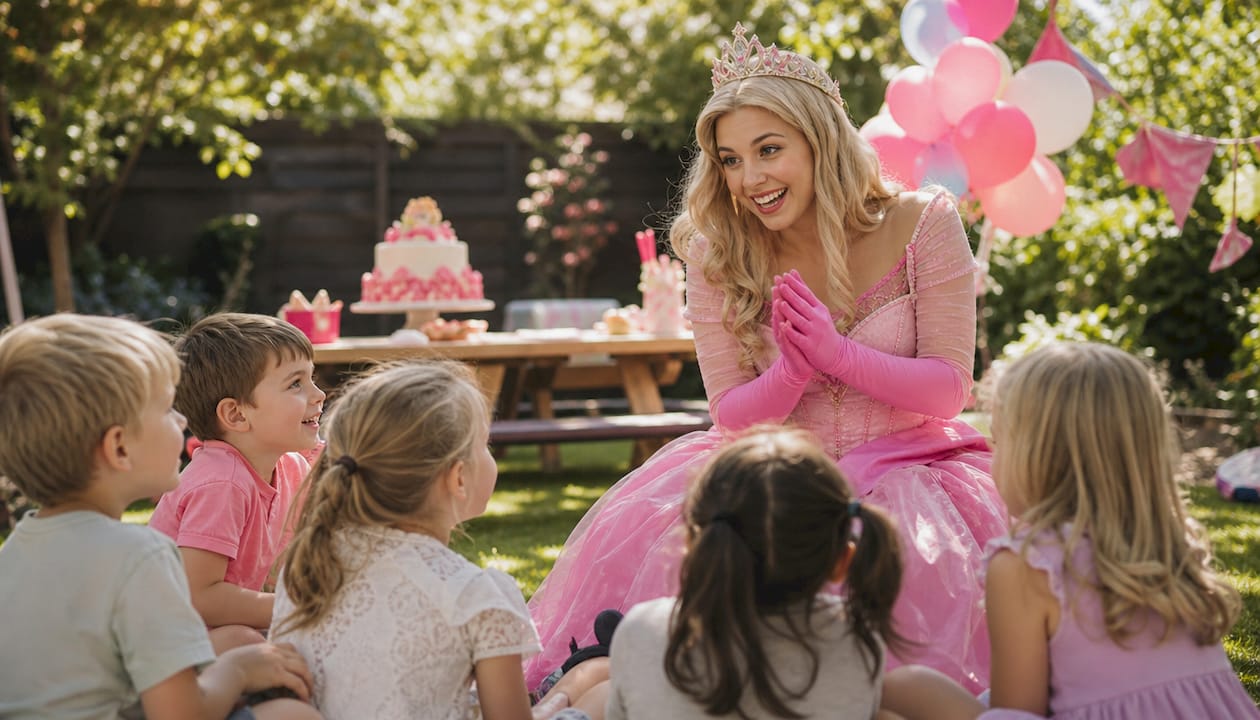
A party character costume is a themed outfit worn to transform a performer into a beloved fictional figure, creating immersive entertainment at children’s parties. Known in the events industry as “character entertainment costuming,” these outfits go far beyond fancy dress. They are purpose-built to bring a character’s personality to life through fabric, colour, and detail. Whether it’s a sparkly princess gown, a superhero suit, or a K-Pop demon hunter ensemble, the right costume turns an ordinary birthday into a memory children carry for years. Dreamscape has delivered this kind of magic to Melbourne families for over 25 years.
What is a party character costume and why does it matter?
A party character costume is a full outfit designed to represent a specific character, persona, or theme at a children’s event. The costume works as the centrepiece of the entertainment. It signals to children that something special is happening, shifting the atmosphere from a regular gathering to a genuine celebration.
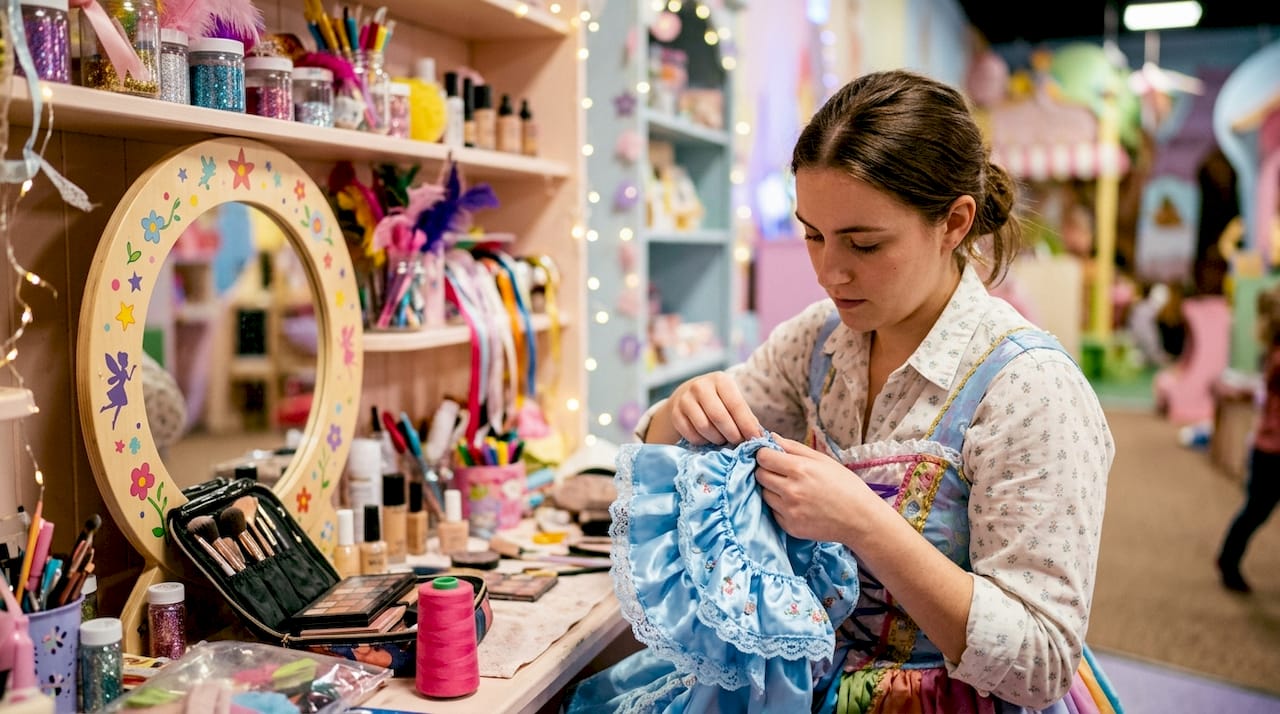
The difference between a character costume and ordinary fancy dress is purpose. Fancy dress is worn by guests for fun. A character costume is worn by a performer or entertainer to deliver an experience. The outfit must hold up through hours of active play, photo opportunities, games, and singing. That durability requirement shapes every design decision, from fabric weight to fastening choice.
Character costumes also carry a social function. Research shows that the best party entertainment matches the character to the child’s personality and preferred style of play, not just their age. A shy child responds differently to a gentle fairy than to a high-energy superhero. Getting this match right is what separates a good party from a great one.
What types of character costumes work best at children’s parties?
The range of character costume ideas available to parents is wider than most realise. Costumes generally fall into a handful of clear categories, each suited to different party themes and age groups.
Popular character costume categories include:
- Princesses and royalty: Classic choices like fairy tale princesses remain consistently popular across age groups from toddlers through to primary school. Gowns in satin and tulle with tiaras and wands create an instantly recognisable look.
- Superheroes: Characters drawn from comics and animated series appeal strongly to children aged four and above. These costumes typically feature bold colours, capes, and masks.
- Cartoon and animated characters: Beloved figures from children’s television and streaming programmes, including characters styled after popular shows, connect immediately with younger audiences.
- Fantasy creatures: Fairies, mermaids, dragons, and unicorns offer imaginative alternatives for children who prefer something outside mainstream pop culture.
- Mascots and novelty characters: Large-headed mascot suits create a theatrical, high-impact visual that works well for school events and corporate family days.
- Pop culture and music-inspired characters: Costumes inspired by K-Pop aesthetics and music-themed personas are growing in popularity, particularly for older children and tweens.
Costume quality varies significantly across these categories. Professional-grade costumes offer better durability, safer materials, and a more authentic appearance than typical store-bought outfits. A professionally made princess gown uses structured boning and quality fabric that photographs beautifully and survives an afternoon of active children. A cheap plastic alternative rarely lasts the party.
Pro Tip: When choosing a party costume theme, look at what your child has been watching or playing with in the three months before the party. Current obsessions make for the most enthusiastic reactions.
How do you choose the right character costume for your child?
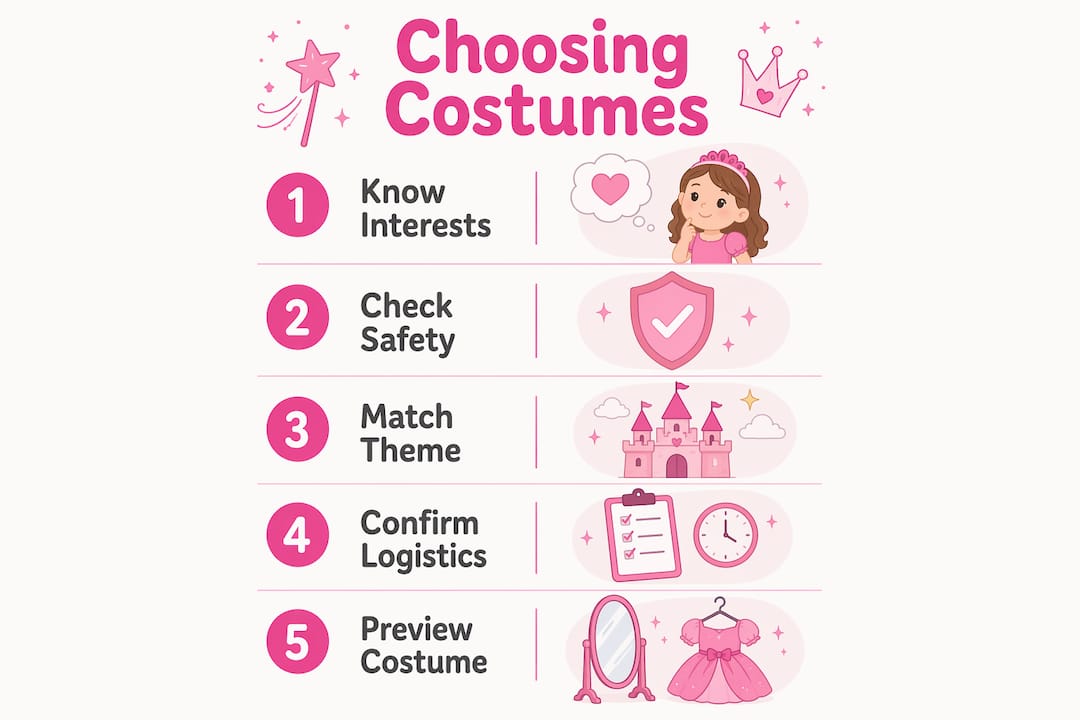
Choosing the right character costume starts with your child’s personality, not the costume catalogue. Experts recommend assessing whether your child prefers being the centre of attention or observing quietly before selecting a high-energy or gentle character entertainer.
A child who loves dancing and performing will thrive with an interactive superhero or pop star character. A quieter child may connect more deeply with a gentle fairy or a storytelling princess who draws them in softly. Forcing a loud, boisterous character on a reserved child can cause distress rather than delight.
Consider these factors when selecting a costume or character:
- Party theme alignment: The character costume should match the overall party theme. A pirate party calls for swashbuckling characters, not princesses.
- Venue and weather: Outdoor summer parties in Melbourne require lighter fabrics and shorter costumes. Heavy velvet gowns in February heat are uncomfortable for the performer and distracting for children.
- Age of guests: Toddlers respond best to soft, familiar characters with gentle voices. School-age children enjoy more complex narratives and interactive games.
- Mobility requirements: The costume must allow the performer to kneel, sit on the floor, and move freely among children.
Clarifying all logistics in writing before the event, including arrival times, parking, and setup requirements, prevents surprises on the day. Dreamscape recommends parents also check the questions to ask before booking to cover every detail with their entertainer in advance.
Matching the party theme to your child’s age is equally worth thinking through carefully. A theme that genuinely excites your child will produce far more engagement than one chosen for aesthetic reasons alone.
What safety rules apply to children’s party character costumes?
Safety is the non-negotiable foundation of any character costume used at a children’s event. Australian standards set clear requirements that every parent and entertainer must understand before a costume comes near a child.
-
Flame resistance labelling: Australian safety regulations require children’s costumes to be labelled flame resistant when used near heat sources or open flames. Mandatory standards apply especially to nightwear in sizes 00 to 14. At parties involving birthday candles, parents must avoid any costume labelled “high fire danger.”
-
Under-36-months compliance: Costumes for children under 36 months must comply with AS/NZS ISO 8124.1:2023. This standard eliminates choking hazards and entrapment risks from small parts. Any decorative element that can detach is a serious hazard for this age group.
-
The activity test: Performing an activity test on every costume before the event is the single most effective way to prevent party injuries. The test involves kneeling, jumping, and spinning in the full costume. Any restriction in movement is a tripping hazard waiting to happen.
-
Battery-operated costume management: Battery management is critical for novelty light-up and inflatable costumes. Bring fully charged spare batteries to every event. A deflated or dark costume mid-party breaks the magic and can create unexpected hazards.
-
Fit and visibility: Oversized costumes cause falls. Masks that restrict peripheral vision are dangerous around excited, running children. The costume must fit the performer properly and allow clear sightlines at all times.
Safety callout: The AS/NZS ISO 8124.1:2023 standard covers all toys and play-based costumes for children under 36 months. This is not optional guidance. It is a mandatory compliance point for anyone providing character entertainment to very young children.
All Dreamscape entertainers hold current Working With Children Checks, and their costumes meet professional safety standards. That combination of credential and costume quality is what parents should look for in any character entertainment provider.
How do you keep costumes in top shape and run a smooth party?
The practical side of character costume management determines whether the entertainment lands or falls flat. A few straightforward habits make a significant difference.
Hiring professional-grade costumes rather than buying store-bought outfits delivers better results for most families. Professional costumes are built for multiple wears, use safer materials, and maintain their appearance under the pressure of an active children’s party. The cost difference is often smaller than parents expect, particularly when weighed against the risk of a cheap costume failing mid-performance.
Practical tips for smooth costume management:
- Conduct the activity test at least 48 hours before the party, not on the morning of the event. This leaves time to source an alternative if needed.
- Store costumes flat or on wide hangers to prevent creasing. Wrinkled costumes photograph poorly and can signal low quality to observant parents.
- Confirm with your entertainer whether they arrive in costume or change on-site. On-site changes require a private space and add time to the setup.
- Keep a small repair kit at the party: safety pins, double-sided tape, and a spare hair tie cover most minor costume emergencies.
The most engaging party characters are interactive and inclusive but make participation optional. Children who feel pressured to join in can become distressed. The best entertainers read the room and adjust their energy to match the group.
Pro Tip: Ask your entertainer to send a photo of the costume in advance. Showing your child the character before the party builds anticipation and prevents any surprise reactions on the day.
Key takeaways
A party character costume works best when it matches the child’s personality, meets Australian safety standards, and is worn by a professional who knows how to engage children without overwhelming them.
| Point | Details |
|---|---|
| Definition matters | A character costume is purpose-built for performance, not just fancy dress. |
| Match character to personality | Quiet children need gentle characters; energetic children thrive with high-energy performers. |
| Safety standards are mandatory | AS/NZS ISO 8124.1:2023 applies to costumes for children under 36 months; flame resistance labelling is required near open flames. |
| Always do the activity test | Kneeling, jumping, and spinning in the costume before the event prevents tripping hazards. |
| Hire over buy for quality | Professional costumes are safer, more durable, and more authentic than most store-bought alternatives. |
What I’ve learned from watching children meet their favourite characters
The moment a child locks eyes with their favourite character is unlike anything else at a party. I’ve watched it happen dozens of times, and it never gets ordinary. But I’ve also seen it go wrong, and the reason is almost always the same: the costume choice was made for the adults, not the child.
Parents often pick the character they think looks impressive in photos. The child, meanwhile, has been obsessed with a completely different character for six months. The mismatch is visible within minutes. The child hangs back, uncertain. The entertainer works hard to connect, but the spark isn’t there.
The safety piece is where I’ve seen the most avoidable problems. A beautiful costume with a trailing hem on a toddler is an accident waiting to happen. A mask that sits slightly too large will slip over a child’s eyes at the worst moment. These are not dramatic failures. They are small oversights that compound quickly in a room full of excited children.
My honest advice: treat the activity test as non-negotiable, not a nice-to-have. And always ask the entertainer directly whether their costume has been tested for the age group attending. A professional will answer that question without hesitation.
— Lauren
Dreamscape’s character entertainment for Melbourne families
Dreamscape has been creating character-led party experiences for Melbourne children for over 25 years, with more than 1,900 five-star reviews from local families.
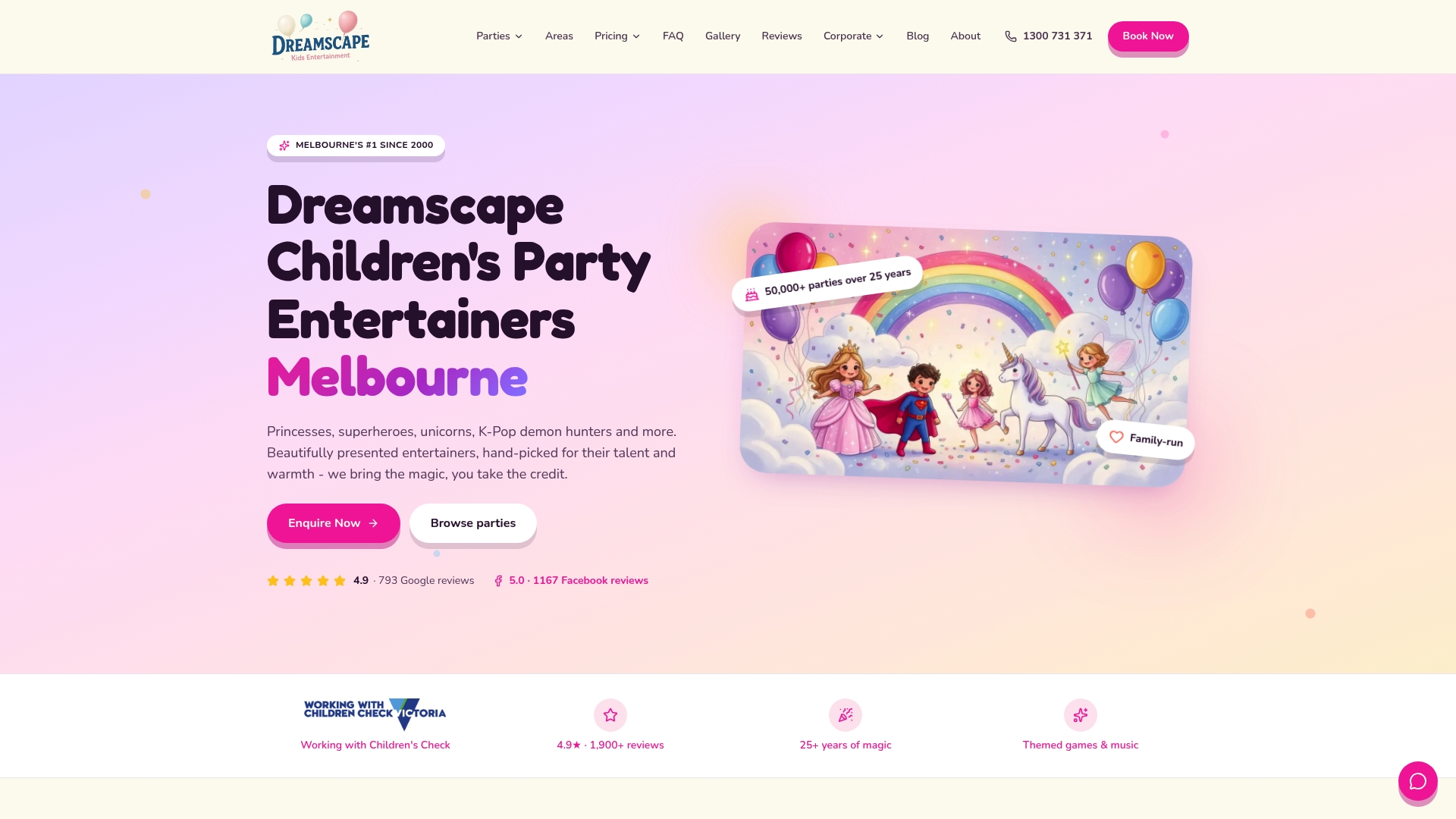
Their kids party characters and themes cover princesses, superheroes, fairies, and more, with every costume meeting professional safety standards. All entertainers hold Working With Children Checks and arrive prepared to match their energy to your child’s personality. Dreamscape also offers kiddie party entertainment packages for birthdays, school events, and corporate family days across Melbourne. Transparent pricing and a family-run approach mean parents know exactly what to expect before the day arrives.
FAQ
What is a party character costume?
A party character costume is a themed outfit worn by a performer to represent a specific fictional character or persona at a children’s event. It is designed for durability, safety, and authentic character representation during active entertainment.
Are character costumes safe for toddlers?
Costumes for children under 36 months must comply with AS/NZS ISO 8124.1:2023, which eliminates small parts and entrapment hazards. Parents should also avoid costumes labelled “high fire danger” at parties involving birthday candles.
Should I hire or buy a character costume?
Hiring a professional-grade costume delivers better safety, durability, and appearance than most store-bought alternatives. Professional costumes are built for multiple wears and use materials that meet higher safety standards.
How do I choose the right character for my child’s party?
Match the character to your child’s personality and preferred style of play. Quiet children respond better to gentle, soft-spoken characters, while energetic children engage more with high-energy, interactive performers.
What should I check before the party entertainer arrives?
Confirm arrival time, parking, setup space, and costume change requirements in writing before the event. Dreamscape recommends reviewing the full entertainer booking checklist to avoid surprises on the day.