

Discover the role of music in kids parties and how it transforms gatherings into memorable celebrations. Learn the benefits for children!
The role of music in kids parties: a parent’s guide
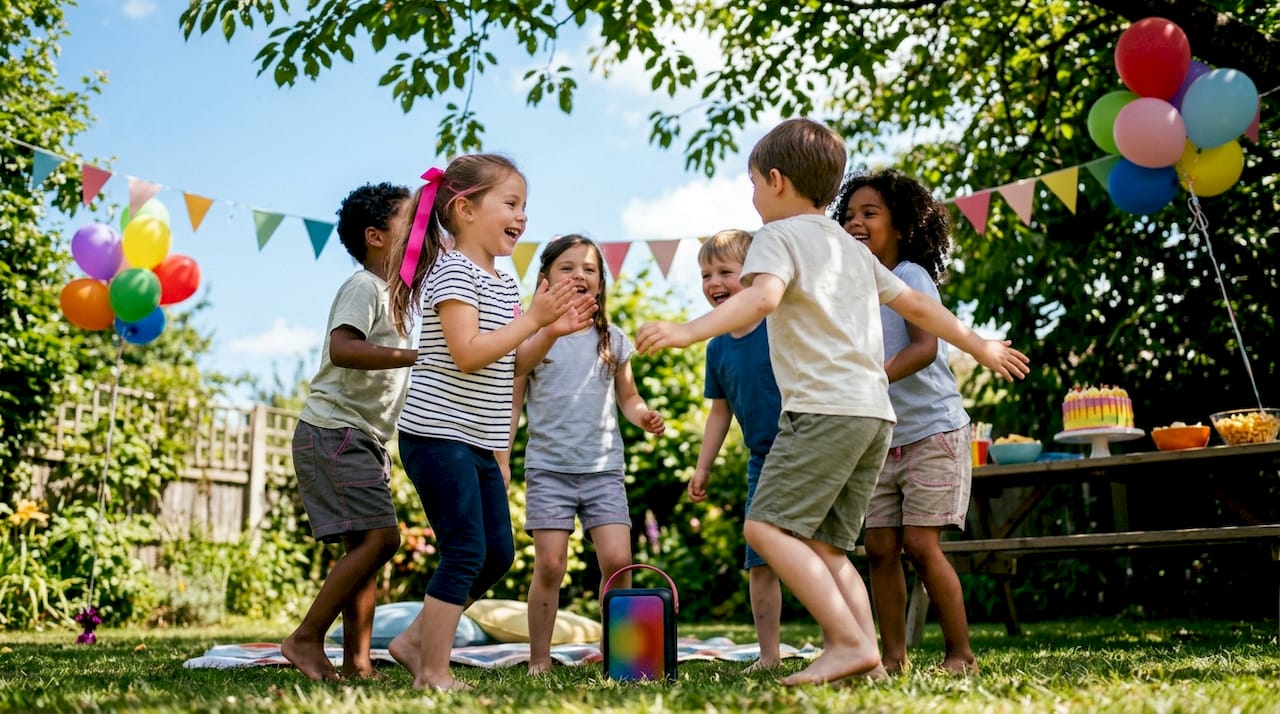
Music is the single most powerful tool for transforming a children’s party from a gathering into a genuine celebration. The role of music in kids parties goes well beyond background noise. It shapes the social atmosphere, supports emotional development, and gives children a shared experience they carry long after the cake is gone. Research published in 2026 confirms that structured musical activities improve prosocial behaviour and reduce behavioural problems in children, making music one of the most evidence-backed choices you can make when planning a kids party. Getting the music right, from the playlist to the volume to the activities, is what separates a party children talk about for weeks from one they forget by Monday.
What are the social and emotional benefits of music at kids parties?
Music does more than fill silence. It actively builds the social connections that make a party feel alive for children.
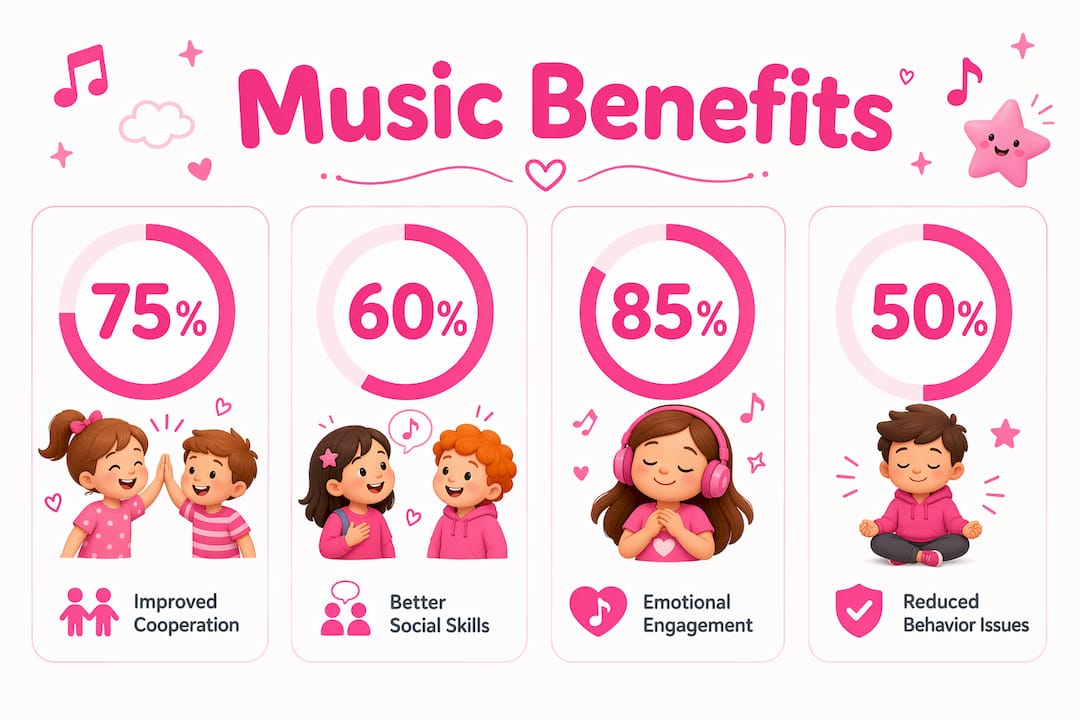
Structured group music games improve cooperation and reduce behavioural problems in children aged 5-6. An intervention study with 213 children showed significant gains in prosocial behaviours after 16-20 music sessions. That means the simple act of playing a musical game at a birthday party is doing real developmental work.
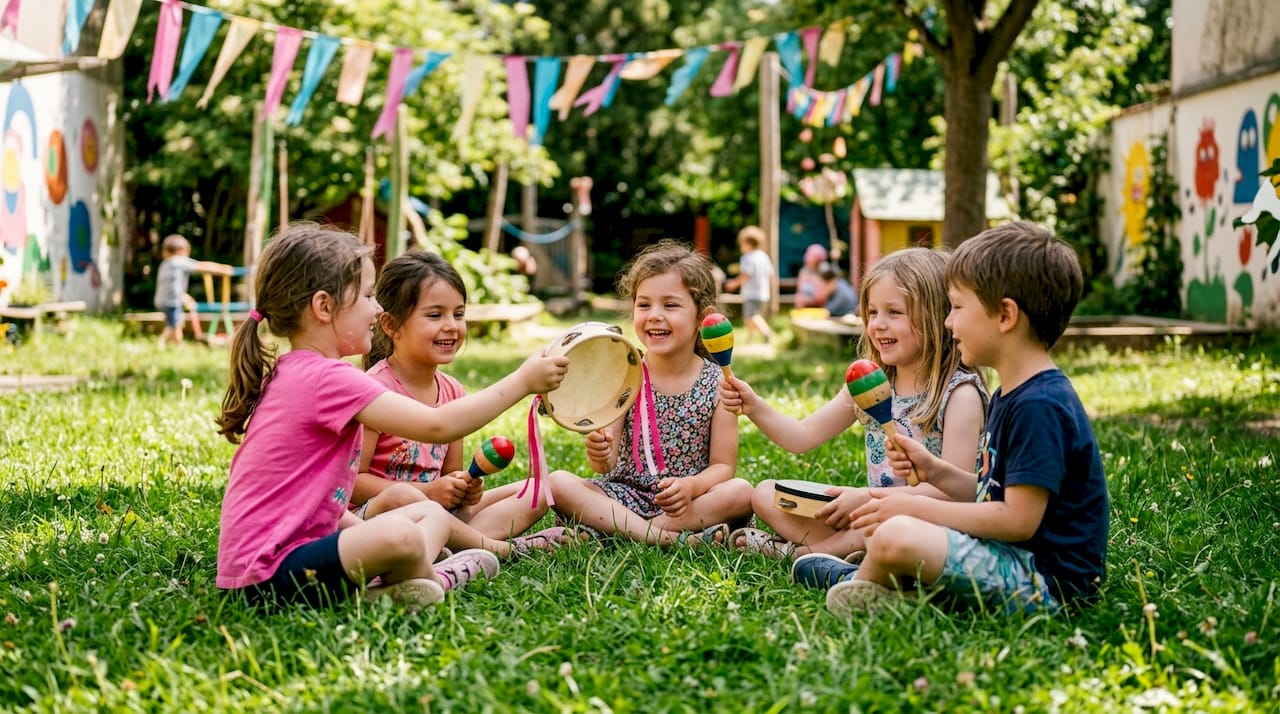
Rhythmic and movement-based music experiences take this further. Shared rhythmic activities build interpersonal synchrony, which is the feeling of being “in time” with others. This synchrony is a foundation for empathy and group cohesion. When children clap together, dance in a circle, or follow a beat as a group, they are practising the social coordination that underpins friendship.
There is also a phenomenon researchers call “music emotional contagion.” Music emotional contagion tunes a child’s emotional sensitivity and promotes empathy during shared celebrations. Importantly, this effect operates independently of the parent-child relationship, meaning music at a party can lift every child’s emotional awareness regardless of their home environment.
“Music at a children’s party is not decoration. It is the mechanism through which children learn to read each other’s emotions, synchronise their movements, and feel genuinely part of a group.”
Some music activities are especially good at building these skills:
- Musical statues: Children freeze when the music stops, practising self-regulation and reading group cues.
- Pass the parcel: Turn-taking with a musical prompt teaches patience and anticipation.
- Group singalongs: Singing together builds a sense of belonging and shared identity.
- Follow-the-leader dance: Encourages children to watch and mirror others, building empathy through movement.
For children with sensory or communication challenges, music supports shared attention and turn-taking more effectively than verbal methods alone. Registered Music Therapists note that music gives these children a non-verbal pathway into social interaction, making it one of the most inclusive party tools available.
How to choose age-appropriate music for different children
The right music for a three-year-old is completely wrong for a nine-year-old. Age-appropriate selection is not just about taste. It directly affects how safe, engaged, and comfortable children feel.
-
Toddlers (under 3): Experts recommend gentle, familiar music such as nursery rhymes and simple movement songs. Loud or high-energy music overwhelms toddlers and can trigger distress rather than delight. Keep the volume low and the tempo steady.
-
Preschoolers (3-5 years): This age group responds well to repetitive, singable songs with clear actions. Think “Head, Shoulders, Knees and Toes” or “The Hokey Pokey.” Songs with physical cues give preschoolers something concrete to do, which keeps them engaged and reduces the chance of restlessness.
-
School-aged children (6-12 years): Older kids thrive with interactive, high-energy music including disco-style games, dance challenges, and music request segments. They enjoy having agency over the playlist and respond well to friendly competition built around music.
-
Mixed-age groups: When you have toddlers and school-aged children at the same party, structure the programme in blocks. Start with gentle music for the younger children during arrival, then shift to higher-energy activities once the little ones are settled or supervised separately.
Choosing the right music also means thinking about the party theme. A superhero party calls for dramatic, punchy tracks. A princess party suits orchestral or pop ballads. Matching music to the theme reinforces the atmosphere and gives children a more immersive experience.
Pro Tip: Build two playlists before the party: one calm playlist for arrival and food time, and one energetic playlist for games and dancing. Switching between them gives you natural control over the room’s energy without any awkward silence.
What safety and suitability considerations should parents keep in mind?
Music safety at a kids party covers two distinct areas: content suitability and physical safety. Both matter, and both are easy to overlook when you are focused on decorations and catering.
On the content side, professional entertainers use clean, radio-edited tracks free of explicit lyrics. Modern DJ software can monitor and filter explicit lyrics in real time, giving parents confidence that nothing inappropriate will slip through. If you are managing your own playlist, audit every track manually before the party. Do not rely on a song’s reputation. Lyrics you have not heard recently can contain content that is not suitable for children.
On the physical safety side, the following measures protect children’s hearing and prevent accidents:
- Speaker placement: Position speakers at adult head height and angled away from children’s ear level. Never place a speaker on the floor where toddlers can press their ears against it.
- Volume testing: Test your audio setup before guests arrive. Sudden volume spikes are startling and can be distressing for younger children or those with sensory sensitivities.
- Cord management: Secure all power cables away from walkways. Children run. A loose cord across a path is a trip hazard.
- Volume limits: Keep music at a conversational level during food and activity transitions. Reserve higher volumes for dedicated dance segments only.
Professional entertainers who hold a Working With Children Check bring an additional layer of assurance. These checks are not just about personal conduct. They signal that an entertainer operates within a professional framework that prioritises child welfare in every aspect of their work, including music selection.
Pro Tip: If you are using a streaming service for your playlist, download the tracks in advance. Buffering or ads mid-party break the atmosphere and can introduce unexpected content.
How can parents successfully integrate music activities into their kids’ parties?
Music works best at a party when it is woven into the structure of the event, not just played in the background. The key is pacing. Children’s attention spans are short, and the energy in a room can shift quickly.
-
Open with a welcome song: A familiar, upbeat song as children arrive signals that the party has started and gives early arrivals something to do while others filter in.
-
Alternate music types: Structuring music by activity prevents burnout. Follow a high-energy dance game with a quieter singalong, then build back up to movement. This rhythm keeps children engaged without tipping into overstimulation.
-
Use group singalongs and dance breaks strategically: Karaoke-style activities work best when you avoid solo pressure. Frame it as a group activity where everyone sings together. Add props like microphone toys or scarves to lower the barrier for shy children.
-
Build in a quiet music moment: After food or during a craft activity, drop the music to a gentle background level. This gives children a natural reset and makes the next energetic segment feel fresh.
-
End with a signature song: Close the party with one memorable song that ties back to the theme. Children leave with a musical memory attached to the experience, which strengthens how they recall the whole event.
For shy or hesitant children, the trick is to never single them out. Invite participation through the group rather than directly. A child who refuses to dance alone will often join in when the whole group moves together. Music supports shared attention in ways that verbal invitations cannot always achieve, making it a gentle and effective tool for drawing quieter children into the fun.
Pro Tip: Ask the birthday child to help choose two or three songs for the playlist in advance. This gives them ownership of the party and makes the music feel personal rather than generic.
Timing the party well also supports music pacing. A party held at the right time of day means children arrive alert and ready to engage, rather than tired or hungry. You can read more about timing your event to get the most from your entertainment programme.
Key takeaways
Music is the most evidence-backed tool for building social connection, emotional development, and lasting memories at a children’s party.
| Point | Details |
|---|---|
| Music builds social skills | Group music games improve cooperation and prosocial behaviour in children aged 5-6. |
| Age-appropriate selection matters | Toddlers need gentle, familiar music; school-aged children thrive with high-energy, interactive tracks. |
| Safety covers content and volume | Audit lyrics in advance, manage speaker placement, and secure all cords before guests arrive. |
| Pacing prevents meltdowns | Alternate high-energy and calm music segments to match children’s attention spans throughout the party. |
| Inclusion through group activities | Frame music activities as group experiences to draw shy or hesitant children into participation comfortably. |
Why music is the one thing I never let parents skip
After years of watching children’s parties unfold, the pattern is clear. The parties children remember are the ones where they moved, sang, and laughed together. The parties they forget are the ones where music was an afterthought.
Parents often pour energy into decorations, food, and party bags. Music gets treated as something that just plays in the background. That is the wrong way around. A beautifully decorated room with no musical energy feels flat within twenty minutes. A simple backyard party with the right music and a few well-chosen activities can feel electric.
The research backs this up, but honestly, you do not need a study to see it. Watch a group of six-year-olds the moment a song they recognise comes on. The room changes instantly. Bodies start moving. Children who were standing awkwardly at the edges suddenly have something to do and somewhere to belong.
The one mistake I see parents make most often is choosing music they like rather than music their child’s age group responds to. A playlist full of adult pop hits might feel fun to you, but it will not land the same way for a room of five-year-olds who have never heard those songs. Know your audience, match the music to the age group, and let the room do the rest.
- Lauren
How Dreamscape brings music to life at kids parties
Dreamscape has been creating unforgettable children’s parties across Melbourne for over 25 years. Every entertainer holds a Working With Children Check, and every performance uses age-appropriate, clean music matched to the theme and the children in the room. Whether you are planning a princess party, a superhero showdown, or a K-Pop themed celebration, Dreamscape’s team knows how to use music and interactive activities to keep every child engaged from start to finish. With over 1,900 five-star reviews and transparent pricing, you can plan with confidence. Explore Dreamscape’s party entertainment packages to find the right fit for your child’s next celebration.
FAQ
What is the role of music in kids parties?
Music creates a shared social atmosphere that encourages children to interact, move, and connect. It supports emotional development, builds cooperation, and gives the party a memorable energy that other entertainment elements cannot replicate.
What are the best party songs for kids?
The best songs depend on age. Toddlers respond well to nursery rhymes and simple action songs. School-aged children enjoy high-energy pop, disco-style tracks, and songs tied to their favourite characters or themes.
How loud should music be at a children’s party?
Music should sit at a comfortable conversational level for most of the party. Reserve higher volumes for dedicated dance segments, and always position speakers at adult head height to protect children’s hearing.
How do music activities help shy children at parties?
Group music activities lower the pressure on individual children by making participation a shared experience. Research shows that music supports shared attention and turn-taking, giving quieter children a non-verbal way to join in without being singled out.
Should I hire a professional entertainer for music at my child’s party?
A professional entertainer brings age-appropriate playlists, real-time content monitoring, and physical safety knowledge that is difficult to replicate with a self-managed playlist. Entertainers who hold a Working With Children Check add an additional layer of assurance for parents.
Recommended
Planning a Melbourne party?
We will get right back to you.