

Create the perfect celebration with our kids party entertainment checklist. Plan activities, choose entertainers, and ensure a fun-filled day!
Kids party entertainment checklist: plan it right

A kids party entertainment checklist is a planning tool that maps every entertainment decision before the day arrives, from choosing the right entertainer to scheduling activities and managing transitions. Parents who skip these steps often find themselves scrambling between stations, managing meltdowns, and missing the moments that matter. The checklist covers what is children’s party entertainment in practical terms: the performers, the props, the schedule, and the flow. Get these elements right and the party runs itself. Get them wrong and even the best venue cannot save the day.
What types of children’s party entertainers are available?
Children’s party entertainment is the organised programme of performers, activities, and experiences designed to engage children at a celebration. The most common types of children’s party entertainers include magicians, face painters, balloon artists, DJs, and costumed characters such as princesses, superheroes, and themed figures.
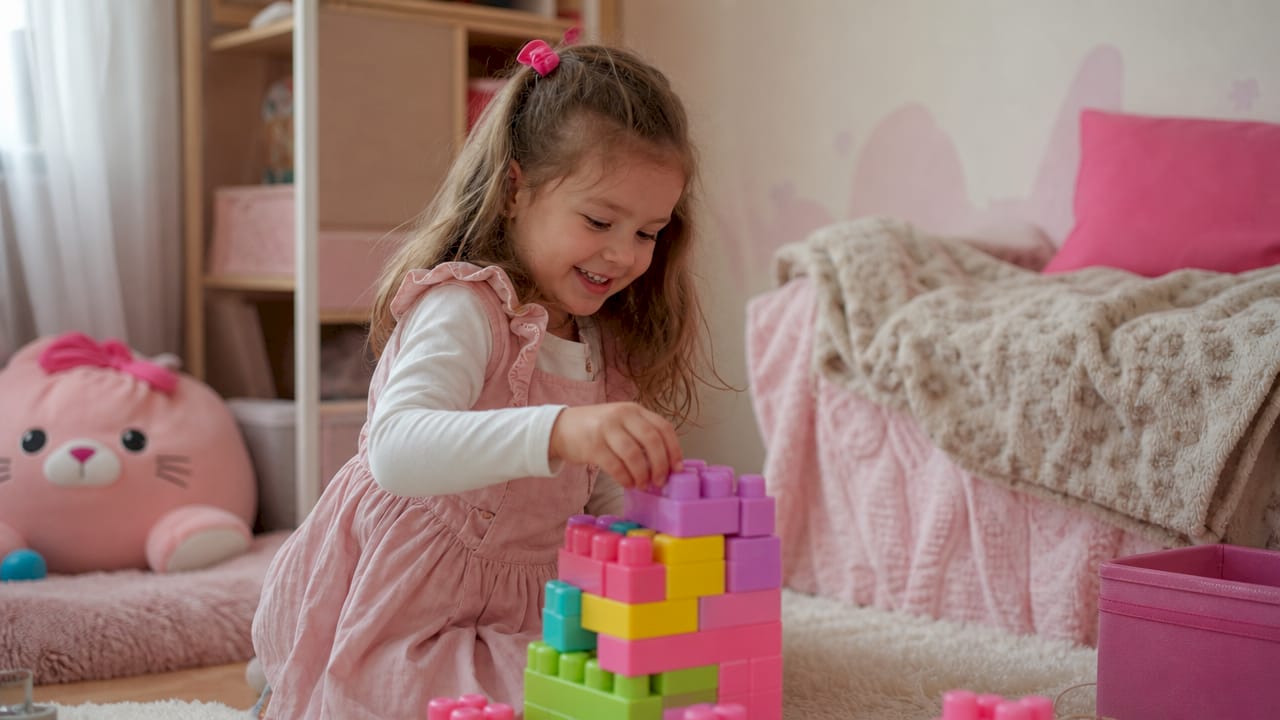
Matching the entertainer to the child’s age is the single most important decision you will make. Preschoolers respond best to gentle, sensory-rich acts like puppet shows and bubble performers. School-age children from around six years upward prefer active formats: relay races, scavenger hunts, and interactive magic shows where they can participate rather than just watch.
Group size shapes your entertainer choices just as much as age does. Face painters typically cover around 14-15 children per hour, which means a group of 30 kids needs either two face painters or a secondary activity running in parallel. That parallel activity is the key to smooth flow.
The gold standard for children’s party entertainment combines a main act with fringe activities to keep every child engaged at all times. A magician holds the group’s attention for a 20-30 minute show, while face painting or balloon twisting runs alongside for children waiting or moving between activities. This combination prevents queues, reduces restlessness, and gives parents breathing room.
Common entertainer types by age group:
- Toddlers (2-3 years): Bubble performers, gentle puppeteers, costumed characters for photos
- Preschoolers (3-5 years): Princess or superhero characters, bubble shows, simple magic
- School-age (6-10 years): Magicians, face painters, balloon artists, DJs, interactive game hosts
- Tweens (10-12 years): DJs, photo booths, craft stations, escape-room style challenges
Pro Tip: Book your main entertainer first, then build fringe activities around their performance slot. Trying to fit a magician’s show around a face painter’s queue is a recipe for a chaotic schedule.
How do you structure a party entertainment schedule?
A structured schedule is the backbone of any successful children’s party. For children aged 4-7, a 2-hour party works best with 3 to 4 guided activities that each have a clear start, a clear end, and a clear set of rules. This structure prevents the energy spikes and meltdowns that derail parties when children have too much unstructured time.
A practical 2-hour schedule for a school-age party looks like this:
- Arrival and free play (15 minutes). Children arrive at different times. A low-key activity like colouring or a craft station gives early arrivals something to do without requiring a host.
- Main entertainment act (25-30 minutes). The magician, character show, or DJ-led game session runs here. This is the centrepiece of the party.
- Fringe activity rotation (20 minutes). Face painting or balloon twisting runs while children transition. This absorbs the post-show energy and keeps the group occupied.
- Food and cake (20-25 minutes). Scheduled downtime that doubles as a natural reset for children’s energy levels.
- Competitive games with prizes (20 minutes). Musical chairs, pass the parcel, or relay races work well here. Every child should receive a small prize or participation reward to avoid tears.
- Wind-down and farewells (10 minutes). A quieter activity or free play signals the party is ending without an abrupt stop.
High-quality entertainers act as emcees throughout this schedule, managing transitions and regulating the group’s energy. They are not just performers. They are flow managers who read the room and adjust the pace when children become restless or overstimulated.
Pro Tip: Build a 10-minute buffer between every major activity. Children take longer to move, settle, and refocus than adults expect. That buffer prevents the entire schedule from running late by 3:00 PM.
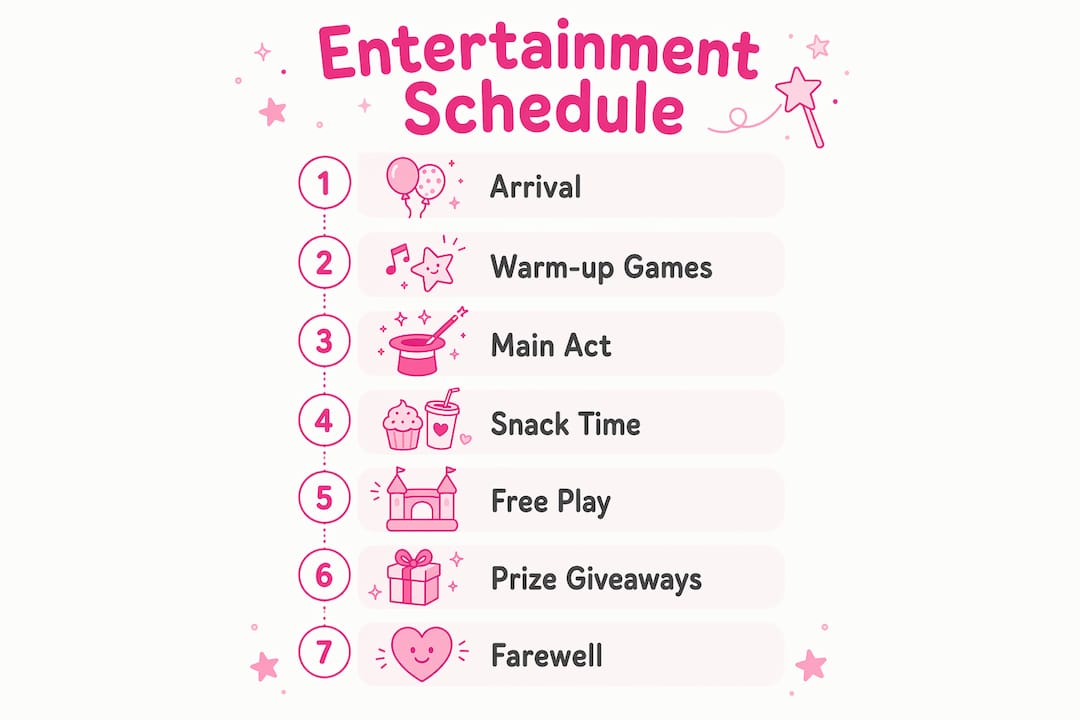
Prizes and inclusive rewards matter more than most parents expect. Competitive games without any reward for non-winners create genuine distress in children under eight. A small lolly bag or sticker sheet for every participant keeps the mood positive and the energy stable.
What goes on your entertainment logistics checklist?
Booking the right entertainer is only half the job. The logistics around that booking determine whether the entertainment actually works on the day. Use this checklist to cover every practical requirement.
| Checklist item | What to confirm |
|---|---|
| Sound equipment | Does the entertainer supply their own speaker and microphone, or does the venue provide it? |
| Props and costumes | Are all props included in the quote, or are there add-on costs? |
| Setup and pack-down time | Confirm exact arrival time, not just performance start time. |
| Insurance and Working With Children Check | Verify both before signing any contract. |
| Backup performer policy | Ask what happens if the booked entertainer is ill on the day. |
| Cancellation terms | Get the refund or credit policy in writing. |
| Run sheet | Request a detailed schedule of the entertainer’s programme for the day. |
Booking logistics also include confirming insurance, backup performers, and cancellation policies before you pay a deposit. Reputable entertainers provide all of this without being asked. If a performer cannot answer these questions clearly, that is a signal to look elsewhere.
Venue choice directly affects your entertainment options. Outdoor venues suit active games and larger character shows but create sound challenges for magicians. Indoor venues with low ceilings can limit balloon artists and certain prop-based acts. Confirm the venue’s power access, floor space, and noise restrictions before finalising your entertainer.
Timing your booking matters. Popular party dates in melbourne, particularly weekends in october and november before the school year ends, fill quickly. Book your entertainer at least 6-8 weeks ahead for standard dates, and 10-12 weeks ahead for school holiday periods and December.
What mistakes do parents make with kids party entertainment?
The most common planning mistake is activity stacking. Parents fill the schedule with too many independent stations, thinking more options mean more fun. Overloading a party with separate activity stations fragments children’s attention and causes meltdowns, particularly in children aged 4-7. Three to four guided activities outperform eight self-directed stations every time.
Other mistakes that derail party entertainment:
- Booking too late. Leaving entertainer bookings until two weeks before the party limits your options and often increases costs.
- Ignoring the host role. Someone needs to manage transitions between activities. If the entertainer is not acting as emcee, a parent or carer must take that role. Leaving transitions unmanaged creates chaos spikes.
- Skipping prizes for non-winners. Competitive games without inclusive rewards create distress in younger children. Budget for small prizes for every participant.
- Underestimating setup time. Entertainers need time to set up before guests arrive. Failing to account for this delays the start of entertainment and compresses the schedule.
- Choosing entertainment based on price alone. The cheapest option rarely includes the flow management, backup policies, and professional hosting that make a party run smoothly.
A professional entertainer does far more than perform a show. They read the room, manage the group’s energy, and keep transitions smooth so parents can actually enjoy the party rather than referee it. The difference between a party that flows and one that falls apart is almost always the quality of the entertainer’s hosting skills, not the theme or the decorations.
Balancing structured activities with free play is also worth planning deliberately. Children need unstructured time to process stimulation. A party that runs from activity to activity without breathing room produces overtired, overwhelmed children by the time cake arrives. Build free play into the schedule as a deliberate choice, not an afterthought.
Key takeaways
A successful kids party entertainment checklist combines age-matched entertainers, a structured 3-4 activity schedule, and confirmed logistics including insurance, backup policies, and setup time.
| Point | Details |
|---|---|
| Match entertainers to age | Preschoolers need gentle acts; school-age children need interactive, high-energy formats. |
| Limit to 3-4 guided activities | More independent stations fragment attention and increase the risk of meltdowns. |
| Combine main and fringe acts | A magician plus face painting keeps every child engaged and prevents queues. |
| Confirm logistics in writing | Insurance, backup performers, and cancellation terms must be agreed before paying a deposit. |
| Book 6-12 weeks ahead | Popular dates fill quickly; late bookings limit choice and can increase costs. |
What I have learned about party flow after years of watching it go wrong
The thing most parents underestimate is how much the entertainer’s hosting skill matters compared to the theme or the decorations. I have watched beautifully decorated parties fall apart because the entertainer only performed their act and left the transitions to chance. I have also watched simple, low-budget parties run beautifully because the entertainer took ownership of the room from the moment they arrived.
Professional entertainers who manage party flow and transitions reduce parental stress far more than any party prop or themed balloon arch. That is the insight most party planning guides miss. They focus on what the entertainer does during their act. The real value is what they do between acts.
My advice to any parent using a party entertainment checklist for the first time: prioritise the entertainer’s hosting credentials over their performance reel. Ask them directly how they handle transitions, what they do when a child is upset, and how they manage a group that is losing focus. The answers will tell you everything about whether they are a performer or a true party host.
Tailor the entertainment to your child’s personality, not just their age. A shy six-year-old will not enjoy being pulled up in front of thirty guests for a magic trick. An energetic eight-year-old will be bored by a quiet craft station. The checklist is a framework. Your child’s personality is the filter.
- Lauren
Dreamscape makes the checklist easier to work through
Planning children’s party entertainment in Melbourne is straightforward when you have a team that covers every item on the checklist for you.
Dreamscape has delivered tailored children’s party entertainment for over 25 years, with a roster of professional entertainers covering princesses, superheroes, magicians, and themed characters. Every Dreamscape entertainer holds a Working With Children Check and brings their own props, sound equipment, and hosting skills to manage party flow from arrival to farewell. With over 1,900 five-star reviews and transparent pricing, Dreamscape takes the guesswork out of booking kids party entertainment in Melbourne. Browse the full range of party packages and themes to find the right fit for your child’s celebration.
FAQ
What is a kids party entertainment checklist?
A kids party entertainment checklist is a planning tool that covers entertainer selection, activity scheduling, logistics confirmation, and flow management for a children’s party. It helps parents avoid common mistakes and ensures the party runs smoothly from start to finish.
How many activities should a kids party have?
A 2-hour party for children aged 4-7 works best with 3 to 4 structured activities, each with clear rules and a defined end point. More activities fragment attention and increase the likelihood of meltdowns.
How far in advance should I book a party entertainer?
Book at least 6-8 weeks ahead for standard weekend dates, and 10-12 weeks ahead for school holidays and december. Popular entertainers in Melbourne fill their calendars quickly, and late bookings limit your options.
What should I check before signing an entertainer contract?
Confirm insurance, a Working With Children Check, a backup performer policy, cancellation terms, and a detailed run sheet before paying any deposit. Reputable entertainers provide all of this without hesitation.
What is the role of a party entertainer for kids?
A children’s party entertainer explained simply: they perform their act and manage the group’s energy and transitions throughout the party. The best entertainers act as emcees, keeping the schedule on track and preventing the chaos that unmanaged transitions create.
Recommended
Planning a Melbourne party?
We will get right back to you.