

Discover the ultimate guide to party games for kids and adults. Learn how to spark fun and connection at your next gathering!
Party games for kids and adults: your complete guide
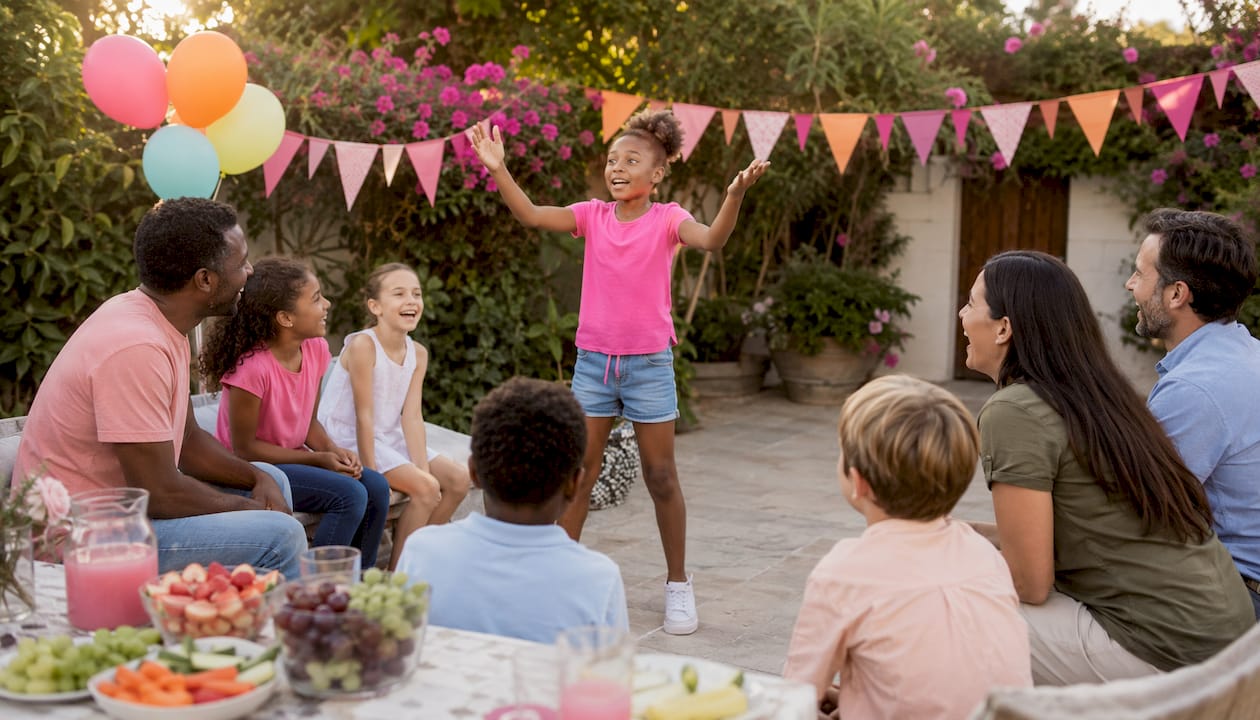
Party games are structured activities designed to entertain guests and spark social connection at gatherings of all sizes. The right games turn a room of strangers into a group of friends, keep children engaged without meltdowns, and give adults permission to laugh and let loose. Optimal party planning recommends 3-4 structured games within a 2-hour event window. That single guideline shapes everything from your game list to your food timing. Whether you are planning a children’s birthday, a backyard barbecue, or a corporate family day, this guide covers the games, the structure, and the thinking behind both.
1. Best party games for kids: age-appropriate and easy to run
The best party games for children are simple to explain, quick to start, and forgiving when rules get forgotten. Kids do not need elaborate setups. They need clear turns, a bit of suspense, and the chance to win something small.
Games that work across age groups:
- Pass the parcel. Wrap a small prize in multiple layers of paper. Children sit in a circle and pass the parcel while music plays. When the music stops, the child holding it unwraps one layer. The child who removes the final layer wins. Add a small treat inside every layer so no one leaves empty-handed.
- Musical statues. Children dance while music plays and freeze the moment it stops. Anyone who moves is out. This game runs itself and burns energy fast.
- Treasure hunt. Hide clues or small objects around the venue. Works indoors or outdoors. Toddlers do well with visible objects; school-age children enjoy written clues or riddles.
- Duck, duck, goose. A classic circle game requiring zero equipment. Works best for children aged 3-7.
- Simon says. One leader calls instructions prefixed with “Simon says.” Children who follow instructions without the prefix are out. Teaches listening and keeps the group focused.
Children’s attention spans vary significantly by age. Toddlers do best with 60-90 minute parties built around repetitive, simple activities. School-age children thrive in 90-120 minute sessions with faster-paced games and clear rules. Matching your game choice to the age group prevents frustration on both sides of the birthday cake.
Setting up a calm corner with cushions and a few books gives overstimulated or neurodiverse children a way to reset without leaving the party. This small addition makes a real difference to the overall energy in the room.
Pro Tip: Alternate one high-energy game with one calm activity throughout the party. This rhythm prevents the sugar-and-excitement spiral that ends in tears before the cake is cut.
2. Party games for adults: social, low-pressure, and genuinely fun
Adult play is not a guilty pleasure. Research shows that playful adults demonstrate stronger empathy, better social skills, and greater group harmony. That makes well-chosen games one of the most effective icebreakers at any adult gathering.
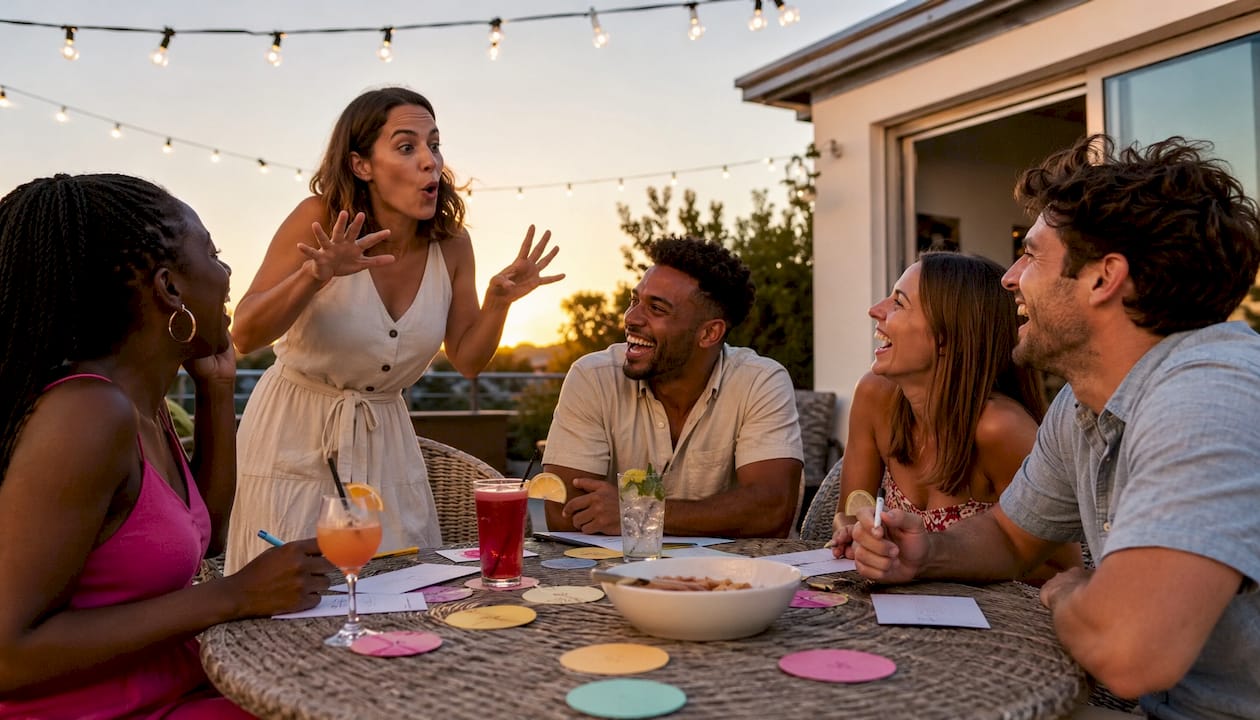
The key is removing pressure. Adults disengage quickly from games that put them on the spot or require physical feats in front of strangers. The best formats encourage collaboration and exploration rather than individual performance.
Games adults actually enjoy:
- Scavenger hunt. Divide guests into small teams and send them on a hunt around the venue or neighbourhood. Teams collaborate, laugh at each other’s navigation, and return with stories. This format encourages collaboration and feels welcoming rather than competitive.
- Two truths and a lie. Each person shares three statements about themselves. The group guesses which one is false. No equipment needed, and it sparks genuine conversation.
- Trivia rounds. Organise guests into teams of 3-5 and run 3-4 rounds of themed questions. Keep rounds short (10 questions maximum) to maintain energy.
- Pictionary or charades. Classic drawing and acting games that work for any group size. The humour comes from the attempts, not the results.
- Creative challenge. Give teams identical materials (paper, tape, a balloon) and a 10-minute challenge to build something specific. Judging is done by applause.
Adult play promotes resilience and stress management, with benefits observed consistently across study participants. That is a strong argument for treating games as a genuine priority at adult gatherings, not an afterthought.
Pro Tip: Choose formats where the whole group participates at once rather than games where one person performs while others watch. Shared experience builds connection far faster than spectator formats.
3. Outdoor and interactive party games for energetic gatherings
Outdoor settings remove the constraints of furniture and floor space, which opens up a whole category of interactive party games that simply do not work indoors. The best outdoor games scale easily for mixed-age groups and large guest lists.
- Relay races. Divide guests into teams and run classic relay formats: egg-and-spoon, sack race, or a simple sprint. Relay races work for children aged 5 and up, and adults join in without needing any explanation.
- Balloon toss. Pairs toss a water balloon back and forth, taking one step back after each successful catch. The last dry pair wins. This game is cheap, loud, and universally loved on a warm day.
- Team scavenger hunt. Hide objects or clues across a large outdoor area. Mixed-age teams work well here because adults and children contribute different skills.
- Tug of war. All you need is a rope and a patch of grass. Teams of equal size pull against each other. Keep it light and rotate teams so everyone participates.
- Obstacle course. Set up a simple course using whatever is available: hula hoops, cones, a garden hose for a crawl-under section. Time each participant or run it as a relay.
- Freeze dance outdoors. A portable speaker and an open space are all you need. Works for children and adults alike.
Alternate high-energy games with lower-intensity activities to manage the group’s energy across the event. After a relay race, run a quieter game like a trivia round or a craft station before returning to physical play. This rhythm keeps guests engaged without burning them out before the food arrives.
Safety is straightforward outdoors: check the ground for hazards before games begin, keep sunscreen and water accessible, and designate a shaded rest area for guests who need a break.
4. Cheap party games: budget-friendly fun with minimal prep
The most memorable party games rarely cost anything. The best cheap party games rely on creativity, movement, and laughter rather than purchased equipment.
Zero-cost games:
- Freeze dance. Play music and stop it at random intervals. Anyone still moving when the music stops is out. Works for every age group and requires only a phone and a speaker.
- Name game circle. Guests sit in a circle. The first person says their name with an action. Each subsequent person repeats all previous names and actions before adding their own. By the fifth person, the room is laughing.
- Wink murder. One player is secretly designated the “murderer.” They eliminate other players by winking at them. Players who are winked at must “die” dramatically. The group tries to identify the murderer before everyone is eliminated.
- Craft station. Set out paper, crayons, and stickers. Children decorate their own party bag or crown. This costs almost nothing and keeps younger guests occupied during transitions.
- Newspaper fashion show. Give teams newspaper and tape. Each team creates an outfit for one team member in 10 minutes. A panel of judges awards points for creativity.
Rather than filling disposable party favour bags, opt for meaningful shared experiences or a single useful item. Disposable bags are frequently left behind at the venue. A small potted plant, a seed packet, or a personalised bookmark costs less and leaves a better impression.
Pro Tip: Print a simple game instruction card for each activity and laminate it. You can reuse the cards at every party you host, and guests can read the rules themselves without waiting for you to explain.
5. How to plan and schedule party games for smooth flow
Effective party scheduling uses defined time blocks rather than a rigid minute-by-minute timetable. The goal is a flexible structure that keeps energy high without over-programming the event.
A proven block flow for a 2-hour children’s party looks like this:
| Time block | Activity |
|---|---|
| 0-20 minutes | Arrivals and free play |
| 20-50 minutes | 3-5 structured games |
| 50-75 minutes | Food and drinks |
| 75-90 minutes | Cake and singing |
| 90-120 minutes | Free play and farewells |
Serving cake at 60-75 minutes aligns with children’s attention spans and creates a natural energy reset before the final stretch of the party. It also gives parents the photo opportunity they came for without disrupting the game flow.
Over-scheduling is the most common party planning mistake. Three well-run games beat six rushed ones every time. Leave gaps for spontaneous play, toilet breaks, and the inevitable moment when one child decides the rules need renegotiating.
For adult gatherings, the same principle applies. Plan 3-4 games across a 3-hour event and leave at least 40 minutes of unstructured time for conversation. The games are the catalyst, not the entire programme. You can find a full party planning checklist on the Dreamscape website if you want a structured template to work from.
Key takeaways
The most successful party games match the age group, keep pressure low, and leave room for spontaneous fun between structured activities.
| Point | Details |
|---|---|
| Match games to age | Toddlers need simple repetitive games; school-age kids need faster-paced formats with clear rules. |
| Keep adult games low-pressure | Collaborative formats like scavenger hunts outperform competitive or performance-based games for adults. |
| Use a block schedule | Plan arrivals, 3-5 games, food, and free play in flexible time blocks rather than a rigid timetable. |
| Budget does not limit fun | Zero-cost games like freeze dance and name game circle deliver as much engagement as purchased options. |
| Alternate energy levels | Rotate high-energy and calm activities throughout the event to prevent burnout before the party ends. |
What I have learned from watching hundreds of parties run
The advice I give most often surprises people: plan fewer games than you think you need. Every party planner I have spoken with, and every event I have watched unfold, confirms the same thing. The moments guests remember are not the games themselves. They are the laughing fits that happen when a game goes sideways, the unexpected friendships formed during a scavenger hunt, and the quiet satisfaction of a child who finally caught the parcel.
The instinct to fill every minute with a structured activity comes from anxiety, not from what guests actually want. Adults need permission to relax. Children need space to be silly without a referee. The games are the frame. The connection is the picture.
I have also noticed that the hosts who stress least are the ones who choose stress-free party entertainment over elaborate DIY setups. They pick two or three games they know well, run them confidently, and spend the rest of the time actually enjoying the party. That confidence is contagious. When the host is relaxed, the guests relax.
The other thing worth saying plainly: inclusivity is not a box to tick. A game that leaves one child standing on the sidelines, or one adult dreading their turn, has failed regardless of how much everyone else enjoyed it. The best games bring people in. They do not sort guests into winners and everyone else.
- Lauren
Dreamscape makes party entertainment effortless in Melbourne
Planning games is one part of a great party. Having a professional entertainer who knows exactly how to run them is another thing entirely.
Dreamscape has delivered tailored kids’ party entertainment across Melbourne for over 25 years, with more than 1,900 five-star reviews from local families. Their professional entertainers hold Working With Children Checks and specialise in themed parties featuring princesses, superheroes, and K-Pop demon hunters. Every entertainer manages the game flow, reads the room, and keeps children engaged from arrival to farewell. If you are planning a birthday, school event, or corporate family day in Melbourne, Dreamscape takes the pressure off so you can be a guest at your own party.
FAQ
What are the best party games for young children?
Pass the parcel, musical statues, and simple treasure hunts work best for children aged 3-8. These games require minimal equipment, have clear rules, and keep the whole group involved at once.
How many games should I plan for a 2-hour kids’ party?
Plan 3-5 structured games for a 2-hour party, leaving time for arrivals, food, cake, and free play. Over-scheduling is the most common mistake, and fewer well-run games deliver better results than a packed programme.
What party games work well for adults?
Scavenger hunts, two truths and a lie, and team trivia rounds are the most effective adult party games. Adult play builds empathy and social connection, so formats that encourage collaboration over competition work best.
What are the cheapest party games to run?
Freeze dance, wink murder, and the name game circle cost nothing and require only a phone and speaker at most. These games work for mixed-age groups and scale easily for large guest lists.
When should I serve cake during a kids’ party?
Serve cake at around 60-75 minutes into the event. This timing aligns with children’s natural attention spans and creates a natural energy reset before the final stretch of free play.
Recommended
Planning a Melbourne party?
We will get right back to you.