

Discover fun joint birthday party ideas for siblings that ensure both kids shine, staying true to their interests while sharing the spotlight.
A joint birthday party for siblings can work brilliantly
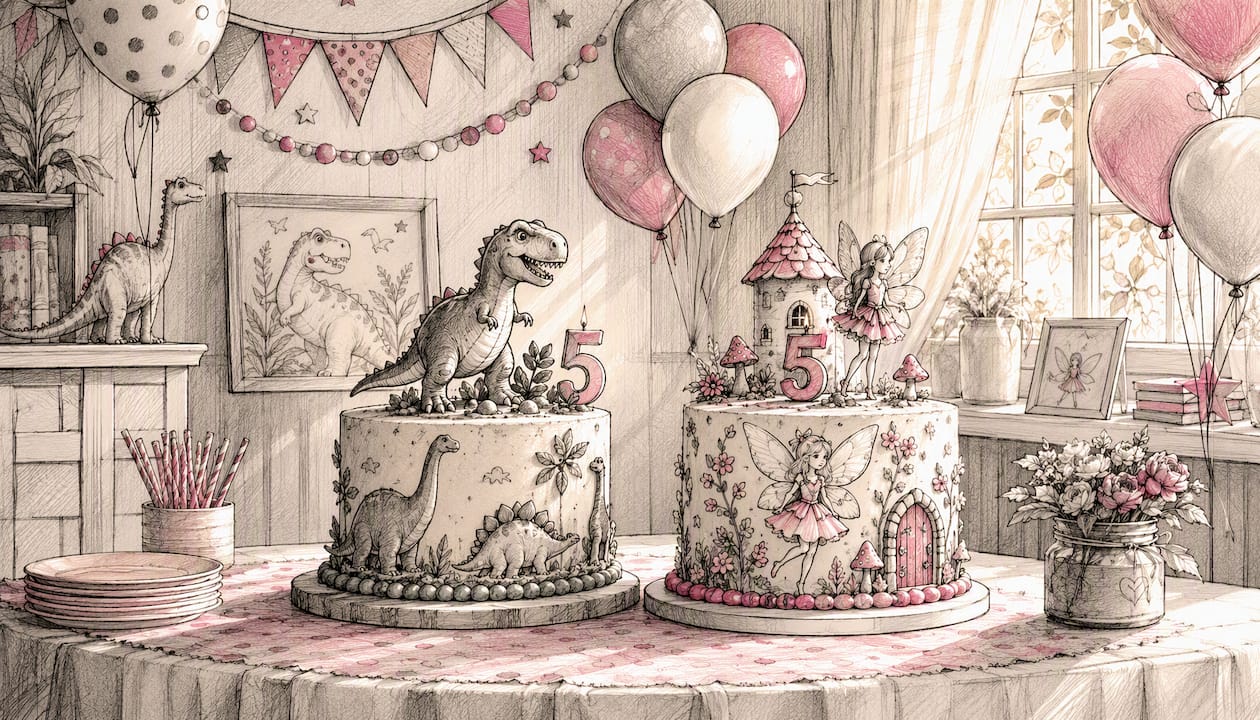
Yes, a joint birthday party works well for siblings when three conditions line up: both kids genuinely want it, there’s enough overlap in ages or interests to keep everyone engaged, and you’ve decided upfront how to share the spotlight. Get those right and you save yourself from needing separate cakes, guest lists, and event days.
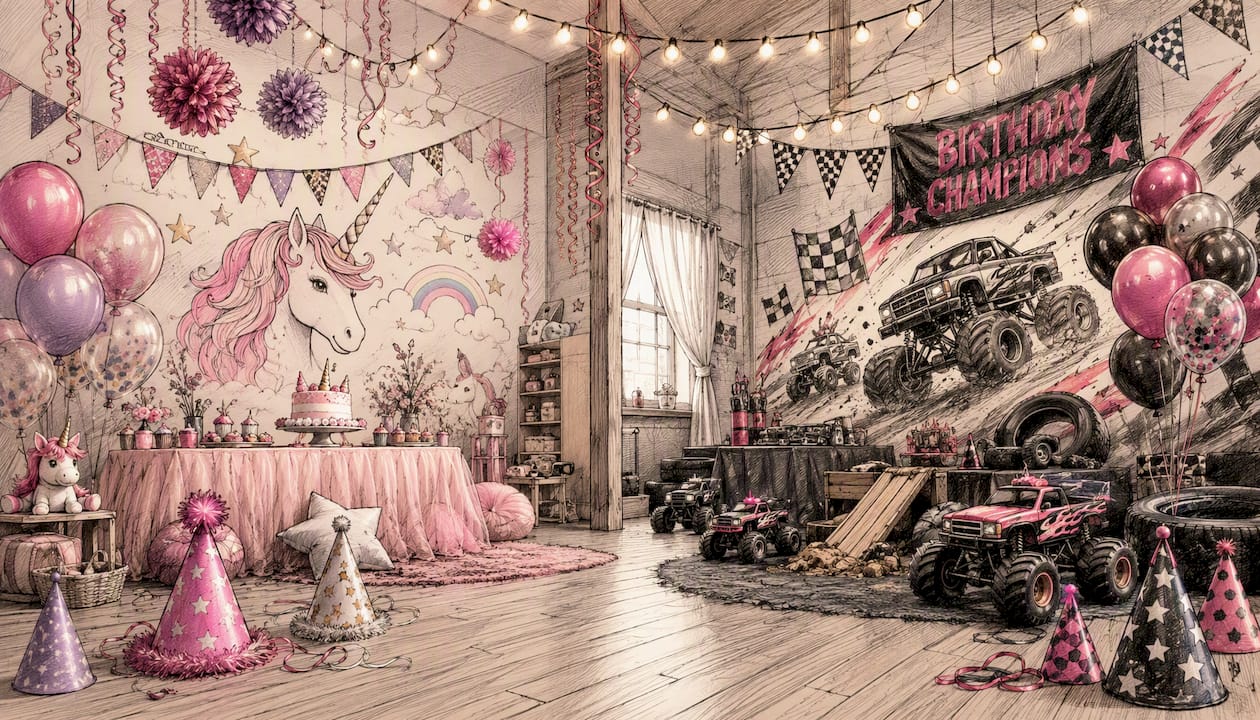
There are three ways to run it. A single neutral theme suits siblings close in age or with a shared obsession (think dinosaurs, space, or a favourite show). A blended mash-up works when interests differ but aren’t opposites. Split mini-zones solve the trickiest combinations, where one child wants unicorns and the other wants monster trucks and neither is budging.
Whichever path you pick, fairness comes down to three small things: both kids agreed to combine forces, both get a genuine moment where the party is about them, and nobody has to pretend to like the other’s theme to enjoy their own birthday. Get that trio right and the logistics sort themselves out.
Table of Contents
- Deciding whether to combine the parties: a checklist for parents
- How to pick a theme that celebrates both kids
- Games and activities that suit mixed ages
- Cake and catering that works for two birthday kids
- Invitations and decorations that make it clearly a joint celebration
- Keeping attention fair without making everything identical
- Venue, timing and budget: the logistics that make or break the day
- When to run separate parties instead
- Real-world tips from entertainers on what actually works
- Why a well-run joint party is worth the extra planning
- If you’d rather hand the logistics to someone else
- Key takeaways for a fair, fun sibling party
- Sources
- FAQ
Deciding whether to combine the parties: a checklist for parents
Before you book a venue or order a cake, run through this. It takes five minutes and saves you from a party that satisfies nobody.
- Are both children actually willing? Not “fine with it” under pressure, but genuinely keen. A reluctant birthday kid ruins the day for everyone, including you.
- Does the age gap make sense for shared activities? An age gap of a few years between children is workable for shared activities. A gap between a toddler and a tween usually isn’t, unless you’re planning very separate activity tracks.
- How much does the guest list overlap? If most of each child’s friends already know each other (siblings often share a school or neighbourhood circle), combining is easy. If the friend groups are strangers to each other, you’ll need more structure to keep both sets entertained.
- Does the budget and venue suit one event instead of two? One party is nearly always cheaper than two, but only if the venue can genuinely handle both age groups at once.
- Are there sensory or behavioural needs to plan around? A child who finds noise or crowds overwhelming might do better with a shorter, calmer joint event than a long one.
Combining two parties into one is a genuinely effective way to save time and money while strengthening sibling bonds, provided both kids feel like it’s their day too.
Pro Tip: Ask each child separately, out of earshot of the other, whether they’d like to share their birthday. Younger kids often say yes to please a sibling even when they’d rather not. A private chat gets you an honest answer.
If one child isn’t ready, don’t force it. Run a small joint family celebration (cake, candles, a shared dinner) and let each child have their own separate friend party on a different day. That way nobody misses out and nobody feels overruled.
How to pick a theme that celebrates both kids
The theme decision is where most parents get stuck, and it’s usually simpler than it looks.
Single neutral theme
This works when the age gap is small or the kids already share an interest. Ocean animals, superheroes, a colour-based theme (everyone wears their favourite colour), or a general “carnival” or “camping” theme all give you one cake, one set of decorations, and no debate about whose theme “wins.” It’s the lowest-effort, lowest-conflict option, and it’s worth trying first before assuming you need something more complicated.
Blended mash-up
When interests differ but aren’t polar opposites, blend them into one cohesive theme rather than choosing sides. A dinosaur lover and a unicorn lover can share a “mythical creatures” theme that folds in dragons, ancient beasts, and magical animals. A superhero fan and a princess fan can share a “heroes and heroines” theme. A pirate and a mermaid pair naturally into “under the sea adventure.”
Small styling touches make a blended theme feel deliberate instead of thrown together: one shared banner with both names, a linked colour palette that pulls from each theme, and a combined cake topper are enough to signal “this was planned,” according to advice on joint party theme design.
Split mini-zones
When the taste gap is wide, or the venue has the room, physically dividing the space works better than forcing a blend. One end of the backyard becomes a princess castle corner; the other becomes a dinosaur dig site. Kids drift between zones as they like, but each sibling gets a space that’s unmistakably theirs.
- Choose single theme: siblings close in age, shared interests, smaller budget.
- Choose mash-up: interests differ but complement (adventure themes, animal themes, colour-adjacent aesthetics).
- Choose split zones: interests clash hard, or you have the physical space (a park, a large backyard, a hired hall) to separate them.
Melbourne parents planning ahead can find current theme inspiration in Dreamscape’s roundup of 2026 party themes, which covers plenty of pairings that work for mixed-interest siblings.
Games and activities that suit mixed ages
The trap with mixed-age parties is picking games that bore the older kids or overwhelm the younger ones. The fix is stations, not one single activity for the whole two hours.
- Treasure or scavenger hunt with two difficulty tiers: simple picture clues for little ones, riddles for older kids, converging on the same prize table.
- Craft station where younger kids decorate with stickers and stamps while older kids get proper craft supplies (fabric paint, beading, slime kits).
- Obstacle course that scales by adjusting distance and difficulty rather than running two separate courses.
- Karaoke or dance-off - genuinely age-neutral, and a good energy leveller between more physical games.
- Pizza-making or cupcake-decorating station - hands-on food activities work for almost any age and double as part of the catering.
Scavenger hunts, craft stations, obstacle courses, and interactive food activities are consistently flagged as ideas that scale across age groups, which is exactly what a mixed-age guest list needs.
Running age-differentiated stations doesn’t require a huge team. One adult (or hired entertainer) manages transitions and calls time, while a second floats between stations to help younger kids who need more guidance. Keep each rotation to 10 to 15 minutes; any longer and you’ll lose the littlest guests’ attention.
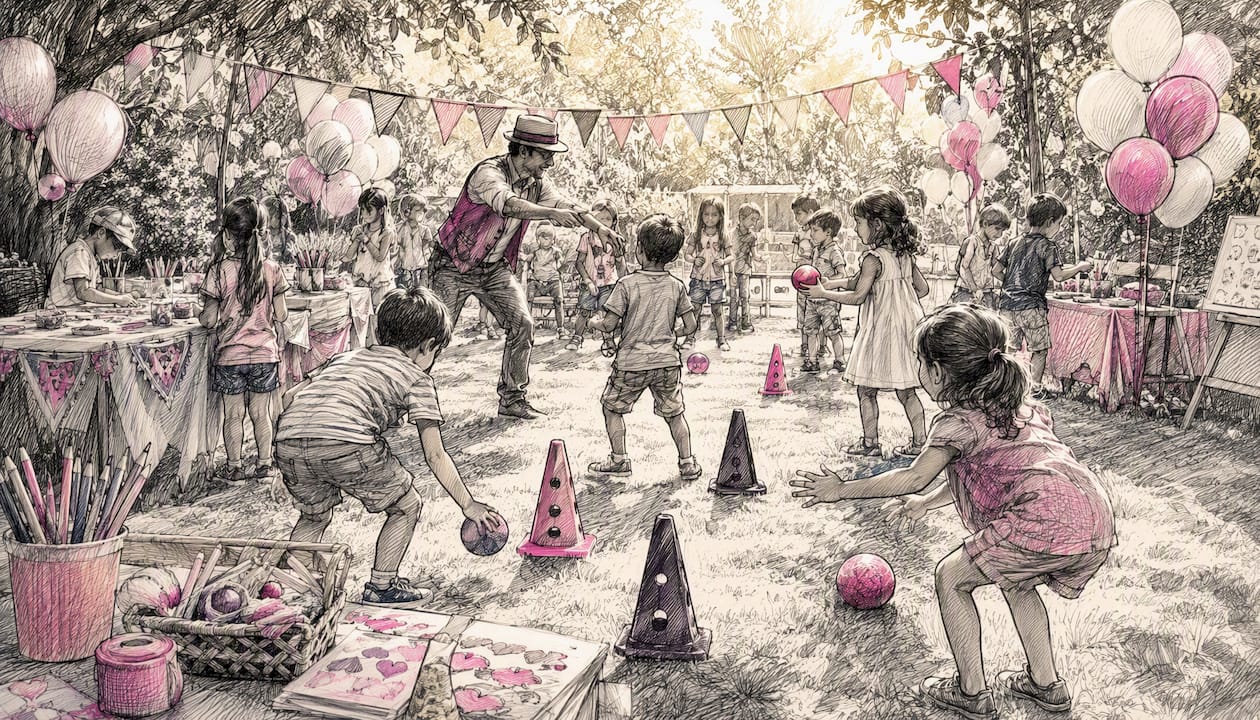
Pro Tip: For anything high-energy (obstacle courses, piñatas, water games), brief one adult purely as a “safety spotter” with no other job. It sounds excessive until the first collision, and then it’s the best decision you made all day.
Dreamscape’s guide to party games for kids and adults has a longer list if you want more station variety, and the piece on how entertainers adapt activities to themes is useful if you’re leaning towards a themed mash-up.
Cake and catering that works for two birthday kids
Cake is a key area to consider carefully before the day to manage sibling rivalry.
| Option | Best for | Trade-off |
|---|---|---|
| One shared cake, two names iced on top | Small age gap, similar tastes, tight budget | Neither child gets a cake that’s “just theirs” |
| Two smaller cakes, one per child | Different tastes, want individual spotlight moments | More cost, more table space, two sets of candles to manage |
| Cupcakes with two decoration styles | Larger guest lists, want easy portioning | Less of a “wow” centrepiece moment |
| One cake split down the middle into two designs | Want a single centrepiece but visual fairness | Needs a baker comfortable with a half-and-half design |
Whichever you choose, give each child their own candle-blowing moment rather than combining it into one. Small individual touches like separate candle blowing and clearly labelled invitations go a long way toward making both kids feel like the day is theirs, even when the cake is shared.
For food more broadly:
- Label common allergens clearly on a shared table (nuts, dairy, gluten) so parents of guests can check quickly.
- Offer at least one simple swap (a gluten-free cupcake, a dairy-free option) rather than a full separate menu.
- Interactive stations, like a build-your-own-taco or pizza bar, sidestep the “whose food is this” problem entirely because everyone builds their own plate.
Invitations and decorations that make it clearly a joint celebration
Guests need to know, before they arrive, that this is a shared celebration and not one child’s party with a sibling tagging along.
Invitation wording should list both names with equal prominence: “Please join us to celebrate Mia and Jack turning 6 and 9!” works better than burying one name in smaller text. Spell out the gift situation clearly too, since ambiguous invitations create awkwardness at the door. Say either “one gift per family, addressed to both kids” or “separate small gifts welcome” so guests aren’t guessing.
For decorations:
- Single palette, dual accents: one main colour scheme with each child’s theme showing up in smaller accessories (balloons, table runners, cake toppers).
- Two mini display tables: one for each child’s theme, positioned side by side so neither dominates the room.
- Joint photo wall: a single backdrop with both names and both themes represented, so photos naturally capture the shared occasion.
Name signage matters more than people expect. A simple banner or chalkboard with both names in equal-sized lettering avoids the subtle “this is really so-and-so’s party” impression that lopsided decor can create. Dreamscape’s guide to decoration and entertainment combos has practical pairing ideas if you’re blending two themes visually.
Keeping attention fair without making everything identical
Fairness doesn’t mean identical treatment. It means each child gets a genuine, visible moment that’s theirs, even if the details differ.
- Dual cake moments (even with one shared cake): two separate rounds of candles and “happy birthday” singing.
- Simultaneous name announcements at key moments (arrival, cake, farewell) so neither child is introduced first every time.
- Small badges or crowns that mark each child as “birthday star” without ranking one above the other.
- A dedicated slot where each child picks a song, leads a game, or chooses the next activity.
Equity beats equality here. Two personalised, small moments (a favourite song played for one, a favourite game led by the other) tend to land better emotionally than forcing two identical cakes or two identical gift piles. Kids notice sincerity more than symmetry.
Pro Tip: A five-second personalised gesture, like the entertainer calling out “and now for Jack’s favourite bit,” costs nothing but reads as huge to a child watching for signs they matter as much as their sibling.
Gift opening is the other flashpoint. Two workable approaches: open gifts in separate short sessions (five minutes each, back to back) so there’s no direct comparison happening in real time, or open gifts in a private family moment after guests leave, which sidesteps the whole issue in front of an audience.
Venue, timing and budget: the logistics that make or break the day
Parents usually ask about this before anything else, and fair enough. It’s what determines whether the day runs smoothly or falls apart by hour two.
Sample 2 hour timeline: Arrival and free play (20 min) → group activity or game rotation (40 min) → food (25 min) → cake and candles, both kids (15 min) → free play or dance-off (15 min) → farewell and lolly bags (5 min).
Sample 3 hour timeline: Arrival (15 min) → two rotating activity stations (60 min) → food (30 min) → cake, both kids (20 min) → main entertainment block, a hired performer or big group game (45 min) → farewell (10 min).
Budget splitting has three common approaches: an even 50/50 split regardless of guest numbers, an itemised split where each parent covers their own child’s cake and gift bags while sharing venue and catering costs, or a “whoever’s turn it is pays more” arrangement if the parties alternate years. None is more correct than another; pick whichever avoids resentment in your specific family.
| Venue | Space for mixed ages | Cost | Supervision needs | Weather resilience |
|---|---|---|---|---|
| Home/backyard | Good if you can zone it | Lowest | High, you’re doing it all | Poor without a backup plan |
| Local park | Excellent, natural zones | Low to moderate | Moderate, open space needs more eyes | Poor, fully weather-dependent |
| Activity centre | Good, often has age-tiered zones | Moderate to high | Low, staff usually help | Excellent, indoors |
| Hired hall | Very good, blank canvas to zone | Moderate | Moderate | Excellent, indoors |
Capping the guest list matters more for joint parties than single ones, since you’re managing two friend groups at once. Assigning one parent or entertainer to manage transitions between activities keeps things on schedule and stops the day drifting, a tactic event providers consistently recommend for exactly this kind of multi-age event. Dreamscape’s broader stress-free party planning guide covers general logistics if you want a fuller checklist beyond joint-specific concerns.
When to run separate parties instead
Combining isn’t always the right call, and forcing it usually backfires louder than just running two smaller events.
Watch for these red flags:
- A large age gap where shared activities genuinely don’t work (a two-year-old and a twelve-year-old have almost nothing in common at a party).
- One child has a strong, stated dislike of sharing their birthday spotlight, even after a private conversation.
- The two friend groups actively clash or have unresolved conflict (this happens more often with older kids and school politics than parents expect).
- One child is agreeing only because they feel pressured, not because they actually want to.
If any of these apply, simpler alternatives keep the peace: a small family-only morning celebration together, followed by separate friend parties on different days, or a joint family dinner with one cake at home while each child gets their own party with friends. Explain the choice to both kids honestly. Something like “you both wanted really different things, so we’re going to make sure you each get exactly the party you want” respects both without making either feel like the reason it didn’t happen.
Real-world tips from entertainers on what actually works
Dreamscape entertainers run joint sibling parties regularly, and the pattern that separates a smooth one from a chaotic one is almost always preparation, not luck.
One recurring setup: a five-year-old obsessed with fairies and an eight-year-old obsessed with superheroes, sharing a backyard. Splitting the space into a “fairy garden” corner and a “hero training zone,” with one entertainer rotating between both every 15 minutes, kept both kids engaged without either feeling like they’d compromised on their theme.
Another common one: twins with a wide personality gap, one loud and performance-hungry, one quieter and happier watching. Giving the quieter child a smaller, low-pressure moment (leading a simple craft) instead of a big spotlight (like a solo dance) let both feel included on their own terms rather than an identical, ill-fitting script.
The entertainers who run these parties smoothly tend to work from the same short checklist every time: confirm arrival order for both birthday kids, brief every entertainer on both children’s names and interests before guests arrive, set up one calm, low-stimulation station for anyone who needs a breather, and schedule two short individual spotlight moments rather than one long shared one.
Briefing matters as much for family as for hired help. A quick five-minute chat with grandparents, aunts, and uncles about “we’re doing separate cake moments, please cheer for both” prevents well-meaning relatives from accidentally favouring the louder or older child. Pre-briefing helpers and older kids in advance reduces friction and keeps transitions between activities running smoothly, which matters more in a joint party than a single-child one simply because there’s more happening at once.
If sibling friction is a known risk in your family, Dreamscape’s piece on handling sibling rivalry and meltdowns at parties has specific de-escalation tactics worth reading before the big day.
Why a well-run joint party is worth the extra planning
The parties that stick in a kid’s memory aren’t the ones with the most decorations. They’re the ones where they felt like the day genuinely belonged to them, even while sharing it with a brother or sister. That’s the part I’d tell any parent weighing this up: a joint party isn’t a compromise that halves the magic for each child. Run properly, with real individual moments built in, it can double the warmth instead, because now the celebration includes the sibling relationship itself, not just the birthday.
The planning is more work up front. There’s more coordinating, more negotiating, more little decisions about whose turn it is to go first. But the payoff is a memory of celebrating each other, not just being celebrated, and that’s the bit kids talk about years later. If you want a fuller toolkit for the logistics side, Dreamscape’s practical planning resources cover most of what comes up once you’ve settled on your approach.
If you’d rather hand the logistics to someone else
Running two friend groups, two attention spans, and two “it’s my birthday” moments solo is a lot for one parent to manage while also hosting. A professional entertainer changes that equation directly: they manage the transitions between age-tiered stations so you’re not the one calling time on the craft table while also plating cake, and they build in two separate spotlight moments as a matter of routine, not an afterthought you have to remember mid-party.
Dreamscape’s entertainers hold Working With Children Checks and run themed parties across Melbourne, from princesses and superheroes through to newer favourites, with over 1,900 five-star reviews behind that track record. For a joint sibling party specifically, a hired entertainer can run a blended theme or split mini-zones without you needing to coordinate staffing yourself, freeing you up to actually enjoy the day instead of managing it from the sidelines.
Have a look at Dreamscape’s kids’ party entertainment packages to check character options and pricing, or browse the full range of party characters and themes if you’re still deciding between a mash-up and a split-zone approach. If you’re in Melbourne’s northern suburbs, check local availability here to see what dates are open before you lock in a venue.
Key takeaways for a fair, fun sibling party
A joint sibling party succeeds when both kids agree to it, get a genuine individual spotlight moment, and share a theme approach that fits their actual interests rather than a forced compromise.
| Point | Details |
|---|---|
| Get buy-in first | Ask each child privately whether they want to combine, before booking anything. |
| Match the theme to the gap | Use a single theme for close ages, a mash-up for compatible interests, split zones for clashing ones. |
| Plan two spotlight moments | Separate candle-blowing and name announcements so both kids feel individually celebrated. |
| Build age-tiered stations | Run activities in rotations so younger and older guests both stay engaged. |
| Cap the guest list | Keep numbers manageable given you’re hosting two friend groups at once. |
| Brief your helpers | Tell family and any hired entertainer about both kids’ names and interests in advance. |
| Have a fallback plan | If one child isn’t ready, run a small joint family moment plus separate friend parties instead. |
| Consider hiring an entertainer | Dreamscape can manage transitions and dual spotlight moments so parents aren’t running the whole show. |
Combining two birthdays into one genuinely fun celebration is very doable. It just takes a plan, not luck.
Sources
- How to Plan a Joint Birthday Party for Siblings or Friends
- Sibling Party Success: How To Blend Two Themes Into One Epic Celebration
- Joint Birthday Party Ideas for Siblings: Creative Themes and Fun Activities for Memorable Celebrations
- Throwing a Joint Birthday Party: 6 Tips for Celebrating Multiple Kids at Once - BirthdayLand
FAQ
What are good joint birthday party ideas for brothers?
Shared adventure themes work well, like superheroes, pirates, or a “mission impossible” style obstacle course, since these usually appeal across a wider age range than character-specific themes. Add age-tiered activity stations so a younger and older brother both stay engaged.
What are good joint birthday party ideas for sisters?
Mythical creature mash-ups (unicorns and dragons), a shared arts and craft theme, or a “under the sea” combination work well when sisters have overlapping but not identical tastes. If their interests genuinely clash, split mini-zones let each sister keep her own theme within one event.
What’s a good birthday party idea when it’s just for my brother?
If you’re not combining celebrations, choose a theme around his specific current interest and skip the fairness planning altogether, since a single-child party doesn’t need spotlight-sharing tactics. The activity and cake advice in this guide still applies, just without the split logistics.
What do you call siblings who share the same birthday?
There’s no single official term, though “birthday twins” is commonly used informally for siblings born on the same calendar date, even in different years. Siblings who simply celebrate together on one shared party day (regardless of actual birth dates) are usually just described as having a “joint” or “combined” birthday party.
Recommended
Planning a Melbourne party?
We will get right back to you.