

Parents, school coordinators and event planners: a practical checklist of what entertainers bring, what hosts must supply, and the safety checks to request.
25 Years’ Proof: What Entertainers Bring for Parents, Schools & Events
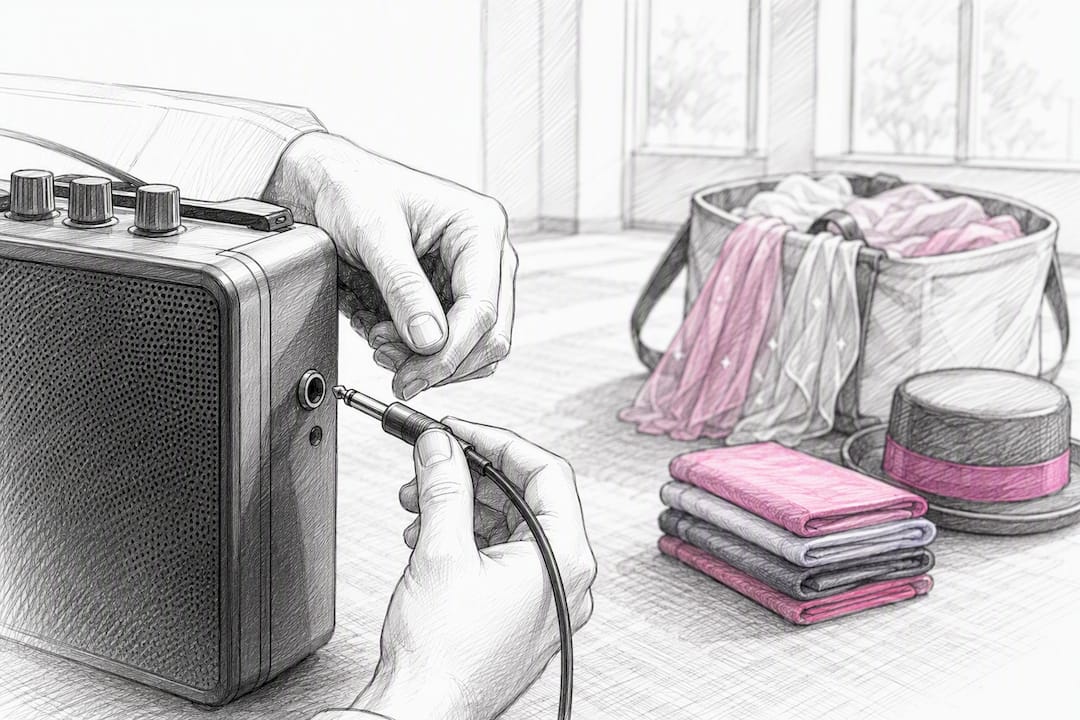
Entertainers bring the performer, a themed costume and props, portable sound and music, and activity supplies like balloons, face paints and craft materials, plus a basic setup and pack-down. They should also arrive able to show a Working With Children Check and public liability insurance. Hosts, in turn, usually cover the space, power and seating, and both sides should lock in a run-sheet before the big day.
TL;DR:
- Entertainers arrive with costumes, props, portable sound systems, backup supplies, and carry spares for common issues, ensuring readiness for seamless performances.
- Hosts must provide a performance area, access to power, seating, and parking, with clear arrangements confirmed beforehand to prevent delays or misunderstandings.
- Verify that entertainers can connect to existing venue equipment via Bluetooth or cables, and confirm power access and lighting requirements in advance to avoid technical setbacks.
- Ask for and review safety documentation such as Working With Children Checks and public liability insurance, as hesitation or missing proof indicates a higher booking risk.
- Travel distance and venue access influence setup time and equipment, so clarify logistics and contingencies for bad weather or last-minute changes to stay prepared.
Table of Contents
- The full checklist: what entertainers usually bring
- Entertainer supplies vs. host responsibilities: who brings what
- What safety documents should entertainers show you?
- Setting up the venue: logistics organisers need to plan
- How to confirm pricing and dodge hidden costs
- Which entertainer format suits which event?
- Considerations for travelling entertainers
- Handling technical needs and equipment compatibility
- What if something goes wrong on the day?
- Why the fine print matters more than the costume
- Ready to book? What Dreamscape packages include
- Sources
- FAQ
The full checklist: what entertainers usually bring
A professional entertainer’s kit runs deeper than a costume and a smile. Most Melbourne-based performers arrive with a set list built around performance essentials, technical gear, and enough consumables to keep a room of children occupied without a lull.
Performance essentials:
- The performer themselves, in a fully themed costume matched to the booking (princess, superhero, K-Pop character, pirate, magician)
- A rehearsed script or routine, adapted on the fly for the age group in the room
- Props specific to the act (a magician’s kit differs completely from a balloon artist’s)
Sound, staging and activity supplies:
- A portable speaker, usually battery-powered as backup to mains
- Curated playlists or a small lighting setup for disco-style segments
- A balloon-twisting kit, a face-painting set using hypoallergenic paints, and craft materials for take-home projects
Entertainers typically arrive with costumes, props, portable sound systems and backup activity supplies already packed, precisely so nothing depends on what’s in the host’s cupboard. Reputable operators also carry spares: an extra wand, a backup speaker battery, a small first-aid kit, and something to tidy up glitter or paint spills before they leave. If face painting is part of the package, expect a rolling pace of three to five minutes per simple design, which matters when you’re working out how many kids can realistically get through the queue in an hour.
Entertainer supplies vs. host responsibilities: who brings what
Most day-of friction comes from an assumption nobody actually confirmed. A clear split, agreed in writing before the event, fixes that.
What the entertainer typically handles:
- Arriving with full kit, in costume, ready to set up
- Running the show, managing games and activity flow
- Packing down props and clearing their own mess
What the host typically provides:
- A cleared performance area, roughly the size of a small lounge room
- Access to a power outlet
- Seating for younger children and clear parking or loading access for bulkier gear
Simple lines in your booking confirmation solve most problems: state the arrival time, note how the entertainer accesses the venue, and confirm whether mains power is available near the performance space. Entertainers usually depend on the host for power, seating and a clear performance area, so leaving this vague is the single easiest way to start a party fifteen minutes late.
Pro Tip: Ask your entertainer for a short run-sheet and, if it’s a new venue, send them a photo of the performance space during booking. It takes two minutes and removes almost all day-of guesswork.
What safety documents should entertainers show you?
Ask for two documents before you hand over a deposit: a Working With Children Check and a current public liability insurance certificate. In Victoria, anyone doing paid child-related work generally needs an Employee Working With Children Check, and legitimate entertainers are used to producing it without fuss.
Public liability insurance protects the venue and the family if a prop, a costume, or an overenthusiastic conga line causes damage or injury. Most schools and function venues will ask for proof before letting a third-party performer on site.
Beyond the paperwork, ask for references, and look for independent reviews or a recent showreel rather than relying on testimonials curated for the supplier’s own website. Independent reviews and short performance videos tell you far more than a polished five-star quote pulled from a homepage.
Red flags worth walking away from:
- Hesitation or excuses about showing a WWCC or insurance certificate
- No written terms, quote, or confirmation email
- Zero independent reviews anywhere outside the supplier’s own site
Experts are blunt about this: refusal or hesitation to provide a WWCC or insurance is one of the clearest warning signs in the whole booking process, and it costs nothing to simply ask.
Setting up the venue: logistics organisers need to plan
Entertainers move fast, but they still need the room ready. Most acts need a setup window of about a quarter to half an hour before the first child walks in, and a small performance area roughly the size of a small lounge room for solo acts, growing for larger interactive shows or multiple performers; venues offering tailored options are detailed in Kids Birthday Party Packages - Archers Battlefield.
Run through this before the event:
- Confirm a mains power outlet is within reach of the performance area, or agree on an extension lead.
- Check the room’s acoustics; a small hall echoes differently to a backyard marquee.
- Sort load-in access and parking, especially for magicians or balloon artists carrying bulky kit.
- Agree on pack-down time and who handles rubbish or leftover balloon offcuts.
- If the event is outdoors, agree a wet-weather contingency in advance, not on the day.
Confirming power access and a clear performance area in advance is consistently the difference between a show that starts on time and one that doesn’t. It’s a five-minute conversation that saves an hour of stress.
How to confirm pricing and dodge hidden costs
A quote that looks simple on the surface can hide a handful of add-ons that only surface in an invoice. Before you book, insist the quote itemises travel, parking, setup and pack-down time, and any surcharge for running overtime or squeezing in extra children.
Ask directly:
- “Does this price include travel to my venue, or is that billed separately?”
- “What happens if we run 20 minutes over?”
- “Is there an extra charge if more children than expected turn up?”
A supplier who answers these plainly, in writing, is one worth booking. Vague or evasive answers usually mean the surprise fee shows up later. Also check cancellation and refund terms: some operators charge a partial fee for cancellations inside a set window, particularly around school holidays and peak birthday season. A run-sheet and clear setup timing agreed in advance also protects you from the most common source of extra charges, which is simply running late through nobody’s fault.
Which entertainer format suits which event?
The right act depends far more on age and event tone than on how flashy the show looks in a brochure photo.
- Under 5s: short magic sets or a single costumed character, kept to 30 to 40 minutes with lots of one-on-one interaction.
- Ages 5 to 8: interactive discos, games-based shows, or a character host running party games works best.
- Ages 8 to 12: more complex magic, workshops, or K-Pop-style dance sessions hold attention longer.
- School assemblies: need a calmer, more structured format than a home birthday, with clear time slots.
- Corporate family days: benefit from higher-energy, larger-group formats since numbers are often bigger and less predictable.
A smaller act paced well for the age group consistently outperforms an oversized show that’s pitched too old or too complex for the kids in the room. For groups over 40 to 50 children, ask whether an extra helper or second entertainer is included, since one performer alone starts to struggle with crowd control past that point.
Considerations for travelling entertainers
Entertainers who travel between venues face a different set of pressures than one working from a fixed studio, and organisers benefit from understanding what that means for the booking.
Travel time affects arrival buffers. A performer coming from across the city needs more setup margin than one arriving fifteen minutes early with time to spare. Ask what buffer they build into their schedule, particularly for back-to-back weekend bookings, which is common during birthday season when one entertainer might run three or four parties across a single Saturday.
Transport also shapes what they can realistically bring. An entertainer travelling by car can carry a full costume rack, spare props, and a proper sound rig. One relying on public transport or a smaller vehicle may need to pack lighter, which is worth asking about if your event calls for a bigger prop setup or multiple costume changes.
Weather and access matter more for travelling acts than fixed venues. Confirm parking, loading zones, and lift access if the event is upstairs or in a venue without easy street access. A performer hauling a speaker, a balloon pump, and a costume bag up three flights of stairs will need extra setup time, and that should be factored into the arrival window rather than discovered on the day.
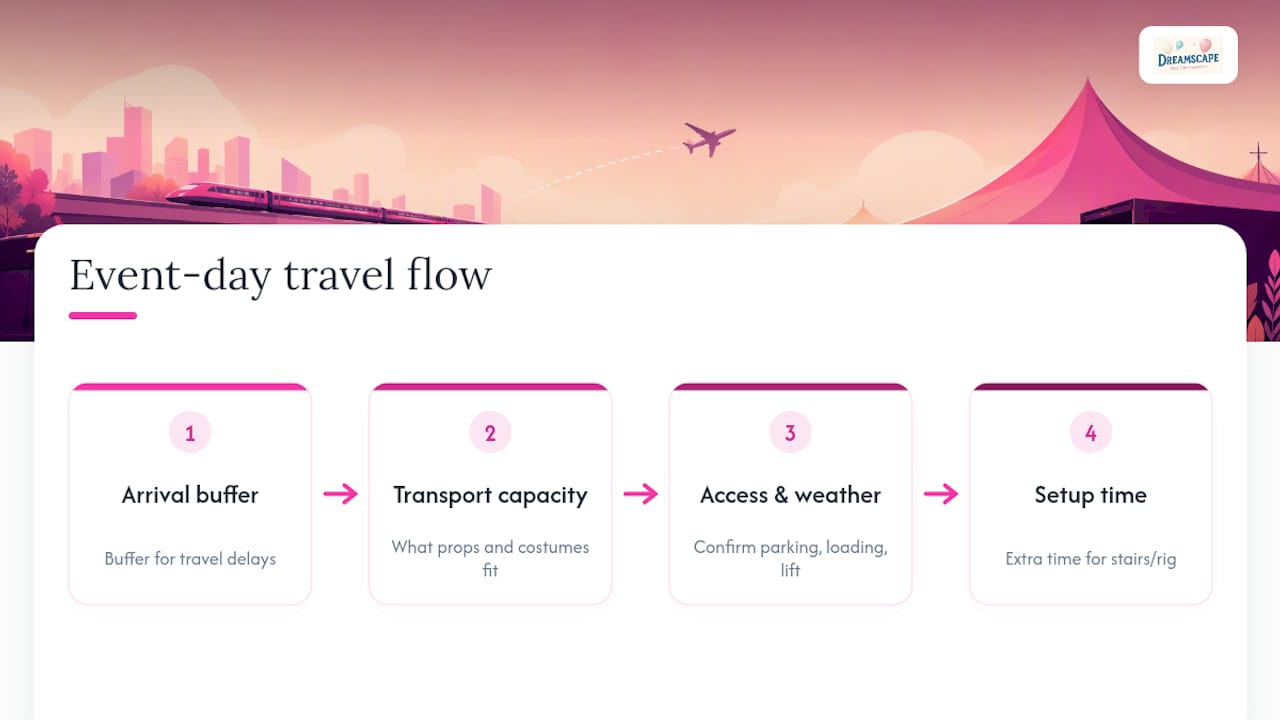
Finally, ask how they handle back-to-back bookings on the same day. A tight turnaround between two parties leaves little room for delays, so if your event has a strict start time, it’s worth confirming whether you’re their first booking of the day or their third.
Handling technical needs and equipment compatibility
Sound and power are where most technical hiccups start, and they’re almost always avoidable with one conversation before the event.
Entertainers generally bring their own portable speaker and playlist setup, but compatibility issues crop up when a venue has its own PA system the entertainer is expected to use instead. If a school or function centre insists on running audio through its own equipment, confirm in advance whether the entertainer can connect via Bluetooth, an auxiliary cable, or a specific adaptor, because a mismatched cable on the day wastes valuable setup minutes.
Power is the other common snag. Most performers run on standard mains power, but older venues or outdoor settings sometimes only offer a power point some distance from the performance area. This is exactly the kind of detail practitioners flag as the most common cause of day-of delays: confirm the safe cable route in advance, not when the entertainer is already unpacking.
Lighting matters for indoor disco-style segments too. A dim school hall might need the entertainer’s own portable lighting, while a bright function room may not need any at all. Ask what the entertainer typically brings and whether the venue’s existing lighting setup will work with it, or whether dimming or blackout curtains are needed.
For larger events, like corporate family days with multiple activity zones, check whether one entertainer’s equipment will overlap or interfere with another’s, particularly if two acts are running simultaneously in nearby spaces.
What if something goes wrong on the day?
Even well-prepared entertainers occasionally hit a technical snag, and how they respond separates a professional operator from a risky one.
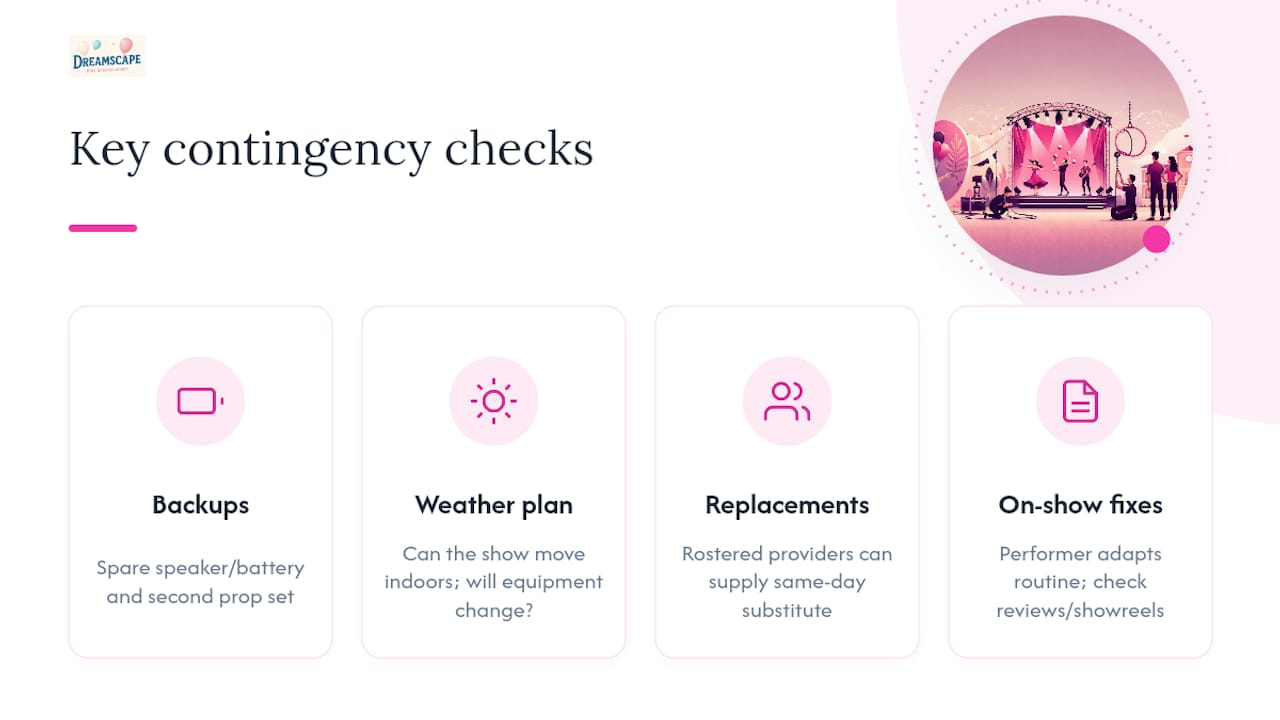
A solid backup plan starts with redundancy. Most experienced performers carry a spare Bluetooth speaker or battery pack in case the primary sound system fails, and a second set of core props in case something breaks mid-show. Ask directly whether they carry backups, since a hesitant answer is worth noting alongside the safety document checks covered earlier.
Weather contingencies matter just as much for outdoor bookings. If rain is forecast, confirm whether the entertainer can shift the show indoors with minimal disruption, and whether that changes their equipment needs (a magic act moves indoors easily; a large-scale bubble show generally doesn’t).
Illness or last-minute unavailability is the other scenario worth asking about. Established entertainment providers with a roster of performers can usually offer a same-day replacement in character and skill level; a sole operator working solo cannot. This is worth clarifying at the point of booking rather than assuming it’s covered.
Finally, ask what happens if a piece of equipment simply fails mid-party, a speaker dies, a prop breaks. A professional entertainer adapts the routine on the spot rather than stopping the show, drawing on other material in their kit. That flexibility is hard to guarantee from a written contract, but reviews and video showreels from actual performances tend to reveal how a performer handles the unexpected far better than a polished sales pitch does.
Why the fine print matters more than the costume
Most parents assume the risk in booking a kids’ entertainer is picking the wrong character or the wrong vibe. It rarely is. The real risk sits in the unglamorous stuff: whether power was confirmed, whether the WWCC was ever actually sighted, whether the quote had a hidden overtime clause. Entertainers with genuine experience treat documentation and logistics as part of the performance, not paperwork bolted on afterwards.
Dreamscape has spent over 25 years building party packages across Melbourne, backed by more than 1,900 five-star reviews and a roster that spans princesses, superheroes and K-Pop characters. Every entertainer on the books holds a Working With Children Check, and packages are laid out with clear inclusions and a run-sheet rather than a vague verbal promise. That combination of documented safety and plain-English written terms is what actually reduces the pressure on parents trying to pull a party together alongside everything else on their plate.
The lesson for any organiser, corporate or otherwise, isn’t to chase the flashiest act. It’s to chase the operator who answers the boring questions without flinching.
- Lauren
Ready to book? What Dreamscape packages include
Some entertainment providers offer an alternative to piecing a party together yourself. Instead of chasing separate quotes for a costumed performer, a balloon artist and a face painter, you can get a single team, one written quote, and safety documentation sorted upfront.
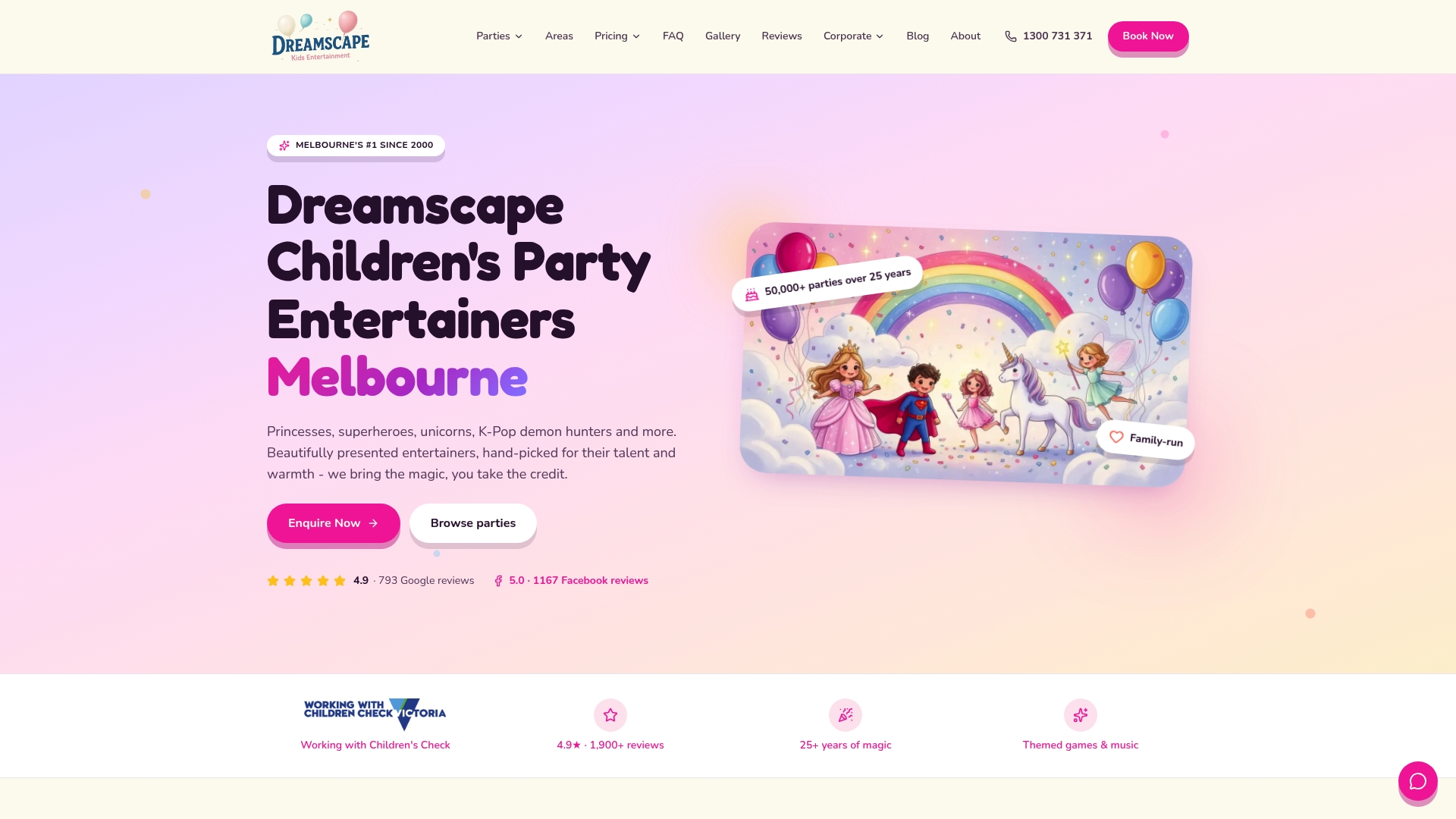
Every kids’ party entertainment package spells out exactly what’s included, from the character and costume through to setup and pack-down, so there’s nothing to guess at when comparing options. Browse the full character and theme roster to match the act to your child’s age and interests, or check the pricing and package breakdown to see inclusions side by side before you commit. Running a school event or a corporate family day instead? Those packages scale for bigger groups and multiple activity zones. If face painting or balloon twisting is the main drawcard, the face painting and balloon twisting service page details exactly what’s supplied on the day. When you’re ready, request a quote and lock in your date, especially if you’re booking around peak birthday season.
Sources
- Check explained - Victorian Government
- Questions to ask a children’s entertainer - Party Suppliers Direct
FAQ
What do entertainers bring to a kids’ party?
Entertainers typically bring the performer in costume, props, portable sound equipment, and activity supplies like balloons, face paints and craft materials, along with basic setup and pack-down.
What should the host provide for the entertainer?
Hosts usually need to supply a cleared performance area of about 2 metres by 2 metres, access to mains power, seating for younger children, and clear parking or loading access.
Do children’s entertainers need a Working With Children Check?
Yes. In Victoria, paid child-related work generally requires an Employee Working With Children Check, and reputable entertainers show this without hesitation when asked.
How long does an entertainer need to set up?
Most acts need a 15 to 30 minute setup window before the performance starts, plus time to pack down afterwards, depending on the complexity of the show.
What should I ask before booking an entertainer?
Ask whether the quote includes travel, setup and pack-down time, what happens with overtime, and request proof of a Working With Children Check and public liability insurance, which providers like Dreamscape supply as standard.
Recommended
Planning a Melbourne party?
We will get right back to you.