

A contract-first checklist organisers, parents and schools can use to lock in load in times, a reserved drop off, who pays parking, and power and...
Parents & Schools: Lock Entertainer Parking and Access in the Contract
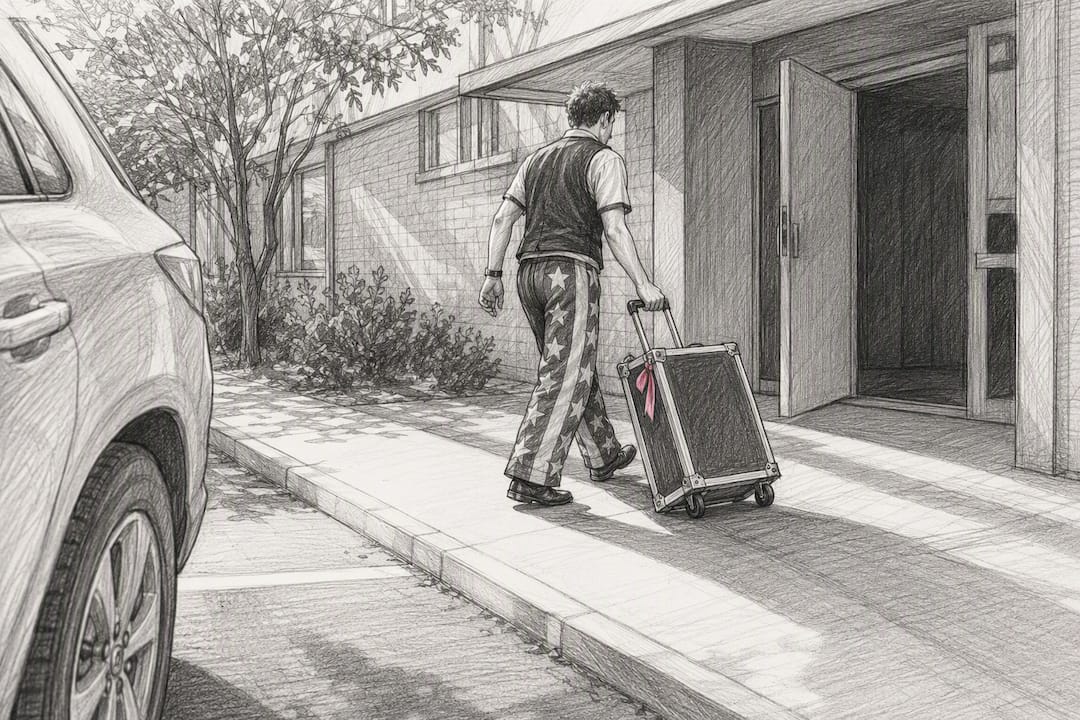
Every party entertainer booking hinges on one thing: a reserved unload spot near the performance area and a written record of who’s paying for parking. Agree on the exact load-in window before the day, put it in the contract or technical rider, and the entertainer arrives on time, sets up without a scramble, and the party starts when it’s supposed to.
TL;DR:
- Confirm a reserved unloading spot and who is responsible for parking costs in the booking contract or rider to prevent delays and misunderstandings on the event day.
- Clearly specify load-in and load-out windows, vehicle size limits, and exact drop-off points to ensure smooth setup and avoid last-minute scrambling.
- Include technical and backstage requirements such as power access, secure storage, and quiet, private changing areas to support performer readiness.
- Check street parking regulations and arrange permits or reimbursements in advance to avoid fines or access issues during busy or restricted times.
- Identify a single contact person at the venue before the event to coordinate parking, access, and security, reducing the risk of miscommunication or delays.
Table of Contents
- What is entertainer parking and access, and why does it need a written agreement?
- What goes in the entertainer rider or contract logistics appendix
- Planning the route from vehicle to performance area
- Backstage, power and equipment: minimum provisions entertainers need
- Permissions, insurance and safety: the practical checklist
- Dreamscape’s practical approach to parking and access
- Signage and directional support for entertainers’ vehicles
- Accessibility considerations for differently-abled entertainers
- Security measures for parked vehicles and equipment
- Coordination with venue staff or parking authorities
- Impact of local parking regulations and restrictions on event days
- The one thing most access checklists get wrong
- Book an entertainer who already has logistics sorted
- Sources
- FAQ
What is entertainer parking and access, and why does it need a written agreement?
Entertainer parking and access covers everything between an entertainer’s car pulling up and their first prop coming out of the boot: where they park, which door they use, how far they carry costumes and sound gear, and who covers the cost if the only option is a paid car park. It sounds minor until it isn’t. A magician stuck circling a school for a parking spot loses ten minutes of setup time. A princess performer carrying a costume rack up three flights of stairs because nobody mentioned there was no lift arrives flustered, not magical.
Industry guidance backs this up directly. Onstage Entertainment’s planner resources note that logistical requirements like arrival instructions, loading bays, parking and access should be clearly defined in the entertainer’s contract or technical rider to avoid ambiguity and last-minute costs. That’s the standard industry term worth knowing: a technical rider (sometimes called a performance rider) is the logistics appendix attached to a booking contract, and it’s where all of this detail belongs, not in a text message the morning of the event.
Organiser checklist: what to confirm and share before the event
Before you confirm a booking, run through this list with the entertainer or agency. It takes five minutes and saves an hour of confusion on the day.
- Arrival time and route: give the exact load-in time, the entrance to use, and a mobile number for the person who’ll meet them.
- Parking arrangement: confirm a reserved unload spot, or agree upfront who pays if paid parking is the only option.
- A simple site map: mark doors, ramps, lifts, and the performance area so nobody guesses on arrival.
- Power access: note the nearest outlets and whether you’re supplying extension leads or the entertainer needs to bring their own.
- Venue quirks: flag anything unusual, no public toilets for changing, a flight of stairs, a strict noise curfew after a certain hour.
Onstage’s own checklist guidance for organisers confirms this is standard practice, not an extra step: technical requirements, arrival times, backstage amenities, and contingency plans should be agreed in writing before the booking is locked in.
Pro Tip: Send the site map and parking instructions as a single PDF, not a string of separate texts. Entertainers juggling three bookings a week can’t hunt through old messages for your car park code.
What goes in the entertainer rider or contract logistics appendix
A rider isn’t legal padding. It’s the reference document both sides pull up when something goes sideways, a locked gate, a missing power outlet, a parking inspector circling the block. Onstage Entertainment’s guide on entertainment riders treats this logistics detail as core to preventing last-minute disputes, and treating it as a formal contract term also lets performers arrive focused rather than troubleshooting on the footpath.
Here’s what the appendix should specify, in order:
- Load-in and load-out windows, plus vehicle size limits and the exact drop-off point (kerb, loading dock, driveway).
- Who pays for parking, how vouchers or receipts are handled, and when reimbursement happens (before, on the day, or invoiced after).
- Technical needs: power ratings, available stage or performance area size, ceiling height for any overhead props.
- Backstage requirements: a private space, secure storage for costumes and equipment.
- Cancellation, late arrival and overtime rules, including what happens if a logistics failure on the organiser’s end (locked gate, no parking) delays the show.
SprintLaw’s guidance on event contracts reinforces the same principle from a legal angle: contracts should state who provides what, access times, and responsibility for damage or delays in plain, specific language. Vague clauses cause more disputes than strict ones. Organisers should also settle whether parking, tolls, or interstate travel costs sit inside the entertainer’s fee or get billed separately, a detail Onstage flags as worth agreeing in advance precisely because it’s so often assumed rather than confirmed.
Planning the route from vehicle to performance area
Getting a performer from their car to the stage sounds simple until you’re carrying a fog machine through a doorway that’s ten centimetres too narrow. Measure the physical constraints before booking day, not on it.
Check door widths, lift dimensions, and stair clearances ahead of time, especially for acts hauling PA systems, balloon rigs, or costume racks. A door that fits a person doesn’t automatically fit a speaker stand. Mark one direct load-in route on the site map and share it with every supplier working the event, not just the headline entertainer, so nobody improvises a different path and blocks the corridor.
For heavier gear, agree the handling plan in advance:
- Use wheeled dollies or trolleys wherever the floor surface allows it.
- Lay protective floor runners on polished timber or carpeted venues to avoid damage claims.
- Settle on a two-person carry plan for anything over a manageable single-person weight, sound equipment and large character costumes included.
- Build in extra time when access is genuinely limited, a heritage building with narrow stairs, a school hall down a long external path, an office tower with a single service lift.
None of this needs to be complicated. It needs to be decided once, written down, and shared with everyone driving to the venue that day, rather than worked out in real time while a queue of small guests waits at the door.
Backstage, power and equipment: minimum provisions entertainers need
Public toilets are not a changing room. That’s the single most common access failure organisers overlook, and it matters for dignity as much as practicality when an entertainer needs to change into a full costume between sets.
At minimum, venues should provide:
- A private changing area reasonably close to the performance zone, not two buildings away.
- Secure storage for costumes, props and personal items, plus basic hospitality: water, and somewhere to sit between sets.
- Confirmation of how many power outlets are available and whether they’re RCD-protected, particularly for anything involving sound equipment near children.
- Ground-floor access wherever possible for mascots and large-costume acts, since stairs and tight turns are genuinely difficult, sometimes impossible, in a full-body suit.
Onstage Entertainment’s guidance on managing entertainers on and off stage notes that basic backstage comfort, storage and refreshments directly affect how ready a performer is once they step out in front of a crowd.
Permissions, insurance and safety: the practical checklist
Confirm public liability insurance before booking day and settle which party is providing it, most professional entertainers carry their own, but assume nothing. Ask for proof of a Working With Children Check for anyone performing at a children’s event, and agree a simple, low-friction way to check it (a photo of the card on arrival is usually enough).
Check whether the venue has its own noise limits, crowd flow rules, or emergency access plans that might affect performance timing. Alive Events Agency’s planning guidance notes that larger live events often require council permits, noise curfews and crowd safety plans, and while a birthday party isn’t a concert, the same local council rules around noise and street access can still apply, particularly for outdoor or apartment-complex bookings.
- Confirm insurance coverage and who holds it.
- Sight WWCC proof before the entertainer starts work.
- Ask the venue directly about noise limits or curfews.
- Agree one emergency contact for the day, not three different numbers.
Statistic callout: There’s no single national figure for how often parking or access confusion delays children’s entertainment bookings, but the pattern across industry guidance is consistent: nearly every documented access dispute traces back to a detail that was assumed rather than written down.
Dreamscape’s practical approach to parking and access
An experienced children’s party entertainment provider asks for the same details every time: confirmed arrival time, the exact load-in point, whether parking is reserved or reimbursed, and where the nearest power access sits. It’s a short list, but it’s the list that actually prevents delays.
Professional entertainers typically hold a current Working With Children Check, and the team builds practical costume handling into the day, changing areas sorted ahead of time, props packed for quick carry, not slow unloading. On the ground, common fixes are unglamorous but effective: a reserved kerbside spot arranged with a school office, or fifteen extra minutes built into the schedule when a venue’s access is tight. None of it is complicated. It just has to be asked about before the day, not discovered on it.
Signage and directional support for entertainers’ vehicles
A single laminated sign taped to a school gate saves more confusion than any amount of texted directions. If your venue has multiple entrances, staff car parks, or a driveway that isn’t obvious from the street, put up temporary signage pointing entertainers to the correct drop-off point.
For school and corporate venues especially, consider:
- A printed sign at the main entrance reading something as simple as “Entertainer drop-off, use side gate.”
- Cones or a taped-off space if you’re reserving a specific parking bay for the day.
- A staff member or volunteer briefed to watch for the entertainer’s arrival and wave them in, particularly useful when street parking is tight or the venue sits on a busy road.
Directional support matters more than most organisers expect because entertainers are often navigating an unfamiliar site solo, sometimes carrying gear, sometimes running slightly behind schedule between two bookings in one afternoon. A GPS pin gets them to the street. It doesn’t tell them which of four driveways is yours, or that the visitor car park is actually reserved for deliveries only. Spend five minutes on signage and you remove the single biggest cause of late arrivals that has nothing to do with traffic.
Accessibility considerations for differently-abled entertainers
Access planning has to work both ways. Just as venues need to accommodate entertainers carrying heavy costume cases or oversized props, they also need to consider entertainers with mobility needs, visual impairment, or other access requirements.
If an entertainer has flagged a mobility need, ground-floor performance space and step-free access from the parking area become non-negotiable, not a nice-to-have. Check this at booking stage, not the week before, so alternative arrangements, a different room, a portable ramp, a closer parking bay, can be organised properly.
Practical steps that make a real difference:
- Ask directly at booking whether the entertainer has any access requirements, rather than assuming none exist.
- Confirm step-free routes from the parking area to the performance space wherever ramps or lifts are available.
- Keep the load-in distance as short as possible; even a fully able-bodied performer benefits from not hauling gear across an entire building.
- Note any accessible parking bays near the venue entrance and reserve one specifically for the entertainer if needed.
This isn’t a compliance box to tick. It’s the same principle running through every other section here: ask early, write it down, and don’t make the entertainer solve an access problem on the doorstep that a five-minute conversation beforehand would have fixed.
Security measures for parked vehicles and equipment
Entertainers often leave thousands of dollars in sound gear, costumes and props in a parked vehicle while they’re inside performing. A reserved parking spot solves the access problem, but it doesn’t automatically solve the security one.
If the entertainer’s vehicle will sit unattended for the length of the booking, especially at larger school or corporate events with public foot traffic, a few basic measures help:
- Park in a visible, well-lit spot rather than a secluded corner of the car park.
- If the venue has security staff or reception coverage, let them know a vehicle will be parked on-site and ask them to keep half an eye on it.
- Bring high-value equipment, sound gear, tablets used for music or effects, inside rather than leaving it in the car during the performance.
- For larger corporate bookings with valuable production gear, confirm whether the venue’s own security or CCTV coverage extends to the car park.
None of this is about distrust. It’s about the fact that a performer focused on a room full of children can’t also be watching a car park through a window. Organisers who flag security arrangements upfront, particularly for venues in busier commercial precincts, remove one more thing the entertainer has to worry about on arrival.
Coordination with venue staff or parking authorities
The entertainer’s contact on the day should never be “whoever’s around.” Name one person, front-of-house manager, school administrator, event coordinator, and give the entertainer their mobile number before arrival. That person needs to know the entertainer is coming, when, and where they’re parking.
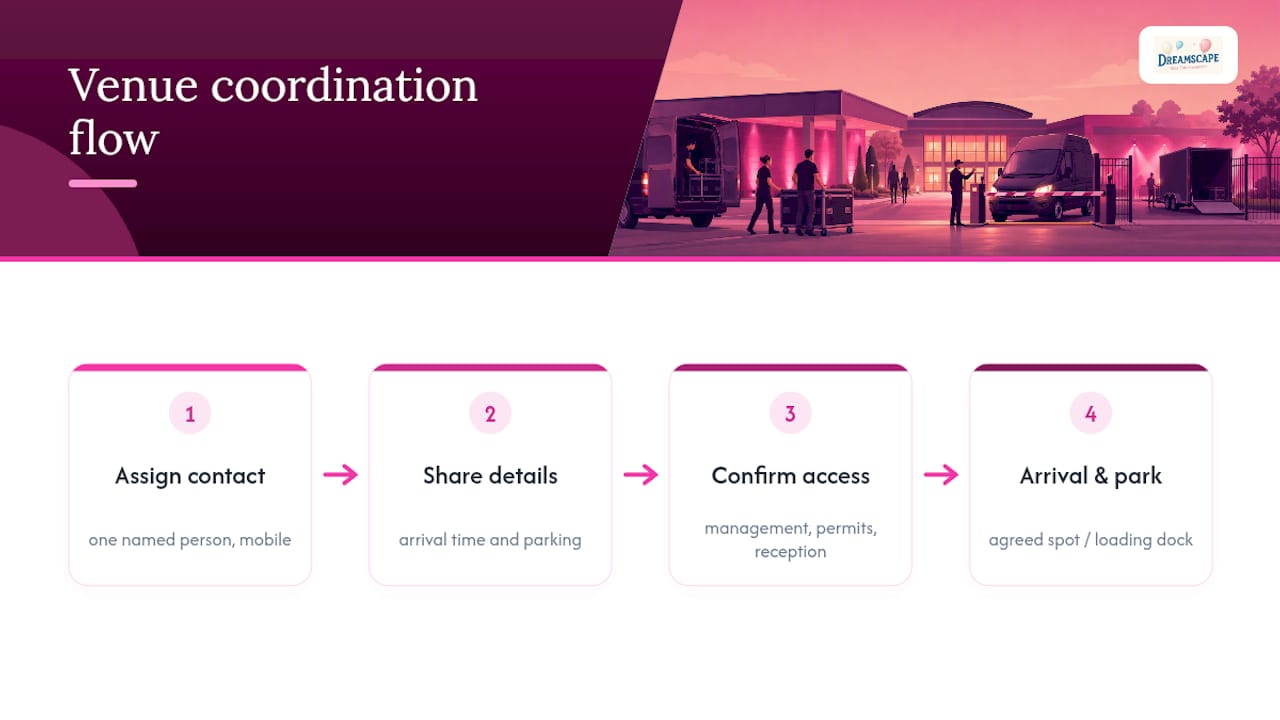
For venues that share a car park with other tenants or sit on council-managed streets, a quick check with building management or local parking authorities avoids an awkward surprise. Some strata-managed buildings require visitor vehicles to be registered at reception. Some councils issue short-term parking permits for tradespeople and event suppliers on request, and an entertainer’s van often qualifies under the same category.
This coordination matters more for corporate events than home parties, simply because more people are involved and more can go wrong between the booking confirmation and the entertainer’s actual arrival. A building’s loading dock might be locked outside business hours. A shared car park might fill up during a separate event in the same complex. None of these problems are hard to solve, but they all need someone on the venue side who actually knows the entertainer is coming and has agreed where they’ll park. Without that single point of contact, the entertainer is left negotiating with security or reception staff who’ve never heard of the booking.
Impact of local parking regulations and restrictions on event days
Street parking rules don’t pause for a birthday party. Time-limited zones, resident-permit-only streets, and clearway restrictions during school pick-up and drop-off times can all affect whether an entertainer can legally park anywhere near your venue.
This matters most in three situations: inner-city venues with metered or permit parking, school events during the exact window when parent pick-up traffic is heaviest, and apartment or unit complex parties where visitor parking is limited and strictly enforced. If any of these apply, check the actual signage on the street near your venue before the booking, not after the entertainer gets a ticket.
A few practical fixes cover most scenarios:
- If the venue has visitor parking permits, request one in advance and have it ready at reception for the entertainer to collect.
- For metered zones, agree in the contract whether the organiser reimburses metered parking costs, this is exactly the kind of detail Onstage recommends locking in before the day.
- For school events during pick-up windows, consider a slightly earlier or later arrival time that avoids the worst of the traffic restriction entirely.
- Where street parking genuinely isn’t viable, look at whether a nearby paid car park with a short walk is a better fallback than risking a fine.
Local parking regulations vary by council and by street, so a general guide can’t tell you exactly what applies outside your venue. What it can tell you is that this is worth checking rather than assuming, particularly for any event in a dense urban precinct.
The one thing most access checklists get wrong
Most advice on this topic treats parking and access as a courtesy, something nice to sort out if there’s time. That’s backwards. It’s the first structural risk in the entire booking, before the entertainer has even opened their kit bag, and it’s also the easiest one to eliminate completely.
The conventional wisdom says “confirm details closer to the date.” In practice, that’s exactly when details get missed, because everyone assumes someone else has handled it. The organisers who never have access problems are the ones who put parking and load-in details in writing at the point of booking, not the week before.
If there’s one priority to take from all of this, it’s not the site map, the power outlets, or even the WWCC check, though all of those matter. It’s the single line in the contract that says who’s parking where, at what time, and who’s paying for it. Everything else in this checklist is downstream of getting that one commitment locked in early.
- Lauren
Book an entertainer who already has logistics sorted
You’ve just read what it takes to get parking and access right: a reserved spot, a written rider, a clear load-in window. Dreamscape builds that into every booking as standard, not as an add-on you have to request. Before the day, the team confirms arrival time, load-in point, and parking provision, drafts the logistics into the booking agreement, and gives you a direct day-of contact so nobody’s guessing at the gate.
For birthday parties, check pricing and package options to see what’s included before you book. School organisers can see logistics support built specifically for term-time bookings on the schools page, and corporate planners running family days can review options on the corporate events page. If you’re booking your first children’s party entertainer, start with the kiddie party entertainment page and get a quote with parking and access details confirmed upfront, not sorted out on arrival.
Sources
- What Do Entertainment Riders Really Include? A Planner’s Guide - Onstage Entertainment
- Event contract essentials - what to include when hiring vendors or hosting events - SprintLaw
FAQ
Who pays for entertainer parking costs?
This should be agreed in writing before the booking, either the organiser reimburses metered or paid parking, or the fee is inclusive; Dreamscape confirms this detail during booking so there’s no surprise cost on the day.
What should go in an entertainer’s technical rider?
A rider should cover load-in and load-out windows, vehicle drop-off point, parking cost responsibility, power and stage requirements, backstage needs, and rules for delays or overtime.
Do children’s entertainers need a Working With Children Check?
Yes, any entertainer performing at a children’s event should hold a current Working With Children Check, and organisers should sight proof before the booking is confirmed.
How much load-in time should I allow an entertainer?
Allow extra time whenever access is limited, narrow doorways, stairs, a single lift, or a long walk from parking, and confirm the exact load-in window with the entertainer in advance rather than assuming it will be quick.
What if the venue has no dedicated parking?
Agree an alternative in the contract: a nearby paid car park with reimbursement, a temporary loading zone permit, or a specific kerbside drop-off point arranged with venue staff ahead of time.
Recommended
Planning a Melbourne party?
We will get right back to you.