

Planning a mixed age birthday party? Discover tips to keep every child entertained with fun themes, activity zones, and engaging games!
How to plan a mixed age birthday party that keeps every kid entertained
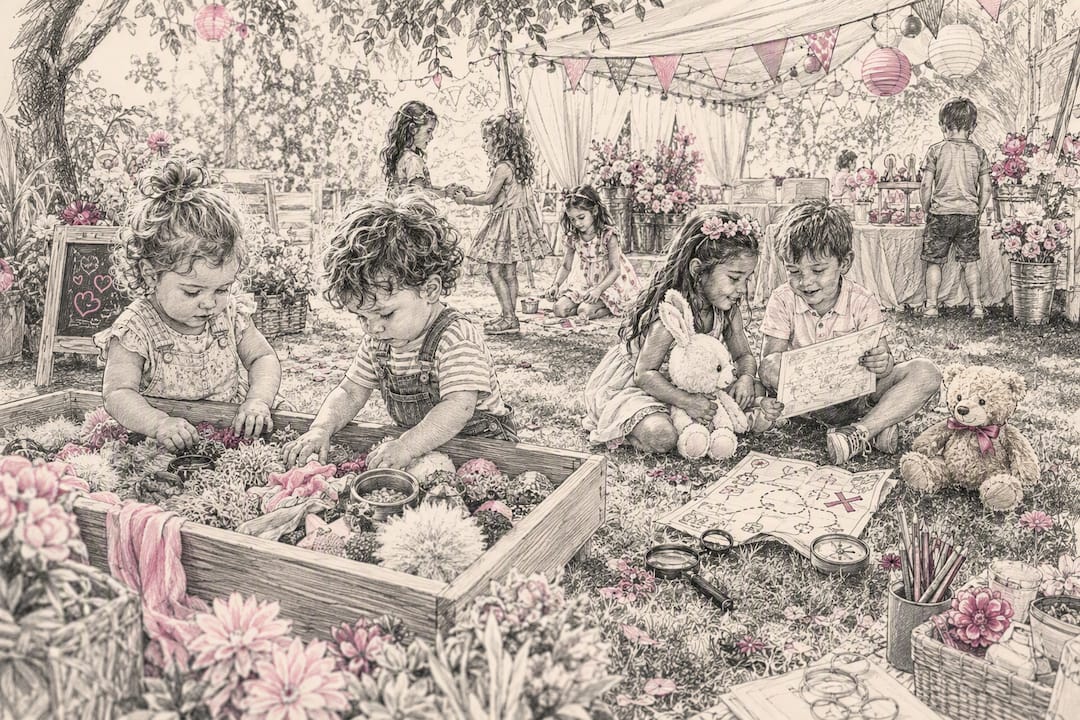
The simplest way to run a mixed age birthday party is to pick a flexible theme, split your space into activity zones, run open-ended games with no elimination, and keep the whole thing to 90 to 120 minutes. That structure lets a toddler and a ten-year-old enjoy the same afternoon without either one getting bored or overwhelmed. If you’d rather someone else manage the moving parts, a professional entertainer like Dreamscape can run the anchor activity and hold the whole group together while you actually enjoy the party.
Three things to sort out this week:
- Choose a theme built around colour, story, or activity rather than one character.
- Mark out three zones: something sensory for littlies, something active for the bigger kids, and a quiet corner for anyone who needs a break.
- Line up one or two helpers, or book an entertainer who’s used to managing a wide age spread.
Key Takeaways
Mixed age birthday parties succeed when hosts replace one-size-fits-all activities with parallel zones, non-elimination games, and a strict 90 to 120 minute runtime.
| Point | Details |
|---|---|
| Pick a flexible theme | Choose colour, story, or activity-based themes over single-character ones so older kids stay engaged. |
| Zone the space | Set up toddler, craft, active, and chill-out zones with one helper per zone as a baseline. |
| Ban elimination games | Swap musical chairs and similar games for add-in variants so no child is knocked out early. |
| Feed to the youngest guest | Quarter grapes, label allergens, and skip whole nuts to cut choking risk across the age range. |
| Keep it short | Run the whole event in 90 to 120 minutes with one anchor activity everyone shares. |
| Consider professional help | Dreamscape’s entertainers hold Working With Children Checks and manage zone transitions and anchor acts across wide age gaps. |
Table of Contents
- Choosing a theme for a mixed age kids party
- How do you zone a space for a mixed age kids party?
- Games and activities that work for every age at once
- Food, allergies and choking safety for a mixed age party
- A sample timeline for a 90 to 120 minute party
- Should you hire a professional entertainer for a mixed age party?
- Invitations, helpers and a logistics checklist
- Talking to toddlers and preteens in the same breath
- Should caregivers and siblings join in the activities?
- Setting rules everyone can actually follow
- What most party advice gets backwards
- Book an entertainer who’s already solved this problem
- Sources
- FAQ
Choosing a theme for a mixed age kids party
A single character theme works fine when every guest is five. Once you’re inviting cousins aged two through eleven, a Bluey party or a superhero party starts to split the room, because the ten-year-olds check out fast. Colour-based, story-based, or activity-first themes solve this because every age group can engage with them differently. A “colour explosion” party lets toddlers finger-paint while older kids run a colour scavenger hunt. A pirate theme lets little ones dig for treasure in a sandpit while preteens do a map-and-compass challenge.
Themes tied to a current TV character tend to date quickly and can leave older attendees feeling like the party wasn’t built for them, so a flexible frame beats a single-character costume every time.
Reliable options that scale across ages:
- Under the sea (water play for little ones, snorkel relay for bigger kids)
- Carnival or fete (ring toss simplified for toddlers, harder targets for teens)
- Detective or mystery
- Nature explorers
- Around the world
- Superheroes (generic, not brand-specific)
- Circus and acrobatics
- Space explorers
- Rainbow or colour party
- Pirates and treasure
Keep printed decorations to a minimum. One consistent colour palette across balloons, tableware, and a single banner does more for photos than a dozen character cutouts, and it costs less too. If you want more detail on matching a theme to your guest list’s actual age spread, choosing the right party theme walks through it properly.
How do you zone a space for a mixed age kids party?
Trying to run one activity for every age in one shared space is where most mixed age parties go wrong. Early-childhood practitioners recommend parallel-play zones instead, letting different age groups play side by side rather than forcing them into the same activity at the same time.
A workable layout for a backyard or hall:
- Toddler and sensory zone - soft mats, water play, a sandpit or sensory tub, positioned away from anything fast-moving.
- Craft and quiet zone - a table for colouring, building blocks, or process art that any age can join.
- Active and challenge zone - obstacle courses, ball games, or an inflatable, with harder variations for older kids.
- Chill-out and photo zone - cushions, a drink station, and somewhere overstimulated kids or adults can retreat.
Use simple signage so parents know which zone suits which age, and put soft matting or a physical barrier like a low fence between the toddler zone and anything with speed or height involved. Aim for one adult helper per zone as a baseline, more if the zone involves water or an inflatable.
Pro Tip: If you’re hiring an inflatable, run a separate toddler-only session for the first 15 minutes before opening it up to older kids. Mixing very different sizes and weights on the same bouncy castle at once is one of the most common injury risks at kids’ parties.
Games and activities that work for every age at once
The rule that makes mixed-age games work is simple: nobody gets knocked out. Elimination-based games leave the youngest or slowest kids sitting on the sidelines within minutes, which is exactly the outcome you’re trying to avoid. Swap musical chairs for musical hats or musical statues, where a chair (or hat) disappears but the “loser” just picks a new spot instead of leaving the game. Run pass-the-parcel with a small prize wrapped into every single layer, so every child who gets a turn unwraps something.
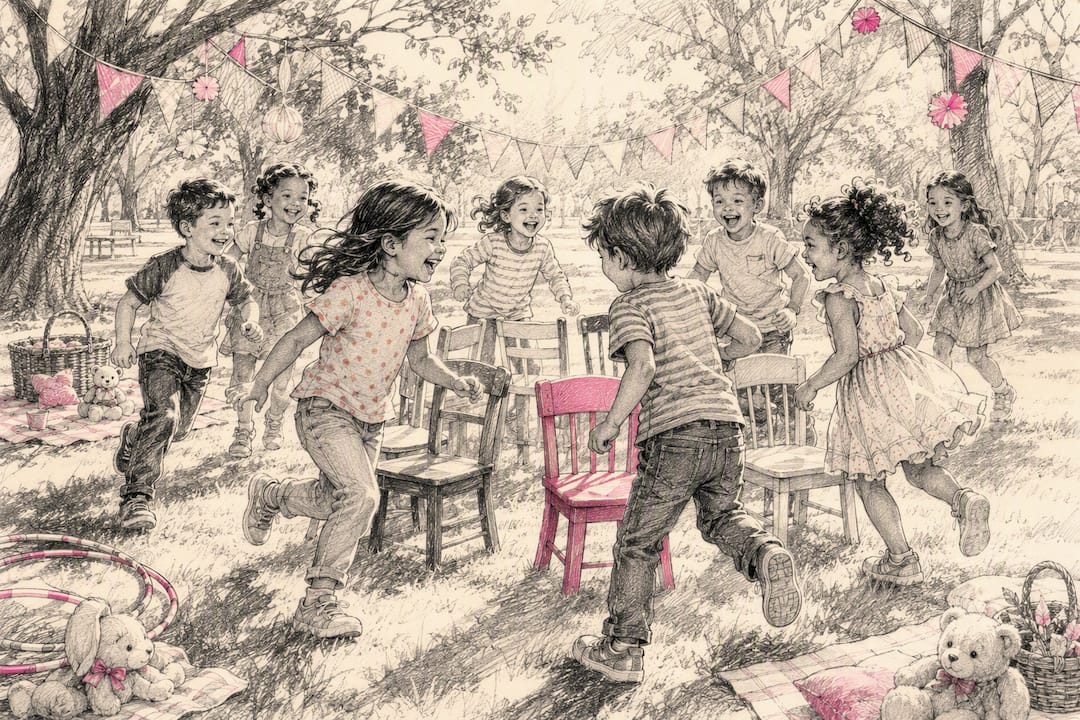
Open-ended activities with no single correct outcome are the real workhorses of a mixed age party, because a two-year-old and a ten-year-old can both do them at their own level without anyone feeling babied or out of their depth.
Build your activity list from these categories:
- Sensory and messy play: water tables, sand digging, slime stations
- Craft: decorate-your-own biscuit, friendship bracelets, painting rocks
- Cooperative games: giant Jenga, group scavenger hunts, team-based obstacle relays
- Active challenges: bean bag toss with distances marked for different ages, a simplified relay for littlies running alongside a timed version for older kids
- Anchor activity: face painting, balloon twisting, or a short entertainer show that everyone gathers for at once
Give each zone activity 15 to 20 minutes before rotating, and build in a harder variant for older kids at every station: a scavenger hunt clue written in code, a relay with an extra obstacle, a craft with a fine-motor detail younger hands can skip. The Dreamscape party games guide has a longer breakdown of variants by age if you want more options, and the activity finder tool matches specific games to your actual guest list.
Food, allergies and choking safety for a mixed age party
Plan the menu for the youngest guest at the table, not the oldest. That single habit prevents most of the choking risks at kids’ parties. Quarter any grapes, skip whole nuts and hard lollies where toddlers can reach them, and label anything containing common allergens clearly on the table rather than trusting every parent to ask.
Menu ideas that work across the whole age range:
- Mini sandwiches cut into quarters
- Fruit skewers with soft fruit only
- Small cupcakes instead of one large slice everyone has to cut
- Vegetable sticks with dip, served in small portions
- A clearly labelled nut-free zone if any guest has an allergy
Keep one adult stationed near the food table while kids are eating, ask about allergies on the invitation rather than on the day, and keep a basic first-aid kit within reach. It rarely gets used, but the two minutes it saves you when it does matters more than almost anything else on this list.
A sample timeline for a 90 to 120 minute party
A party that runs longer than two hours tends to lose the toddlers to naps and the older kids to boredom, so a 90 to 120 minute window is the sweet spot most experienced hosts land on.
- 0 to 15 minutes: Arrival and free play in the craft zone, low pressure while everyone settles.
- 15 to 45 minutes: Zone rotation, toddler sensory play and active challenges running in parallel.
- 45 to 65 minutes: Anchor activity, everyone together for the entertainer’s show, face painting, or a group game.
- 65 to 85 minutes: Food.
- 85 to 100 minutes: Cake and candles.
- 100 to 120 minutes: Wind down, goodie bags, goodbyes.
If your guest list skews younger, start earlier in the day, around 10am, before nap-time fatigue sets in, and trim the active zone in favour of more sensory play.
Should you hire a professional entertainer for a mixed age party?
Hiring help makes the most sense once you’re spanning a wide age gap, hosting more than about 15 kids, or you’d actually like to talk to the adults at your own child’s party instead of running games all afternoon. A trained entertainer’s real value in a mixed age setting isn’t the costume. It’s the ability to read a room of different ages and adjust an anchor act on the fly so a five-year-old and a ten-year-old both stay interested at the same time, while managing zone transitions so nobody’s left standing around waiting for the next thing to happen.
An entertainer who’s genuinely experienced with mixed age groups will ask about your guest list before the party, not just on arrival. They’ll want to know the age spread, whether there’s a toddler who might need a gentler moment, and whether you want elimination games swapped out entirely.
Before booking anyone, ask for a Working With Children Check. It’s a basic, non-negotiable safety standard, and any legitimate entertainer will have one ready to show you without hesitation. Dreamscape’s entertainers all hold current checks and have built a track record across 1,900 five-star reviews from Melbourne families managing exactly this kind of mixed-age brief.
If you do book someone, brief them properly: send the age range, flag any no-elimination requests, and tell them which zone needs the most attention. The benefits of professional party entertainment guide covers what a good entertainer handles beyond the costume.
Invitations, helpers and a logistics checklist
Get the age range and any allergy note onto the invitation itself, not left for a text message later. Mention where the rest space is, and give a clear arrival window so parents with toddlers aren’t standing around with an overtired kid before the party officially starts.
For staffing and supplies, aim for:
- One helper per zone, minimum, plus one floating adult for the food table
- A basic supplies list: name tags, spare nappies or wipes, extra cups, sunscreen if outdoors
- A spare kit: bandaids, tissues, a change of clothes for spills
- A five-minute tidy-up plan, so pack-down doesn’t fall entirely on the host
Tell parents upfront whether you expect them to stay and supervise their own child, and ask permission before posting party photos anywhere public. The stress-free birthday party tips guide has a longer version of this checklist if you’re hosting a bigger group.
Talking to toddlers and preteens in the same breath
A three-year-old and an eleven-year-old don’t process instructions the same way, and running one set of rules delivered one way guarantees half the room tunes out. Toddlers need short, concrete instructions paired with a demonstration. Tell a two-year-old to “put the ball in the bucket” while you point at the bucket, and they’ll get it. Tell them to “wait your turn for the next round” and you’ll lose them.

Older kids, on the other hand, disengage fast if you talk to them the way you’d talk to a four-year-old. A ten-year-old given a genuine responsibility, like helping run a station or timing a relay, tends to stay more engaged than one told to simply “have fun and wait.” Give preteens a job with a bit of autonomy attached and they usually rise to it.
The practical fix is to explain each activity twice, in two registers, rather than once in the middle. Say the simple version first for the little ones (“find the shape, put it here”), then immediately layer on the harder version for older kids (“and if you find all five, time yourself against your cousin”). This also solves a problem hosts don’t always anticipate: kids who are behind their peers developmentally, or who are naturally quieter, benefit from the same two-tier explanation without ever being singled out or slowed down publicly.
Watch faces, not just ages. A shy seven-year-old might need the toddler-style demonstration just as much as the two-year-old standing next to them, and a confident four-year-old might be ready for the harder instruction early. Age is a rough guide, not a rulebook.
Should caregivers and siblings join in the activities?
Parents hovering at the edge of every activity usually means kids play more cautiously and adults never get to actually talk to each other, which defeats half the point of throwing a party in the first place. The fix isn’t asking parents to leave. It’s giving them a specific, optional role instead of a vague expectation to “keep an eye on things.”
Ask one or two parents to help staff the craft table or the sensory zone, particularly if you’ve got a toddler-heavy guest list where an extra set of hands genuinely reduces risk. Everyone else can be told plainly, on the invitation or on arrival, that supervision is handled and they’re welcome to relax.
Siblings who weren’t formally invited but turn up anyway are common enough that it’s worth deciding your policy before the day, not during it. Most hosts find it easier to build a little flexibility into the numbers, since a five-year-old with a jealous three-year-old sibling standing outside the activity zone rarely makes for a smoother party. If you’re planning a celebration for two siblings with different friend groups and overlapping ages, a joint sibling birthday party approach is often less stressful than running two separate events back to back.
Setting rules everyone can actually follow
Rules that work for a mixed age party need to flex with age without ever feeling arbitrary to the kids following them. A blanket “no running” rule frustrates eight-year-olds in the active zone while doing nothing useful in the craft zone where nobody was running anyway. Set rules by zone instead of by the whole party: running and rough play are fine in the active zone, calm hands and voices in the craft and chill-out zones.
State rules positively rather than as a list of prohibitions. “We take turns and everyone gets a go” lands better with a four-year-old than “don’t push in,” and it sets the same standard for a ten-year-old without sounding like a scolding. Explain the reason behind a rule in one short sentence when you introduce it. Kids, even quite young ones, follow a rule more willingly when they understand why it exists rather than just being told to comply.
Apply rules consistently across every age in the room. If the youngest guest gets a pass on the no-elimination rule but an older kid is told to sit out for breaking it, that inconsistency gets noticed fast and undermines the whole structure you’ve built.
What most party advice gets backwards
Most party planning guides treat a wide age range as a problem to be minimised, either by narrowing the invite list or picking a theme that quietly targets the middle of the pack and hopes nobody notices. That’s the wrong instinct. The research on inclusive play points the other way: parallel zones and non-elimination games don’t just patch over an age gap, they tend to produce a better party than a single-age one, because no single group dictates the pace all afternoon.
The overrated piece of conventional wisdom is the character theme. Parents chase it because it photographs well, but it does the most damage in a mixed age room, alienating the older kids the moment they realise the party was really built for their little cousin. Prioritise the zoning and the rules before you even pick decorations. A backyard cake day gets zoning and non-elimination games right so often, almost by accident, that it’s worth studying what those simple layouts do well before adding anything fancier.
Where hosts consistently underestimate the value of outside help is timing. Bringing in an entertainer isn’t an admission you couldn’t manage it yourself. It’s a way to buy back the zone management and pacing that otherwise falls entirely on one exhausted parent.
Book an entertainer who’s already solved this problem
Dreamscape has spent over 25 years running exactly the kind of mixed age party this guide describes, adapting one anchor act across a toddler-to-preteen crowd so you’re not the one managing zones, timing, and game rules on the day. Every entertainer holds a current Working With Children Check, and the team has built a track record of over 1,900 five-star reviews from Melbourne families with the same wide guest lists you’re planning for.
Where a generic party host or a DIY setup asks you to run the zoning and transitions yourself, Dreamscape’s entertainers arrive briefed on your age spread and manage that structure for you, from the anchor activity through to keeping the youngest and oldest guests equally entertained. Check the pricing and package options for your guest count, or go straight to the kids party entertainment page to check availability for your date. If you’re planning a school event instead, the school and nursery entertainers page covers that separately.
Sources
- Inclusive games for small areas | Department for Education (SA)
- 20 activities for multi age groups | Picklebums
- Working with mixed age groups in an early childhood setting | Aussie Child Care Network
- Hosting a multi-age children’s party | FunPlay World
FAQ
What are some fun activities for a mixed age group?
Sensory play, craft stations, and cooperative team games work best because they’re open-ended and let each child join in at their own level, from toddlers through preteens.
What should you do for a 2 year old’s birthday party?
Keep it short, under 90 minutes, with sensory play like water tables or sand, soft snacks cut small, and a quiet space to retreat to if they get overstimulated.
What games work well across different age groups?
Non-elimination games like musical statues, pass-the-parcel with a prize in every layer, and scavenger hunts with tiered clues let every age keep playing without anyone sitting out early.
What are good multi-age group games for a birthday party?
Cooperative relays, giant Jenga, and craft stations with a simple and a harder version of the same task all scale well, and a professional entertainer like Dreamscape can adapt a single anchor game across the whole guest list.
Should siblings who weren’t invited be allowed to join the party?
Most hosts find it easier to allow a small amount of flexibility for uninvited siblings on the day rather than turning them away, particularly for younger children who struggle to be left out.
Recommended
Planning a Melbourne party?
We will get right back to you.