

Discover the magic of "KPop Demon Hunters," Netflix's most-watched film! Dive into the 2025 animated fantasy blending K-pop and adventure.
KPop Demon Hunters: the complete 2025 film guide
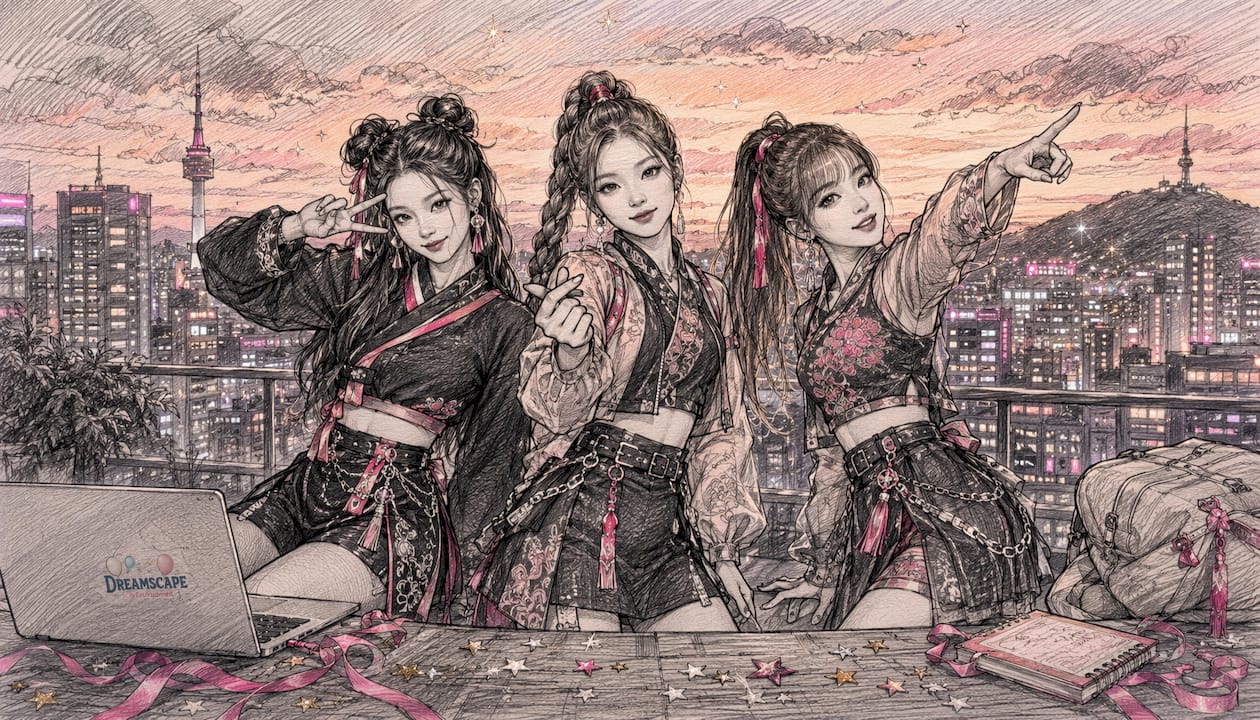
KPop Demon Hunters is a 2025 animated musical fantasy film about a K-pop girl group who secretly hunt demons between sold-out performances. Produced by Sony Pictures Animation for Netflix and co-directed by Maggie Kang and Chris Appelhans, the film has become Netflix’s most-watched film of all time, surpassing 236 million views globally. It blends Korean mythology, contemporary K-pop culture, and a genuinely funny coming-of-age story into a package that works for kids and adults alike.
Here is what you need to know at a glance:
- The heroes: Huntrix, a three-member K-pop girl group whose members are also trained demon hunters
- The villains: Saja Boys, a rival boy band whose members are secretly demons
- The lead single: “Golden,” which topped the Billboard Global 200 and the UK Singles Chart
- The voice cast: Arden Cho, May Hong, Ji-young Yoo, Ahn Hyo-seop, Lee Byung-hun, Ken Jeong, and Daniel Dae Kim
- Australian rating: PG, recommended for ages 10 and up
- Runtime: 95 minutes
- Streaming: Netflix, with a limited theatrical sing-along run that sold out in Australia
What is the plot of KPop Demon Hunters?
Huntrix, the world’s hottest girl group, carry a secret their fans will never see on a fan-cam. Rumi, Mira, and Zoey have been trained since childhood to hunt demons and maintain the Honmoon, a magical barrier built from song that keeps the demon world sealed away from humanity. The deeper mythology draws on Korean shamanism: historically, song and dance formed the core of rituals performed by Korean shaman women, and the film weaves that tradition directly into its lore.
Rumi carries the heaviest burden. She is half-demon, a fact known only to her guardian Celine, a former hunter who raised her. Demonic patterns are slowly spreading across her skin, and Rumi believes that performing “Golden” live will strengthen the Honmoon into its final, permanent form, erasing the patterns and her secret along with them. Then she starts losing her voice.
The threat arrives in the form of the Saja Boys, five demons led by Jinu, a human-turned-demon, who form a boy band specifically to steal Huntrix’s fanbase and weaken the Honmoon. The plan is Gwi-Ma’s, the demon king, who promises Jinu that success will erase his painful human memories. What neither of them anticipates is that Jinu and Rumi will form a genuine connection. Jinu discovers Rumi’s patterns and covers for her; Rumi learns that Jinu’s guilt over abandoning his family is the very shame that keeps him enslaved to Gwi-Ma.
The story builds to the Idol Awards, where Gwi-Ma’s forces expose Rumi’s demonic heritage on stage, fracturing Huntrix and sending Rumi into a spiral of self-loathing. The climax is not a conventional battle. Rumi interrupts the Saja Boys’ final performance with an improvised song about shame and self-acceptance, breaking Gwi-Ma’s trance over the crowd. Jinu sacrifices himself to save her, his restored soul reinforcing Rumi’s power. Huntrix defeats Gwi-Ma, seals the demons, and creates a new rainbow Honmoon. Fight scenes involve hand-to-hand combat, swords, and daggers, with defeated demons turning to dust rather than anything graphic.
Who voices the characters in KPop Demon Hunters?
The casting prioritises authentic Korean and Korean-American talent across both bands, which gives the dialogue a naturalism that dubbed productions rarely achieve.
Huntrix:
- Rumi voiced by Arden Cho. The group’s lead vocalist and the emotional centre of the film. Rumi’s arc from perfectionist overachiever to someone who accepts her own complexity drives the entire story. Cho, known for her work in Teen Wolf and Partner Track, brings a warmth that keeps Rumi sympathetic even when she is making terrible decisions.
- Mira voiced by May Hong. The fiercest member of Huntrix, quick to fight and quicker to feel betrayed. Hong’s delivery gives Mira a comedic edge that balances the film’s heavier moments.
- Zoey voiced by Ji-young Yoo. The group’s most emotionally expressive member, whose loyalty to Rumi is tested hardest when the truth comes out.
Saja Boys and supporting cast:
- Jinu voiced by Ahn Hyo-seop. The demon boy band’s conflicted leader, whose guilt and longing for connection make him far more interesting than a standard villain. Ahn, a prominent Korean actor, delivers the film’s most nuanced performance.
- Gwi-Ma voiced by Lee Byung-hun. The demon king is cold, theatrical, and genuinely menacing. Lee, an internationally recognised actor with credits including G.I. Joe and Squid Game, lends Gwi-Ma a weight that elevates every scene he appears in.
- Celine voiced by Yunjin Kim. Rumi’s guardian and former demon hunter, whose complicated relationship with Rumi forms the film’s emotional backbone.
- Ken Jeong and Daniel Dae Kim appear in supporting roles, adding further Korean-American star power to the ensemble.
Pro Tip: If your child loves the film, Ahn Hyo-seop’s performance as Jinu is worth discussing with them. Jinu is a villain who is also a victim, and that moral complexity opens up genuinely interesting conversations about guilt and forgiveness.
How was KPop Demon Hunters made?
The origin of the idea
Maggie Kang first pitched the concept to producer Aron Warner in 2018, while he was working on Wish Dragon for Sony Pictures Animation. Development began that year, and Sony publicly announced the project on 8 March 2021 under the working title K-Pop: Demon Hunters. Hannah McMechan and Danya Jimenez wrote the script after being approached by producer Nicole Perlman. McMechan told Variety that she and Jimenez “had never done animation before, and we didn’t know anything about K-pop,” but that they were “exactly what Maggie had been looking for, with our friendship and us being young girls.”
Character design
The visual design of Huntrix drew directly from real K-pop groups. Character designs were inspired by ITZY, BLACKPINK, and TWICE, while the Saja Boys were deliberately designed as generic boy-band archetypes to avoid alienating any specific fanbase. Kang wanted Huntrix to feel different from the typical “Marvel female superheroes that were just sexy and cool and badass,” combining those qualities with characters who “had potbellies and burped and were crass and silly and fun.” Mingjue Helen Chen served as production designer, with Ami Thompson as art director.
Animation and choreography
One of the film’s most unusual production choices: all songs were recorded before a single frame of animation was drawn. Animators then built every action sequence and dance routine around the pre-existing music tracks, which meant the choreography had to be physically achievable within the animation style rather than retrofitted to pre-existing visuals. The result is fight scenes and performances that feel rhythmically locked to the music in a way that most animated musicals do not manage.
Tone and cultural grounding
Co-director Chris Appelhans said he “always wanted to do a film about the power of music - to unite, bring joy, build community.” Both directors cited Bong Joon Ho’s monster film The Host (2006) as an inspiration for blending genres and tonal registers. Kang’s direction aimed to authentically represent Korean culture while ensuring the story resonated globally, a balance she described as her “love letter to K-pop” and to her Korean background.
What music features in KPop Demon Hunters?
The soundtrack is not incidental to the film. It is the film’s engine, and it has performed accordingly on the charts.
The songs were written by Danny Chung, Ido, Vince, Kush, Ejae, Jenna Andrews, Stephen Kirk, Lindgren, Mark Sonnenblick, and Daniel Rojas, and produced by Teddy Park, 24, Ido, Dominsuk, Andrews, Kirk, Lindgren, and Ian Eisendrath. Agnes Lee, a producer at Sony Pictures Animation, specifically sought out Teddy Park of The Black Label after the music of 2NE1 and Blackpink came to mind while reading the script. Marcelo Zarvos composed the orchestral score.
The lead single “Takedown” is performed by Jeongyeon, Jihyo, and Chaeyoung of TWICE, giving the soundtrack an immediate connection to one of K-pop’s most globally recognised groups. The soundtrack also features Ejae, Audrey Nuna, Rei Ami, Andrew Choi, Kevin Woo, samUIL Lee, Neckwav, and Lea Salonga.
The soundtrack was released on 20 June 2025 and was certified platinum by the RIAA on 8 October 2025, with sales exceeding 1 million units.
Key soundtrack facts
| Track / Detail | Information |
|---|---|
| Lead single | “Golden” |
| “Golden” chart peak | No. 1, Billboard Global 200 and UK Singles Chart |
| “Takedown” performers | Jeongyeon, Jihyo, Chaeyoung (TWICE) |
| Soundtrack release date | 20 June 2025 |
| RIAA certification | Platinum (1 million+ units sold, certified 8 October 2025) |
| Score composer | Marcelo Zarvos |
| Key producer | Teddy Park (The Black Label) |
“Golden” reached No. 1 on both the Billboard Global 200 and the Official UK Singles Chart, making it one of the few animated film singles to top both charts simultaneously.
What themes does KPop Demon Hunters explore?
The film works on multiple levels, which is why it has connected with audiences well beyond the age group its PG rating targets.
At its core, the story explores good versus evil, cultural diversity, family dynamics, shame, guilt, and resilience. But those themes are not delivered as lessons. They are embedded in character choices that have real consequences. Rumi’s shame about her demon heritage literally weakens her voice. Jinu’s guilt about abandoning his family is the mechanism through which Gwi-Ma controls him. The film argues, without ever stating it directly, that self-acceptance is not a nice idea but a survival skill.
The Korean mythology underpinning the story gives it a cultural specificity that most Western animated films avoid. The Honmoon, the magical barrier maintained through song, draws on the historical role of Korean mudang (shaman women) who used music and dance in ritual practice. That is not window dressing. It is the film’s central metaphor: collective voice as protection.
“The film is vibrant and empowering, but the dark supernatural themes may be intense for younger or more sensitive viewers.” - Children and Media Australia
Representation is woven into the production itself. Kang and Appelhans are both credited as Asian directors, and the cast is predominantly Korean and Korean-American. Critics noted that the film avoids the trap of treating Korean culture as exotic backdrop, instead grounding its supernatural logic in actual cultural practice. The intentional blend of Korean culture with Western narrative structures was a deliberate creative choice, not an accident of casting.
Key themes at a glance:
- Shame and self-acceptance as literal plot mechanics, not just subtext
- Friendship and loyalty tested under pressure
- The emotional cost of perfectionism and public performance
- Korean shamanism as the foundation of the film’s supernatural world
- Asian representation in mainstream animation, both on screen and behind the camera
How was KPop Demon Hunters released in Australia?
Netflix released the film on 20 June 2025. Despite Netflix’s general preference for streaming-only releases, the platform gave KPop Demon Hunters a limited theatrical sing-along run that sold out screenings in Australia and internationally. That is a rare move for the platform and a clear signal of how much confidence Netflix had in the film’s audience.
The film is rated PG in Australia and is generally recommended for children aged 10 and older, with parental guidance advised for ages 10-11 due to themes of death, mild animated violence, injury, and scary fantasy imagery. Children and Media Australia describe it as empowering and vibrant while cautioning that the darker supernatural elements may be intense for younger or more sensitive viewers.
Australian release facts:
- Streaming platform: Netflix (from 20 June 2025)
- Australian classification: PG
- Recommended age: 10 and up; parental guidance for ages 10-11
- Content notes: animated violence, scary imagery, themes of death and shame, mild suggestive content
- Theatrical run: limited sing-along screenings, sold out nationally
- Runtime: 95 minutes
KPop Demon Hunters became Netflix’s most-watched film of all time, reaching over 236 million views globally since its debut.
Parents deciding whether the film suits their child can find useful context in guidance for children’s content that covers age-appropriate themes and how to prepare kids for intense moments. The music in children’s entertainment also plays a significant role in how kids process emotional content, and this film’s soundtrack is a good example of that in practice.
How did Netflix market KPop Demon Hunters?
Netflix leaned hard into the K-pop ecosystem rather than treating the film as a standard animated release. The marketing campaign positioned Huntrix and the Saja Boys as real musical acts, releasing “Golden” and “Takedown” as standalone singles before the film dropped. That strategy meant the soundtrack was already charting before most audiences had seen a single frame of animation.
The sing-along theatrical run was itself a marketing tool. By releasing the film in cinemas with on-screen lyrics, Netflix created a participatory event that generated social media content organically. Audiences filmed themselves singing along, spreading the soundtrack further without any additional spend. The sell-out screenings in Australia and other markets were widely covered in entertainment press, building anticipation for the streaming debut.

Promotional activity also included partnerships with K-pop media outlets and fan communities, tapping into existing fandoms for groups like TWICE, whose members performed “Takedown.” That connection gave the film instant credibility with K-pop audiences who might otherwise have been sceptical of a Western-produced animated take on their culture.
What has been the cultural impact and fan reception?
The film landed at a moment when K-pop’s global reach was already substantial, but KPop Demon Hunters pushed the conversation into new territory. It demonstrated that a Western-produced animated film could engage seriously with Korean cultural material without reducing it to aesthetic borrowing.
Fan reception has been intense. The Huntrix and Saja Boys fandoms operate much like real K-pop fandoms, with fan art, fan fiction, and dedicated social media communities forming within weeks of the film’s release. The film’s treatment of Jinu as a morally complex antagonist rather than a flat villain generated particular discussion, with many viewers arguing he is the film’s most interesting character.
Audience reviews consistently highlight the music and the friendship message as the elements that help families discuss complex emotions together, even when the supernatural villains are genuinely frightening. The film has also sparked broader conversation about Asian representation in animation, with critics noting that having Maggie Kang and Chris Appelhans as co-directors, alongside a predominantly Korean and Korean-American cast, produced a film that feels culturally grounded rather than culturally appropriated.
The Golden Globe win and Academy Award nomination (in another category) added institutional recognition to what was already a significant popular success. For Australian audiences specifically, the sell-out sing-along screenings suggested a level of engagement well beyond passive streaming.
How did KPop Demon Hunters perform at the box office and financially?
The film’s financial story is primarily a streaming story. Netflix does not release traditional box office figures, but the platform confirmed that KPop Demon Hunters became its most-watched film ever, surpassing 236 million views globally. That figure places it ahead of every other Netflix original film in the platform’s history.
The theatrical sing-along run, while limited, sold out across multiple countries including Australia. Netflix’s decision to pursue even a limited theatrical release is commercially significant: the platform has historically avoided cinemas, and the exception signals that the film was expected to generate the kind of word-of-mouth that benefits from a communal viewing experience.
On the music side, the soundtrack’s RIAA platinum certification, achieved by 8 October 2025 with sales exceeding 1 million units, represents a revenue stream that extends well beyond the film itself. “Golden” topping both the Billboard Global 200 and the UK Singles Chart gave the soundtrack mainstream commercial reach that most animated film scores never approach.
The film received a Golden Globe Award win and an NAACP Image Award nomination alongside its Academy Award nomination, which typically drives additional viewership through awards-season attention. For a Netflix animated film, that combination of record viewership, platinum soundtrack sales, and major awards recognition represents an unusually strong commercial and critical result.
Bring the magic of Huntrix to your next Melbourne party
Your child has watched KPop Demon Hunters three times and knows every word of “Golden.” Dreamscape can bring that energy to life at their next birthday party. Dreamscape’s K-Pop Demon Hunters party entertainers in Melbourne deliver the full Huntrix experience, complete with music, moves, and the kind of high-energy fun that makes a celebration genuinely memorable.
With over 1,900 five-star reviews and more than 25 years entertaining Melbourne kids, Dreamscape’s professional team holds Working With Children Checks and brings transparent pricing to every booking. Whether it’s a birthday, school event, or family day, you can check party packages and pricing to find the right fit.
Key takeaways
KPop Demon Hunters is Netflix’s most-watched film ever, combining Korean mythology, authentic K-pop production, and a story about shame and self-acceptance that resonates well beyond its PG rating.
| Point | Details |
|---|---|
| Record viewership | The film surpassed 236 million global views, making it Netflix’s most-watched film of all time. |
| Soundtrack success | “Golden” reached No. 1 on the Billboard Global 200 and UK Singles Chart; the album went RIAA platinum. |
| Australian rating | Rated PG; recommended for ages 10 and up, with parental guidance for ages 10-11. |
| Cultural grounding | The film draws on Korean shamanism and was co-directed by Maggie Kang, a Korean-Australian filmmaker. |
| Production approach | All songs were recorded before animation began, with choreography built around the pre-existing music. |
FAQ
Is KPop Demon Hunters a kids’ movie?
It is rated PG in Australia and recommended for children aged 10 and older, with parental guidance for ages 10-11 due to animated violence, scary fantasy imagery, and themes of death and shame. Younger or more sensitive children may find the supernatural elements intense.
What K-pop bands appear in KPop Demon Hunters?
The film features two fictional bands: Huntrix, the demon-hunting girl group, and the Saja Boys, a demon boy band. The real-world connection is the lead single “Takedown,” performed by Jeongyeon, Jihyo, and Chaeyoung of TWICE.
Why was KPop Demon Hunters reportedly banned by a school?
No verified, publicly documented school ban has been confirmed. The film’s PG rating and content notes around supernatural themes, animated violence, and mild suggestive material have led some parents and educators to consider it unsuitable for younger primary-school children, but no specific institutional ban is on record.
Is there a season 2 of KPop Demon Hunters?
KPop Demon Hunters is a standalone animated film, not a series, so there is no season 2. Netflix has not publicly announced any sequel or spin-off.
Where can Australians watch KPop Demon Hunters?
The film streams on Netflix in Australia. A limited theatrical sing-along run sold out nationally in 2025, but ongoing screenings are not publicly listed.
Recommended
Planning a Melbourne party?
We will get right back to you.