

Ensure your child's fun with face paint safety tips. Learn how to choose safe products and apply them to avoid reactions.
Face paint safety for parents: what to check first
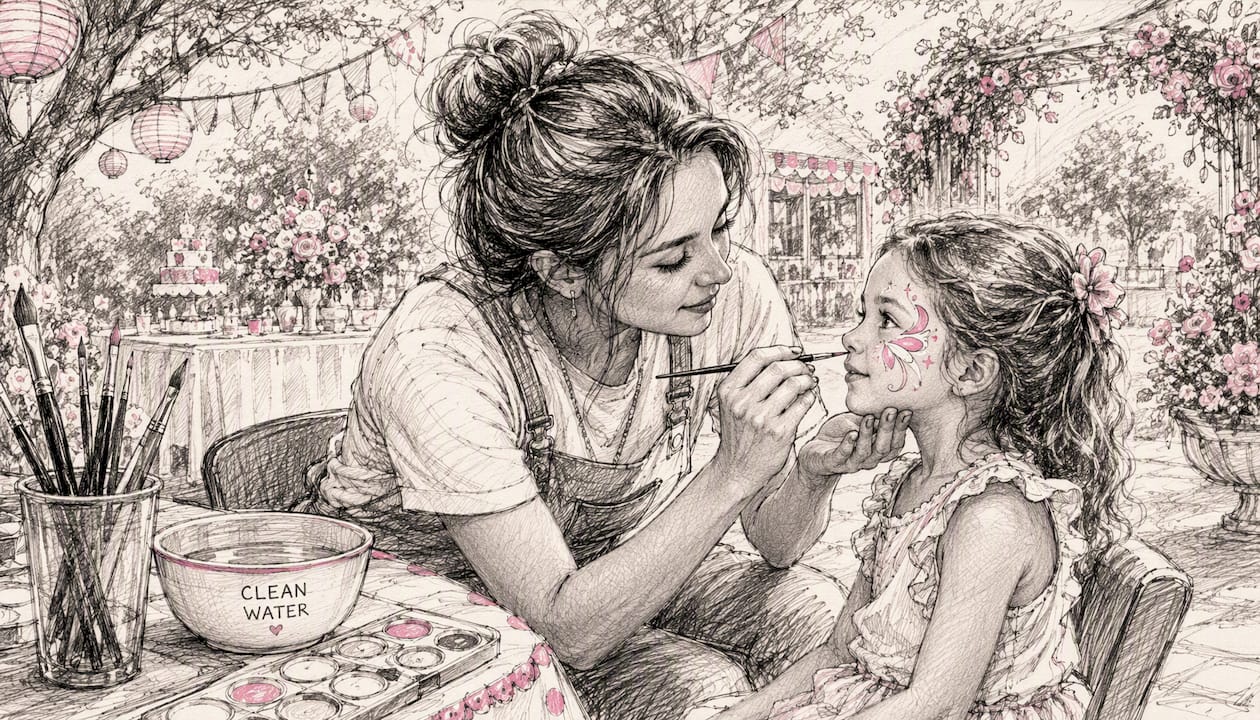
Cosmetic-grade face paint is safe for most children aged three and over when it is patch-tested, kept away from the eyes and lips, and applied with clean tools. That’s the short answer. The longer answer depends on what’s actually in the paint, how the painter manages hygiene between kids, and whether anyone doing the painting knows what a reaction looks like before it becomes a problem.
At any party or event, the rules that matter most are simple:
- Use cosmetic-grade, water-based paints made for skin, not craft or acrylic paint.
- Patch-test new products, especially on kids with eczema or known sensitivities.
- Supervise the whole session and keep paint off eyelids, lips, and open cuts.
- Wash hands, change water, and use clean or disposable applicators between children.
Pro Tip: When you’re not sure about a product or a child’s skin history, skip the lips and the eye rim entirely. Simple designs on the cheeks and forehead carry far less risk than anything close to the mouth or eyes.
Key Takeaways
Face paint is safe for most children aged three and over only when it’s cosmetic-grade, patch-tested, and applied with strict hygiene between kids.
| Point | Details |
|---|---|
| Choose cosmetic-grade only | Avoid craft, acrylic, or novelty paints without a full ingredient list or SDS. |
| Patch-test every time | Apply to the inner arm 20-30 minutes before full application and watch for redness or swelling. |
| Skip toddlers under three | Their skin is more permeable and they’re more likely to touch their eyes or mouth. |
| Keep hygiene tight at events | Change water, clean brushes with disinfectant, and avoid double-dipping between children. |
| Book a managed, insured painter | Dreamscape’s entertainers use cosmetic-grade paints and hold Working With Children checks for every event. |
This article is general information, not a substitute for advice from a qualified doctor. Consult a qualified healthcare professional about your own circumstances before acting on anything here.
Table of Contents
- What makes face paint actually safe to use?
- Who should skip face painting or take extra care?
- How do you patch test face paint properly?
- Running a hygienic face-painting station at events
- How to choose safe face paint products and read the label
- How to remove face paint without irritating the skin
- What are the signs of a reaction and what should you do?
- What to ask before hiring a professional face painter
- Sources
- FAQ
What makes face paint actually safe to use?
“Cosmetic-grade” isn’t marketing fluff. It means a product has been formulated and tested for use on human skin, with a full ingredient list and a Safety Data Sheet (SDS, sometimes still called MSDS) that a supplier can produce on request. That paperwork exists because regulators treat face paint as a cosmetic, not a toy or an art supply.
The safest formats are water-activated cake paints and cosmetic cream palettes built specifically for skin. Craft paint, acrylic paint, and novelty Halloween kits with no ingredient list are not the same category, even if the packaging shows a smiling cartoon face. Health guidance from WA Health is explicit on this point: stick to paints designed for the body, and steer clear of anything meant for paper or canvas.
This isn’t just caution for its own sake. Independent testing has repeatedly found heavy metals including lead and arsenic in cheap novelty kits, with darker pigments showing the highest concentrations. A peer-reviewed toxicology study went further, detecting potentially toxic elements in sampled costume cosmetics and flagging higher risk where paint might be accidentally ingested, which happens more often with small children than most adults assume.
Look for a product that lists its full ingredients, states it’s cosmetic-grade, and comes from a supplier who can show you an SDS without hesitation.
Who should skip face painting or take extra care?
Health authorities recommend avoiding face paint on children under three. Their skin is thinner and more permeable, and toddlers are far more likely to rub paint into their eyes or mouth before anyone can stop them, according to WA Health’s guidance on face and body painting.
A few other groups need extra thought:
- Kids with active eczema, dermatitis, or broken or irritated skin.
- Anyone with a contagious condition like conjunctivitis or a cold sore.
- Children on medication that affects skin sensitivity, or recovering from a recent dermatology procedure.
Ask parents directly about allergies and skin conditions before the brush touches anyone’s face. It takes ten seconds and avoids a much longer conversation later.
How do you patch test face paint properly?
A patch test takes half an hour and tells you almost everything you need to know before a paint touches a child’s whole face.
- Apply a small amount of the paint to the inner arm or just behind the ear.
- Wait 20 to 30 minutes without washing it off.
- Check for redness, itching, swelling, or bumps at the test site.
- If the skin reacts, do not use that product, even in a small amount elsewhere.
- Test each colour separately if you’re using more than one, since pigments vary in composition.
Patch testing guidance from Natural Therapy Pages recommends this window particularly for anyone with eczema or a known allergy history.
Pro Tip: At events with lots of kids, jot down which children have been patch-tested and with what colour. It sounds fussy, but it saves confusion when a parent asks an hour later whether their child was tested.
Running a hygienic face-painting station at events
Face painting at a party or school fete means one set of tools touching a lot of different faces, which is exactly where hygiene habits matter most.
Wash hands before starting and between children where possible. Use single-use sponges or applicators when you can, and never let two children share the same sponge without cleaning it first. Change the water bowl after every child, not every few children. Professional painters avoid double-dipping brushes into shared paint pots by scooping fresh product for each face.
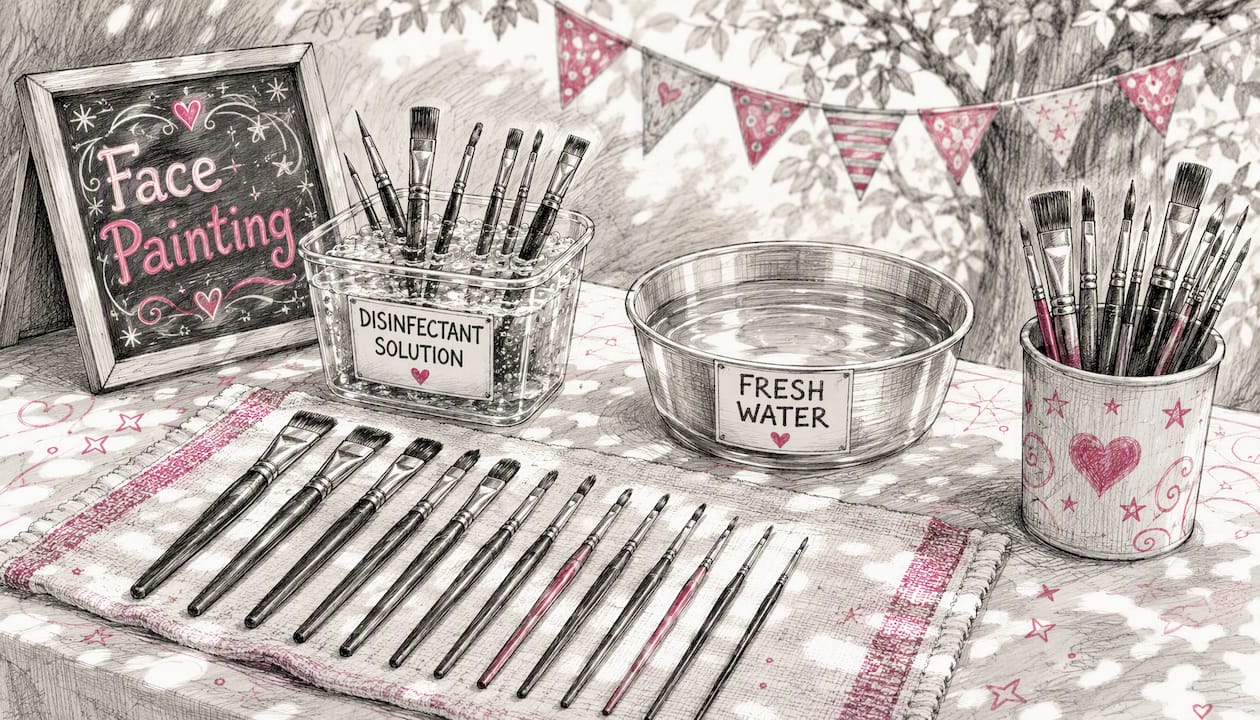
Reusable brushes need a proper clean between kids: soap and warm water at minimum, with a disinfectant soak (70% isopropyl alcohol is the standard) for a more thorough reset between sessions. Let brushes dry fully before reuse. Infection control guidelines for personal care and body art businesses set this out clearly for anyone running a paid service.
Before the first child sits down, check the event has: labelled paints with SDS available, a basic first-aid kit, a way to record allergies or parent consent, and staff with Working With Children checks if it’s a public or paid event.
How to choose safe face paint products and read the label
Reading a label properly takes thirty seconds and it’s the single best filter you have against a bad product.
Look for the words “cosmetic-grade” alongside a complete ingredient list, not a vague “non-toxic” claim with nothing backing it up. Healthychildren is blunt about this: “non-toxic” on packaging is not a guarantee of skin safety, and it’s not a regulated term the way “cosmetic-grade” is.
Red flags include:
- No ingredient list anywhere on the packaging or the seller’s product page.
- Language borrowed from craft paint (acrylic, poster paint, “art and craft use only”).
- No SDS available when you ask a supplier for one.
- Powdered novelty kits with no clarity on whether they contain talc.
Recognised brands that publish ingredient information and safety documentation include Diamond FX, Mehron, and Snazaroo, and Australian specialist retailers like Face Paint World and The Face Paint Shop typically list this detail on their product pages. Mentioning them here isn’t an endorsement of one over another. It’s a starting point for the kind of transparency you should expect from any supplier, and you should still check the SDS yourself before buying.
How to remove face paint without irritating the skin
Getting paint off should be gentler than putting it on, and rushing this step is where a lot of avoidable irritation happens.
- Wet the face with warm water and use a mild soap or baby shampoo, working in gentle circles rather than scrubbing.
- Rinse thoroughly and repeat once if colour remains.
- For stubborn pigment, dab (don’t rub) a cotton pad with baby oil or a gentle makeup remover.
- Stop immediately if the skin turns red or sore, rinse with plain water, and seek medical advice if irritation persists.
Stubborn stains, particularly darker pigments, can take a day or two to fully fade. That’s normal and not a sign the paint has caused lasting harm.
What are the signs of a reaction and what should you do?
Watch for redness, swelling, blistering, unusual itching, or puffiness around the eyes. Rarer but more serious signs include difficulty breathing or noticeable paleness, which need immediate attention.
If you spot any of these, stop painting straight away. Gently remove the product with water, apply a cool compress, and contact the child’s parent or carer immediately. Keep watching their breathing and alertness while you wait for help.
A child’s skin reaction can escalate faster than adults expect, particularly around the eyes, which is why professional painters keep the immediate eye and lip zone bare rather than working right up to the edge.
Call emergency services on triple zero (000) if breathing becomes difficult or the child loses consciousness. Keep the product’s SDS on hand. If a child does need medical attention, being able to hand over the exact ingredient list saves a doctor valuable time.
What to ask before hiring a professional face painter
A few direct questions tell you almost everything about how seriously an entertainer takes safety.
Ask whether they can show you an SDS and ingredient list for the paints they use, and how they manage hygiene between children at busy events. Confirm they carry public liability insurance and that anyone painting faces holds a current Working With Children check.
Watch for the practical signs too: cosmetic-grade paints only, a clear policy on children under three, visibly clean tools, and a willingness to patch-test on request.
Pro Tip: Ask for a reference or a recent review before booking, and don’t be shy about asking what happens if a child has a reaction on the day. A painter with a clear answer has thought about it before you asked.
Publisher perspective: balancing fun and safety
Face painting is a low-risk activity when the basics are followed properly, and it stays one of the most popular requests at kids’ parties for good reason. The risk isn’t in the paint itself so much as in cutting corners with hygiene or grabbing whatever’s cheapest off a shelf. At Dreamscape, our entertainers hold Working With Children checks and use cosmetic-grade paints as standard, which is less about ticking a box and more about not leaving anything to chance on someone’s birthday.
A safe, managed face-painting option for your next event
Booking a professional who already handles the hygiene protocols, insurance, and product checks takes one more thing off your plate on the day. Dreamscape’s face painters and party entertainers bring cosmetic-grade supplies, sanitised tools, and trained staff to birthdays, school events, and corporate family days across Melbourne.

If you’d like to see how it works before booking, our guide to safe face-painting techniques and supplies walks through what we use and why. You’re also welcome to ask for our safety checklist and SDS documentation before confirming anything. When you’re ready, check current packages and pricing and lock in a date for your next event.
Sources
- Face and body painting
- Face paint safety & natural alternatives
- Infection prevention and control guidelines (personal care and body art businesses)
- Face paints & makeup: choose carefully to avoid toxic ingredients
- Simple steps for safer face paint
- Toxic element concentrations in face paints and health risk assessment (peer‑reviewed study)
FAQ
Is face paint safe for your face?
Yes, cosmetic-grade face paint made for skin is safe for most people when patch-tested first and kept away from the eyes and lips.
Is face paint safe for 2-year-olds?
Health guidance generally recommends avoiding face paint on children under three, since their skin is more sensitive and they’re more likely to touch their eyes or mouth.
What is the safest face paint for kids?
The safest options are cosmetic-grade water-activated cakes or cream paints from brands that publish full ingredient lists and an SDS, such as Diamond FX, Mehron, or Snazaroo.
What kind of paint is safe to use on your face?
Only paint labelled cosmetic-grade and designed specifically for skin is safe. Craft paint, acrylic paint, and unlabelled novelty kits are not suitable, even if they claim to be non-toxic.
Can a professional face painter reduce the risk of a reaction?
Yes. A trained painter who patch-tests, uses cosmetic-grade products, and follows strict hygiene between children, like Dreamscape’s entertainers, lowers the chance of irritation compared with unverified products used without testing.
Recommended
Planning a Melbourne party?
We will get right back to you.