

Discover safe face painting techniques and top supplies in Australia. Learn to choose non-toxic products and ensure a fun, safe experience!
Face painting in Australia: safe techniques and top supplies
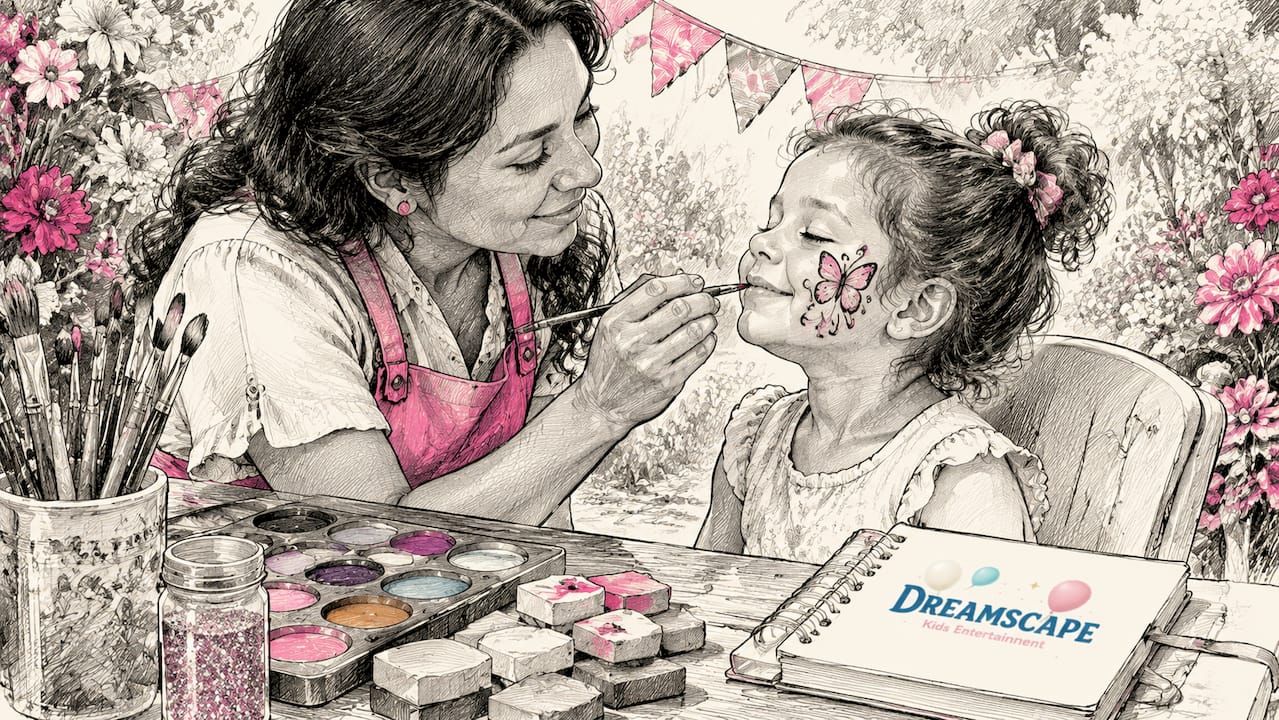
Face painting applies cosmetic-grade paint to skin to create decorative designs, and getting it right starts with one non-negotiable: the products you use must be safe for human skin. In Australia, that means choosing paints compliant with AS 1647.3 or EN71-3, the standards that set strict limits on toxic ingredients. “Non-toxic” labels on craft paints do not meet this bar. Only cosmetic-grade products do.
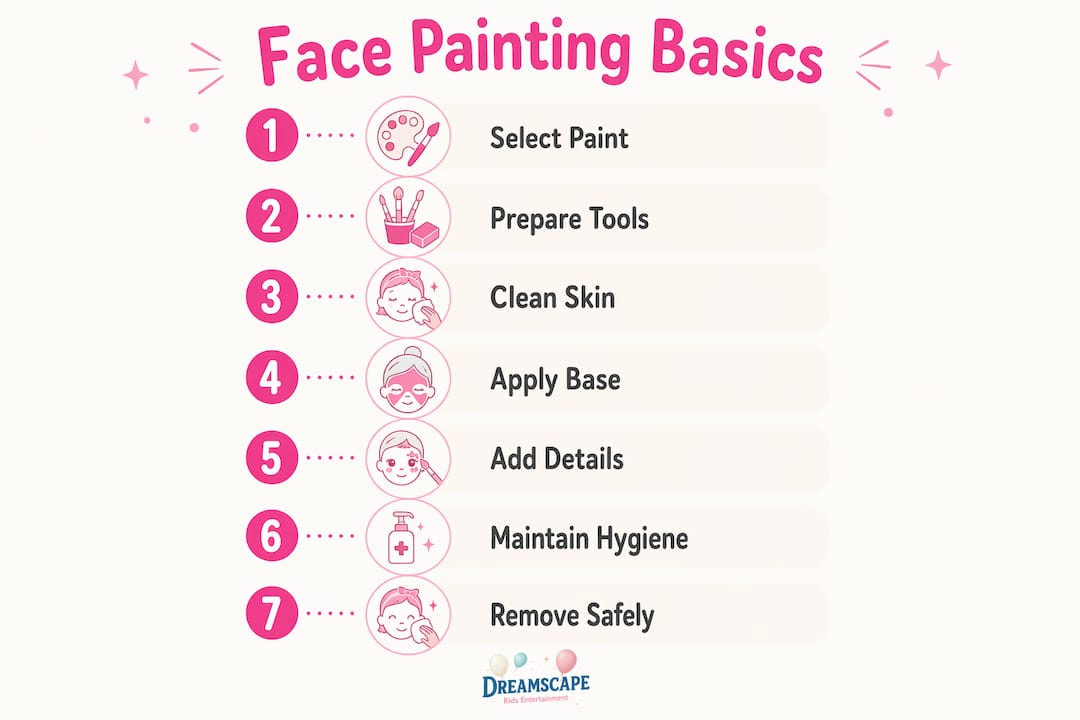
Before you pick up a brush, run through these preparation and safety steps:
- Avoid painting children under 3 years old. They move unpredictably and have sensitive skin prone to reactions.
- Ask clients (or their parents) about skin conditions, food allergies, or reactions to soaps and dyes. If in doubt, do a patch test on an arm or leg first.
- Check that skin is clean, free from scratches, and clear of contagious conditions like conjunctivitis or chickenpox.
- Skip clients with active acne, dermatitis, or open wounds. Painting over these risks infection.
- Clean the area to be painted with soap and warm water or a disposable wipe before starting.
- Always have a parent or guardian present when painting a child’s face.
- Stop immediately and call 000 if a client shows signs of an allergic reaction: shortness of breath, difficulty breathing, or swelling around the eyes.
What face painting products are available in Australia?
Water-activated face paints dominate the Australian market because they glide on smoothly, dry quickly, and wash off easily with warm soapy water. They come in cake, stick, and cream formats, and most professional kits also include flat and round brushes, cosmetic sponges, stencils, and cosmetic-grade glitters.
Four suppliers cover most of what Australian painters need, from beginner kits to professional-grade stock:
| Supplier | Product type | Best for | Brands available | Packaging and sizes |
|---|---|---|---|---|
| The Face Paint Shop | Water-activated cakes, kits, brushes, sponges, glitters | All skill levels | TAG Body Art, Fusion Body Art, Global Colours | Wide range; eco-friendly packaging options |
| Face Paint Shop Australia | Cosmetic-grade cakes, glitter, body paint | Beginners to professionals | Premium multi-brand range | User-friendly packaging; multiple sizes |
| TAG Face Paint | Water-activated cakes, vibrant pigments | Professional artists | TAG Body Art | Professional cake sizes; certified pigments |
| XO Art Co | Multi-buy value sets, body paint combos | Budget-conscious, party painters | XO Art Co house range | Value packs; party-sized bundles |
A few things worth knowing about each option beyond what the table shows. The Face Paint Shop carries Australia’s broadest warehouse stock, with free shipping options that make bulk orders practical for working artists. Face Paint Shop Australia has built a strong reputation since 2013 for stocking premium brands with genuinely user-friendly packaging, particularly useful for painters who are still learning which products suit their style.
TAG Face Paint stands out for professionals who need certified pigments. Its paints carry safety certifications and produce durable, vibrant results that hold up across a long event. XO Art Co suits painters who need to kit out quickly for a birthday party without spending heavily on individual products. Their value packs cover the basics at a price point that makes sense for occasional use.
For cosmetic glitters, look for products specifically labelled cosmetic-grade. Craft glitters use sharp-edged particles that can scratch eyes and skin.
Pro Tip: Check that any glitter you buy is labelled cosmetic-grade or skin-safe. Craft glitter from art supply stores is not the same product and should never go near a face.
How do you choose the right kit for your skill level?
The right kit depends on three things: how often you’ll paint, who you’ll paint, and what events you’re working.
For beginners, a starter kit with four to six water-activated paint cakes, one flat brush, one round brush, and a cosmetic sponge covers most simple designs. Brands like Derivan, which manufactures in Australia and conforms to Australian Standard 1647.3, offer themed starter sets that include face painting ideas to get you going. Spend more on paint quality than on brush quantity early on. Two good brushes beat a bag of cheap ones.
For professional or regular event work, upgrade your brush set to include fine-liner rounds for detail work and a larger flat brush for one-stroke techniques. Add a dedicated water container, a spray bottle for activating paints, and a selection of cosmetic glitters and stencils. Consider a henna and body art service as a complementary offering at events, since many clients who want face painting also ask about henna.
When buying online in Australia, check that the retailer lists the product’s compliance standard on the product page. If it is not listed, ask before you buy.
- Beginners: starter kit with 4-6 paint cakes, 2 brushes, 1 sponge
- Intermediate: add fine-liner brushes, stencils, and cosmetic glitters
- Professional: full brush set, multiple sponge types, spray bottle, dedicated water system, and a range of 20+ colours
Hygiene, safety, and professional compliance in Australia
Hygiene is where most beginners cut corners and professionals get into trouble. Change your water after every client and soak reusable brushes in 70% isopropyl alcohol for at least two minutes after washing. This prevents the spread of infections like conjunctivitis and skin viruses between clients. Never dip a brush directly from a client’s face back into your water jar. Use a two-bowl system: one for rinsing, one for clean water.
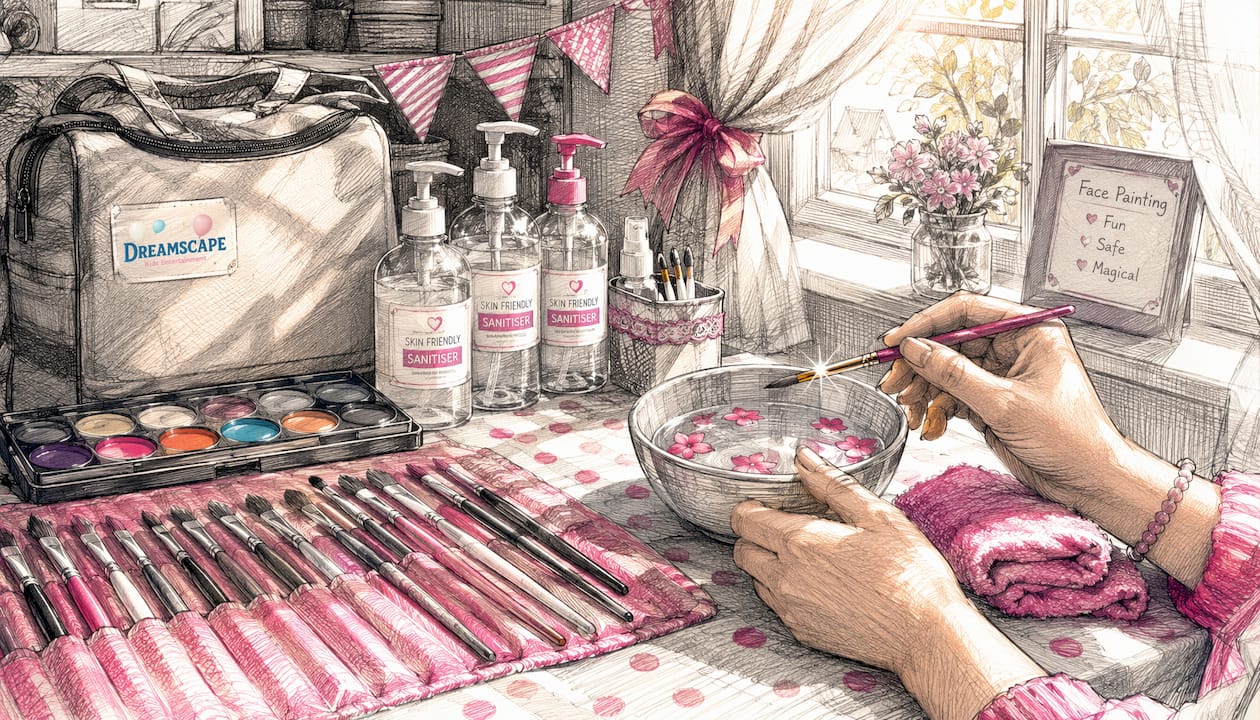
When cleaning paint cakes between uses, wipe them with a damp microfibre or chux-style cloth. Avoid baby wipes as they leave fibres in the paint. Use clean spatulas to scoop from bulk supplies, and store all products away from direct sunlight to prevent them going soft or runny.
Single-use applicators, cotton swabs, and sponges are strongly recommended for client-facing work. Reusable stencils should be made from non-porous materials and wiped with 70% isopropyl alcohol after each use.
Professional compliance checklist for Australian painters:
- Use only cosmetic-grade paints compliant with AS 1647.3 or EN71-3
- Change water and sanitise brushes between every client
- Hold a current Working With Children Check for your state
- Carry Public Liability insurance of $10 million to $20 million with “Face Painting” explicitly listed as a covered activity
- Bundle Product Liability with your Public Liability policy to cover allergic reaction claims
- Keep your Working With Children Check visible on a lanyard at your station
On insurance: public liability cover starts around $39/month for sole traders, and specialised performer rates for Category 2 activities run approximately $59 per year through providers like Duck for Cover. In Queensland, the paid Blue Card (Working With Children Check) costs $108.30 in 2026. Fees vary by state: Victoria reaches $139.20 from July 2026, and New South Wales sits at $107 (rising to $112 from July 1, 2026).
Basic face painting techniques for beginners
Start with the two tools that do most of the work: a damp cosmetic sponge for base coverage and a round brush for line work. Wet your sponge lightly, press it into the paint cake, and apply in a dabbing motion rather than dragging. Dragging smears colour and lifts skin. A damp brush picks up paint more evenly than a dry one.
Simple butterfly design, step by step:
- Sponge a base colour (purple or pink) across both cheeks and the nose bridge.
- Load a flat brush with a contrasting colour and sweep two curved wing shapes outward from the outer corners of the eyes.
- Use a fine round brush to outline the wings and add vein details in a darker shade.
- Add small dots along the wing edges with the tip of the round brush.
- Finish with a light dusting of cosmetic glitter on the wings.
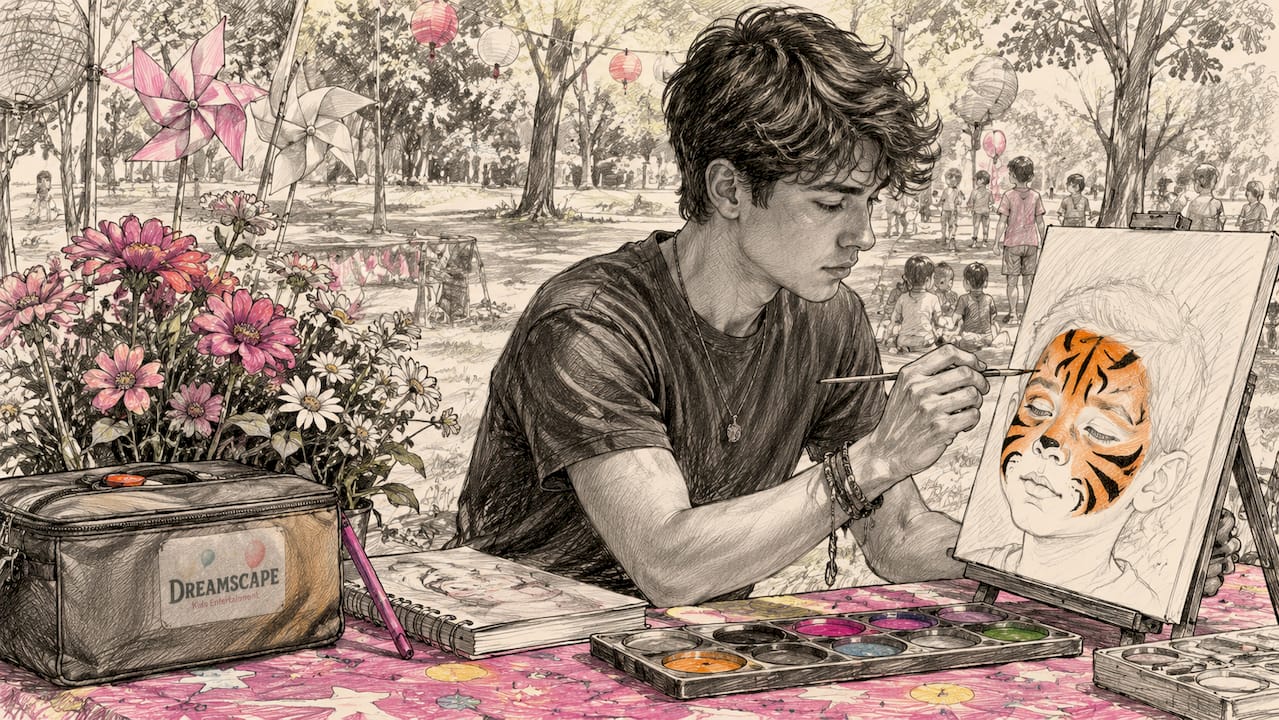
For a tiger design, start with an orange base across the cheeks and forehead, then use a fine brush to paint black stripes radiating outward. White paint on the chin and above the lips creates the muzzle. The key with stripes is to vary their width: thick at the base, tapering to a point.
Practice on your own hand before working on a child’s face. It builds muscle memory for brush pressure and helps you gauge how much water your paint needs.
How do you fix smudging and cracking?
Smudging usually comes from one of two causes: too much water on the brush, or painting over skin that has not been cleaned properly. Activate paint with a damp brush, not a wet one. If the paint looks glossy after application, you have used too much water. Let it dry fully before adding the next layer.
Cracking happens when paint is applied too thickly or when the skin moves a lot, as it does around the mouth and eyes. Apply thin layers and build up colour gradually rather than loading the brush heavily. Around the mouth, tell clients to avoid big smiles for the first minute while the paint sets.
If a design smudges mid-event, let it dry completely, then lightly sponge a thin layer of the same base colour over the affected area. Trying to fix wet paint by adding more paint always makes it worse.
For removal, apply a soapy lathered washcloth in small circular motions until the paint loosens, then rinse. Avoid using dry wipes or rubbing hard on the eye area.
Dreamscape brings professional face painting to Melbourne parties
If you would rather book a professional than buy supplies and learn from scratch, Dreamscape is worth a look. Dreamscape has delivered kids party entertainment in Melbourne for over 25 years, with a team of professional entertainers who hold Working With Children Checks and carry full insurance. Every painter works with cosmetic-grade products and follows the hygiene protocols covered in this guide.
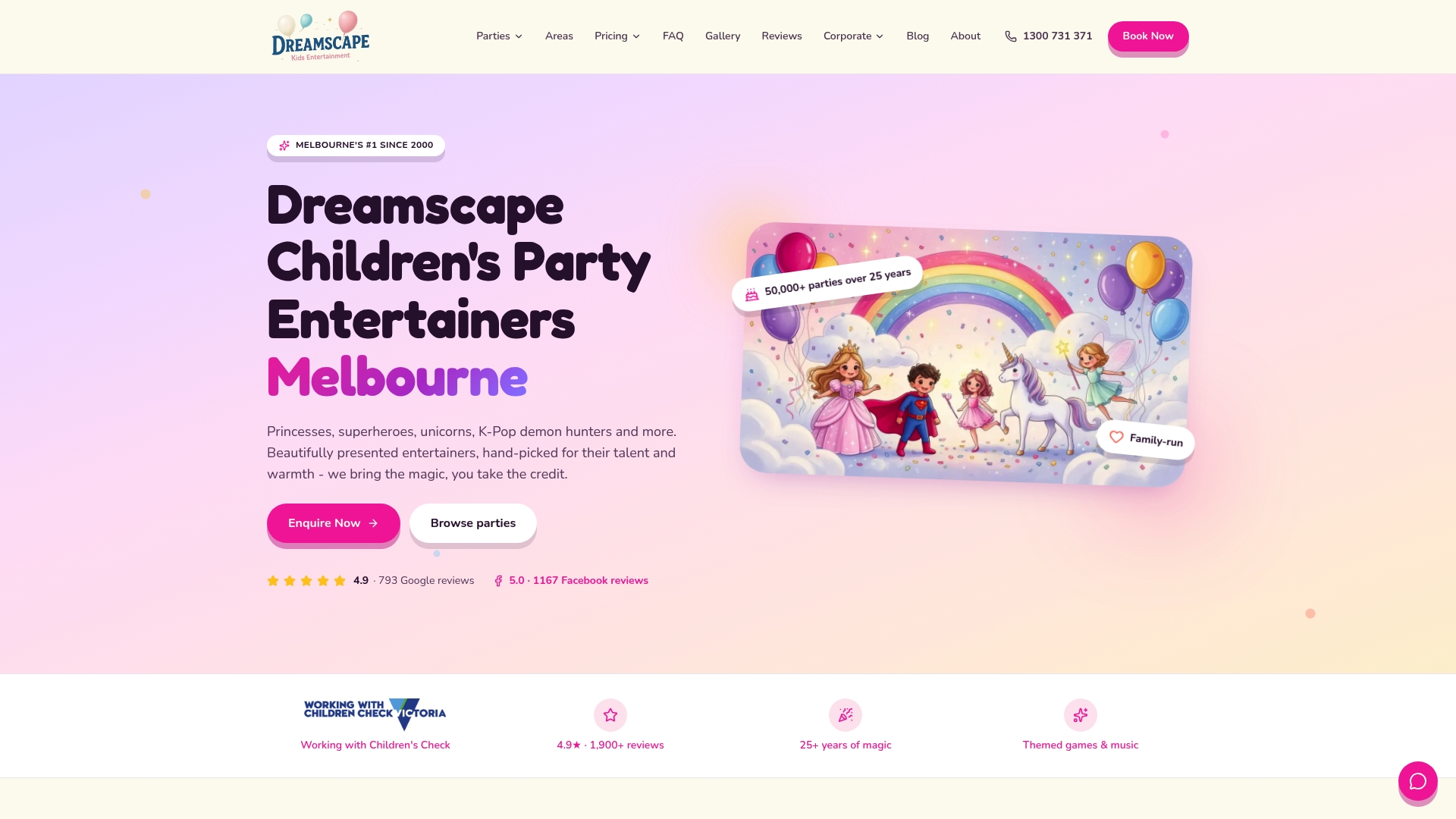
Dreamscape suits parents who want face painting as part of a broader party package rather than a standalone service. Birthdays, school events, and corporate family days are all covered, with transparent pricing and over 1,900 five-star reviews from Melbourne families. It is a different approach from hiring a solo face painter or buying a DIY kit, and for many events, the convenience is the point.
FAQ
What kind of paint should you use for face painting?
Use water-activated cosmetic-grade paints compliant with AS 1647.3 or EN71-3. These glide on smoothly, dry quickly, and wash off easily. Never use craft or acrylic paints on skin.
How much does face painting cost in Australia?
Australian face painters charge roughly $80-$130/hr when building a portfolio, $150-$200/hr when established, and $200-$300+ for senior artists. Rates vary by state, event type, and experience.
How do you do face painting as a beginner?
Start with a damp sponge for base colour and a round brush for line work. Activate paint with a damp tool rather than a wet one, apply thin layers, and practise simple designs like butterflies or tigers before working on children.
What is face painting called professionally?
The practice is called face and body painting or body art. Practitioners working professionally in Australia are often referred to as face painters or body artists, and the broader discipline falls under personal appearance services.
Key takeaways
Cosmetic-grade paints compliant with AS 1647.3 or EN71-3 are the non-negotiable starting point for safe face painting in Australia, whether you are buying supplies or booking a professional.
| Point | Details |
|---|---|
| Use compliant paints only | AS 1647.3 and EN71-3 set the safety standard; “non-toxic” craft paint labels do not meet it. |
| Hygiene between clients | Change water and soak brushes in 70% isopropyl alcohol for at least 2 minutes after every client. |
| Insurance and WWC checks | Professionals need $10M-$20M public liability cover and a current Working With Children Check for their state. |
| Beginner technique | A damp sponge for base colour and a round brush for lines covers most simple designs. |
| Dreamscape for Melbourne events | Dreamscape provides fully insured, WWC-checked face painters as part of children’s party packages across Melbourne. |
Recommended
Planning a Melbourne party?
We will get right back to you.