

Discover a gentle, child-safe method for effective face paint removal that protects young skin and ensures a clean finish.
Face paint removal: a gentle, child-safe method that works
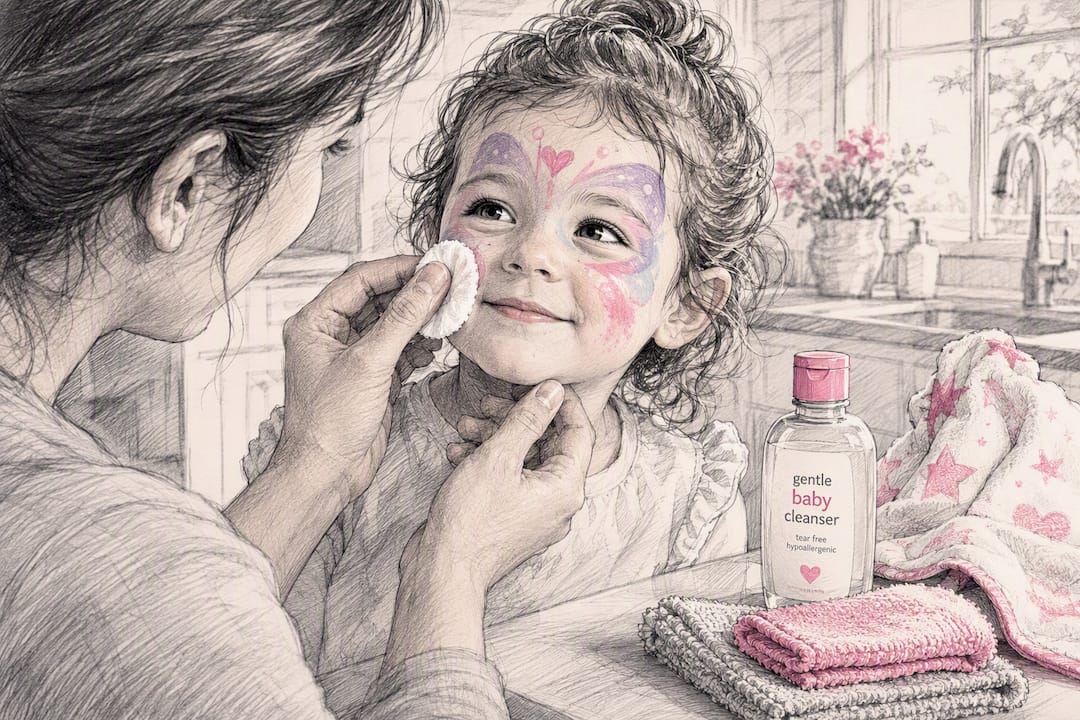
Start with a mild, fragrance-free cleanser and lukewarm water, working in soft circles until the pigment lifts. If colour lingers, don’t scrub. Instead:
- Apply a small amount of cleansing oil or micellar water to a cotton pad.
- Press it against the stained area for a few seconds, then wipe gently rather than dragging.
- Repeat on stubborn patches instead of pressing harder.
- Pat the skin dry and finish with a fragrance-free moisturiser.
This sequence handles most water-based paints without irritating young skin, and it’s the same order professional face painters and skincare guides recommend.
Key Takeaways
Gentle, patient removal with a mild cleanser, oil or micellar water protects the skin barrier far better than scrubbing ever will.
| Point | Details |
|---|---|
| Start mild | Use a fragrance-free cleanser and lukewarm water before reaching for anything stronger. |
| Escalate carefully | Cleansing oil or micellar water lifts stubborn pigment without needing to scrub. |
| Treat glitter differently | Press-and-lift with micellar water instead of dry-wiping to avoid spreading particles near the eyes. |
| Know when to stop | After two gentle attempts, let faint staining fade overnight rather than pushing harder. |
| Prevent, don’t just react | Patch test 24-48 hours ahead and choose water-based, cosmetic-grade paint. |
Table of Contents
- How to remove water-based face paint with soap and water
- What removes stubborn paint when soap isn’t enough?
- How do you remove face paint from eyes, hairline and glitter?
- Why won’t the paint fully come off, and when should you stop?
- Aftercare: soothing the skin once the paint is gone
- How to prevent face paint stains before the party starts
- What Dreamscape’s entertainers know about safe face paint
- Ready to book stress-free party entertainment?
- Authoritative pages and Dreamscape resources
- What actually matters most in face paint removal
- Sources
- FAQ
How to remove water-based face paint with soap and water
Water-based paint is the most common type used at kids’ parties, and it’s also the easiest to shift. A mild cleanser or baby wash paired with lukewarm water is the recommended starting point, according to Face Paint Shop Australia, because gentle circular washing with a soft cloth or flannel loosens the pigment without stripping the skin.
Here’s the sequence that works best:
- Massage a small amount of cleanser directly onto the dry, painted skin first. This helps break down the pigment before water gets involved.
- Dampen a soft flannel with lukewarm water and wipe in gentle circles, following the natural contours of the face.
- Rinse the cloth and repeat over any areas still holding colour, reapplying cleanser as needed.
- Once the paint has lifted, rinse the whole face with clean lukewarm water to remove any residue.
A few things to avoid altogether: hot water, which can irritate and dry the skin; vigorous scrubbing, which does more damage than it does good; alcohol-based wipes, which strip natural oils and can sting broken or sensitive skin; and rough cloths or exfoliating pads, which aren’t necessary for a job soap and water can usually finish.
Pro Tip: Apply cleanser to completely dry skin before introducing any water. Wetting the paint first can actually set some pigments, making them harder to shift later.
Most kids tolerate this method well because it doesn’t sting and doesn’t take long. If you’re working through a full face of paint, don’t rush the process. Two gentle passes beat one aggressive one, every time.
What removes stubborn paint when soap isn’t enough?
Some paints, especially heavier theatrical grades or anything left on for hours, need a bit more help than soap and water alone. Cleansing oils and balms are the next step up, and they work by breaking down the pigment’s bond with the skin rather than scrubbing it away.
- Apply the oil or balm to dry skin (not wet), then let it sit for 20 to 30 seconds so it can penetrate the paint layer.
- Wipe away gently with a soft cloth, then follow with your regular cleanser and lukewarm water to remove any oily residue.
- This oil-first approach is standard advice from Jest Paint, largely because it avoids the friction that scrubbing requires.
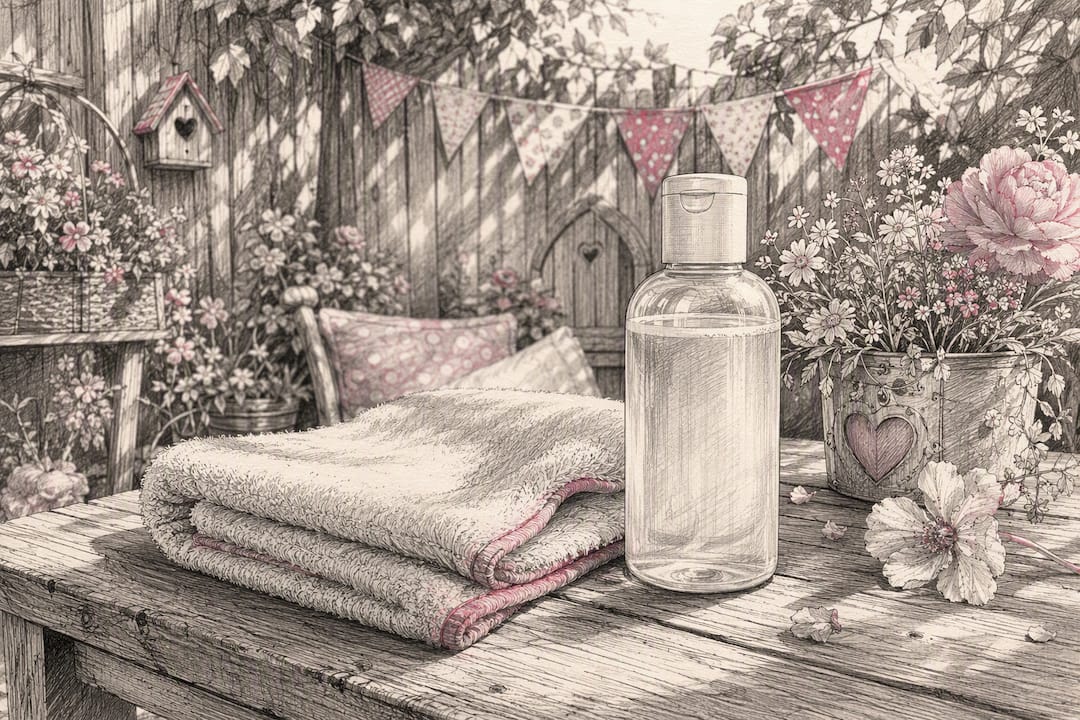
Micellar water is the better option for delicate areas or anywhere glitter is involved. Soak a cotton pad, press it against the skin for several seconds, then lift rather than rub. This press-and-lift technique traps glitter particles in the pad instead of scattering them, according to Fusion Body Art.
Skip baby wipes and fragranced wipes as your first line of attack. The fibres and added fragrance in many wipes can leave residue behind or irritate already-sensitive skin, so a soft microfibre cloth paired with a purpose-made remover is the safer call.
How do you remove face paint from eyes, hairline and glitter?
Some areas hold onto colour longer simply because the skin is thinner or the surface is harder to reach cleanly. These spots need a lighter touch and smaller tools, not more pressure.
- Eyelids and lashes: soak a cotton pad in micellar water, press it against closed eyes for 10 to 15 seconds, then lift gently rather than wipe.
- Hairline and eyebrows: use a cotton bud or a small amount of oil on a soft cloth, working outward toward the hair rather than into the scalp.
- Glitter: never dry-wipe it. Press micellar water onto the area first to lift particles, then follow with your usual soap and water routine.
Working with small, targeted tools rather than broad rubbing motions keeps irritation away from the softer skin around eyes and hairlines.
Pro Tip: Keep a spare cotton pad in each hand when doing eye areas. One for pressing and lifting glitter, one for the final wipe, so you’re not reintroducing lifted particles back onto the skin.
Why won’t the paint fully come off, and when should you stop?
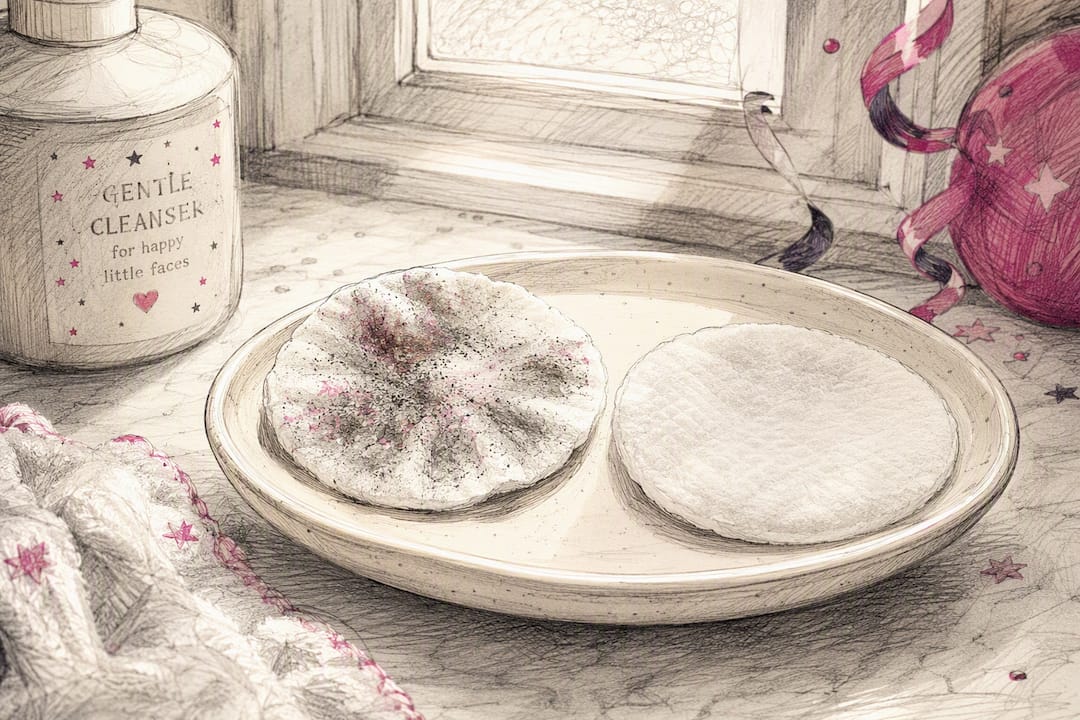
Greens, blues and neon shades tend to stain more stubbornly than reds or yellows, largely because of the pigments used to achieve those colours. A faint tint left behind after removal isn’t a sign you’ve done anything wrong.
- If colour lingers, a second gentle pass with cleanser or a light layer of oil left on for a minute often helps.
- After two gentle attempts, stop. Pushing harder to get a perfectly clean face risks damaging the skin barrier for the sake of a cosmetic issue that will fade on its own overnight.
- If persistent staining comes with redness, swelling or itching, that’s no longer a staining problem. Seek medical advice rather than continuing to clean the area.
Patience beats persistence here. A trace of green around the hairline the next morning is a much smaller problem than irritated skin.
Aftercare: soothing the skin once the paint is gone
Once the face is clean, pat it dry rather than rubbing, then apply a fragrance-free moisturiser. Look for ingredients like ceramides or glycerin, or use aloe vera, both of which help restore the skin barrier after a session of cleansing, according to WaterWipes.
- Watch for redness, swelling or blistering over the following day. These are signs of contact dermatitis, not just leftover irritation from washing.
- Hold off on active skincare products (retinoids, acids, strong exfoliants) for 24 to 48 hours after removal, even on adult skin.
- Removing paint before bed rather than leaving it on overnight reduces the risk of irritation setting in while your child sleeps, a point Health makes directly in its guidance for parents.
If a reaction is more than mild, redness that spreads, swelling, or visible blistering, see a GP or dermatologist rather than waiting it out.
How to prevent face paint stains before the party starts
The easiest removal is the one you never have to fight for, and that starts before the paintbrush ever touches skin.
- Choose water-based, cosmetic-grade face paints rather than craft paints or non-cosmetic dyes. Cheaper kits sometimes contain harsher dyes not designed for skin contact.
- Patch test on the inside of the forearm 24 to 48 hours before the event, particularly for kids with known sensitivities or eczema. Hypoallergenic labelling isn’t strictly standardised, so testing matters more than the label.
- Apply a light barrier cream before painting begins, and have your removers, micellar water, cleansing oil, and a soft cloth, ready before the party wraps up.
A little preparation on paint choice and skin prep does more to prevent stubborn staining than any removal technique that comes after.
What Dreamscape’s entertainers know about safe face paint
Dreamscape’s entertainers have picked up a few habits worth borrowing from many years running kids’ parties across Melbourne. Every entertainer holds a Working With Children Check, and the same hygiene standards that earned the business over 1,900 five-star reviews apply to face painting too.
- Remove paint before bedtime rather than letting it sit on the skin overnight.
- Keep micellar wipes and a fragrance-free moisturiser on hand for a quick clean-up before parents arrive.
- Use single-use applicators and sponges for each child to avoid cross-contamination between guests.
For a fuller rundown of what to check before booking a painter, Dreamscape’s face paint safety guide covers the details parents ask about most.
Ready to book stress-free party entertainment?
Getting face paint on is the fun part. Getting it off shouldn’t be the thing you’re dreading by the end of the party. If you’d rather leave the painting, the games and the clean-up logistics to professionals who’ve been doing this for over two decades, Dreamscape’s kids’ party entertainment packages include experienced, WWCC-checked face painters who use skin-safe, water-based paints as standard. School events and corporate family days are covered too, through Dreamscape’s school and nursery entertainment packages, with transparent pricing and no surprises on the day. If you’re planning ahead for a favour table or party bags to go alongside the face painting, US Novelty’s party favour ideas are worth a browse too.
Authoritative pages and Dreamscape resources
- Face and body painting safety guidance - official patch-test and reaction advice.
- Dreamscape’s face painting techniques guide - safe products and application tips.
- Dreamscape’s child safety checklist - WWCC and hygiene standards for entertainers.
What actually matters most in face paint removal
The research on this topic points in a clear direction, and it’s not what most party blogs lead with. The technique matters less than the restraint behind it. Nearly every source, from health authorities to professional face painters, converges on the same underlying principle: gentle, repeated passes beat one aggressive attempt, every single time.
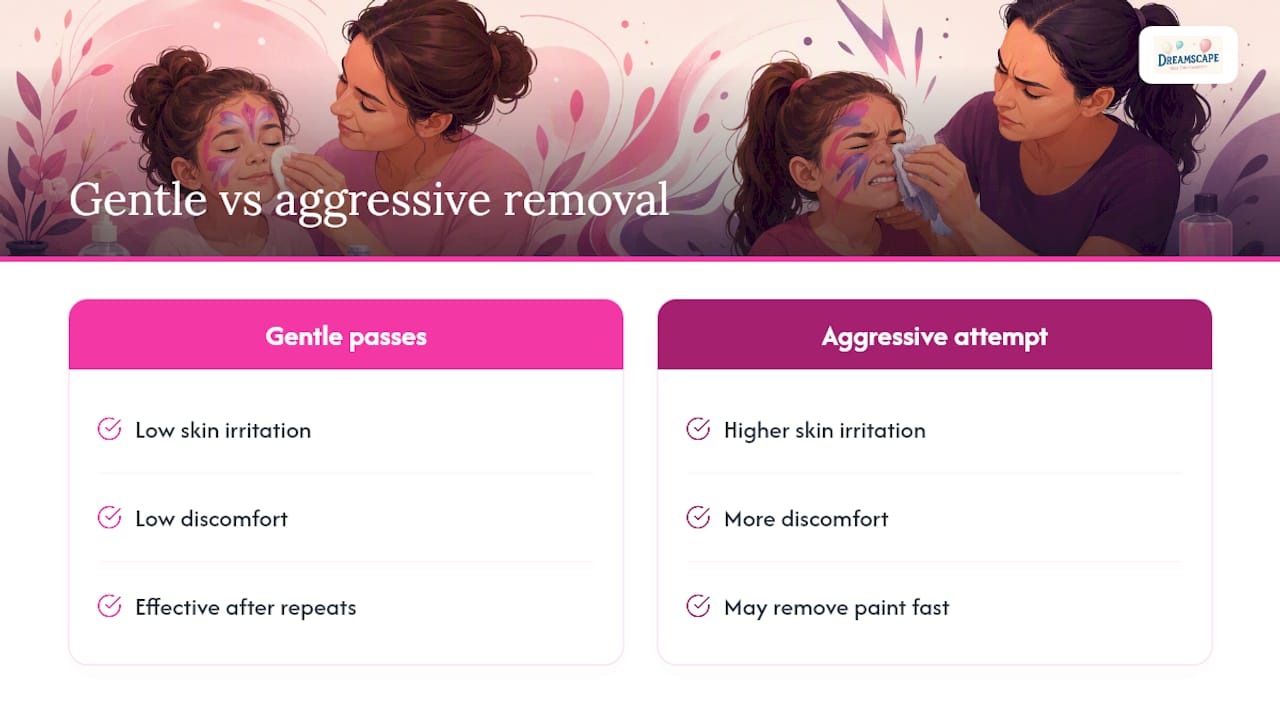
Where conventional advice often falls short is in treating “getting it all off” as the goal. It isn’t. A faint green tinge around a hairline the next morning is a cosmetic non-issue. Irritated, broken skin from scrubbing is an actual problem. Parents under time pressure, bath time, bedtime, a tired kid, are the ones most likely to reach for harder rubbing when patience would serve them better.
If you take one thing from this guide, let it be the patch test. Prevention does more heavy lifting than any removal technique that comes after the fact, and it costs you two minutes the day before the party.
- Lauren
Sources
- Health
- 3 easy steps to removing face paint makeup - Face Paint Shop Australia
- How to Remove Face Paint Quickly & Safely - Jest Paint
- How to remove face paint without irritating skin - Fusion Body Art
- Skin care after face painting and Halloween costume makeup - WaterWipes
FAQ
What is the best way to remove face paint?
Wash with a mild, fragrance-free cleanser and lukewarm water in gentle circles, then follow up with cleansing oil or micellar water on any pigment that remains.
How do you remove face paint from a child’s face?
Use the same gentle cleanser-and-water method as adults, but be extra careful around the eyes and hairline, using a cotton pad with micellar water and a press-and-lift motion rather than rubbing.
Does face paint come off easily?
Most water-based face paints lift easily with mild soap and lukewarm water, though darker pigments like greens and blues can leave a faint stain that fades within a day.
What is the fastest way to remove paint from my skin?
Cleansing oil applied to dry skin works faster than soap alone on stubborn pigment, because it breaks the paint’s bond with skin before you wipe it away.
Recommended
Planning a Melbourne party?
We will get right back to you.