

Learn how to organise school event entertainment in Melbourne. Get tips on permits, engaging options, and steps for a successful event.
How to organise school event entertainment in Melbourne
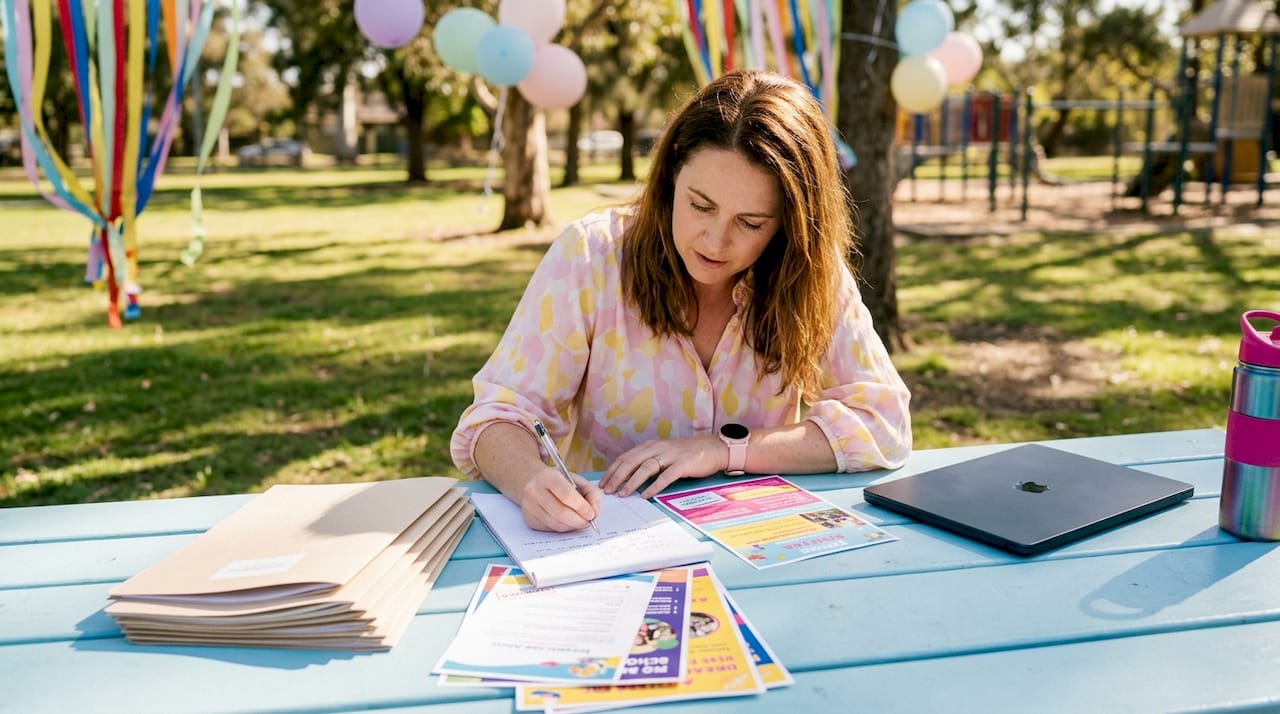
Successful school event entertainment in Melbourne is defined by three things: genuine student engagement, full compliance with Victorian regulations, and a vetting process that keeps duty of care where it belongs. Whether you are planning a school fair, end-of-year celebration, or fundraiser, the decisions you make around entertainment directly shape how students experience the day. This guide covers the permits you need, the entertainment options that work, how to vet providers properly, and the practical steps that separate a smooth event from a stressful one.
What permits and licences are required for school event entertainment in Melbourne?
Permit requirements in Melbourne depend on where your event is held and what it involves. Events on council or public land, using temporary structures, or expecting attendance over 500 require a POPE permit. POPE stands for Prescribed Outdoor Public Event, and it covers stages, marquees, and amplified sound on public land. Missing this permit can result in the council shutting your event down on the day.
Local council approval is a separate requirement from the POPE permit. Amplified music at public events in Melbourne requires both a council permit and, for ticketed or publicly accessible events, a music licence through OneMusic Australia. Different Melbourne councils apply different noise curfews and decibel limits, so confirming requirements directly with your local council is non-negotiable.
School events held entirely on private school grounds with no public access generally face fewer permit triggers. However, amplified sound, large temporary structures, and food stalls each carry their own council notification requirements. Start your permit research at least eight weeks before the event date.
Key permit and licence steps:
- Confirm whether your venue is public or private land before any other planning.
- Contact your local council to ask about noise permits, curfews, and event notification requirements.
- Check OneMusic Australia’s website if your event is ticketed or open to the public.
- Apply for a POPE permit through the relevant Victorian authority if attendance will exceed 500 or temporary infrastructure is involved.
- Keep copies of all approved permits on site during the event.
Pro Tip: Create a single permit folder, physical or digital, that holds every approved document. Hand a copy to your principal and your venue contact the week before the event. Councils occasionally send inspectors, and having everything ready prevents delays.
Which entertainment options engage students at Melbourne school events?
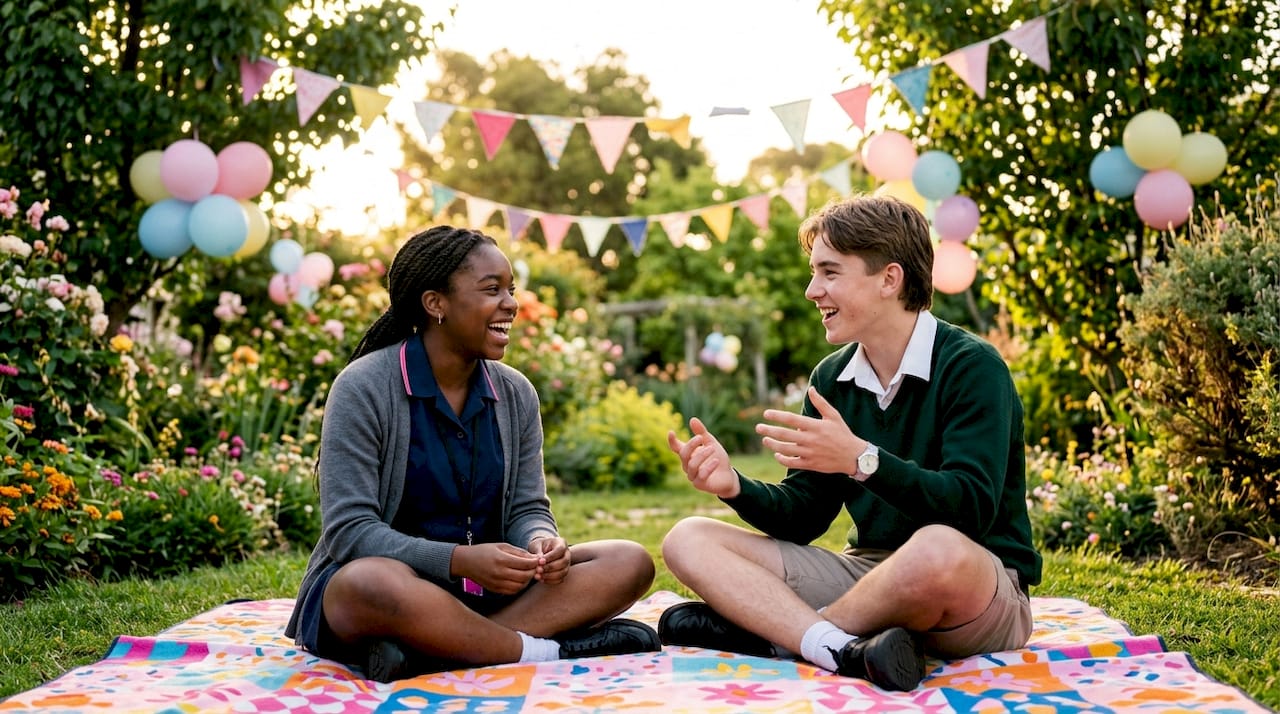
The most effective school entertainment matches the age group, the event format, and the available space. A magic show works brilliantly for primary students at a school fair but falls flat at a Year 12 formal. Choosing the wrong format wastes budget and loses the room within minutes.
The entertainment categories that consistently perform well across Melbourne school events include:
- DJs and live music: High engagement for formals, discos, and end-of-year celebrations. DJ hire costs vary based on event duration, equipment, location, and extra services like photo booths, with quotes starting from a few hundred dollars.
- Magic and illusion shows: Strong fit for primary and lower secondary students. Requires minimal space and no amplification setup.
- Balloon artists and face painters: Ideal for school fairs and carnival-style events. Both work well outdoors and handle high student volumes.
- Interactive performances: Character performers, science shows, and comedy acts suit a wide age range and work indoors or outdoors.
- Arts and crafts stations: Lower energy but high participation, particularly for younger students. Easy to run alongside other activities.
| Entertainment type | Best age group | Engagement level | Space needed | Relative cost |
|---|---|---|---|---|
| DJ and disco | Years 7-12 | Very high | Medium to large | Medium |
| Magic show | Years P-8 | High | Small to medium | Low to medium |
| Character performers | Years P-6 | Very high | Small | Medium |
| Balloon artist | Years P-6 | Medium | Small | Low |
| Science show | Years P-9 | High | Medium | Medium |
| Arts and crafts station | Years P-4 | Medium | Small | Low |
Bundling entertainment types reduces cost and increases variety. Adding a photo booth alongside DJ hire, for example, gives students more to do and often costs less than booking each service separately. Dreamscape’s school entertainment packages are built around this principle, combining performers and activities into a single booking.
Pro Tip: Ask your student leaders or school council what they actually want before you book anything. A five-minute survey saves you from spending the budget on entertainment that students ignore on the day.
How do you vet and select third-party entertainment providers for schools?
Schools cannot delegate their duty of care. Provider risk assessments do not replace the school’s own risk management obligations. A vendor’s public liability insurance and safety plan cover their business. They do not cover your students’ individual medical, behavioural, or psychological needs. That responsibility stays with the school.
Vetting a provider is a professional audit, not a price comparison. Follow this process for every external entertainer you engage:
- Confirm public liability insurance. Ask for a current certificate of currency showing a minimum of $20 million cover. Check the expiry date and the named insured.
- Verify Working With Children Check status. Every adult who will have contact with students must hold a current Victorian WWCC. Victoria’s 2026 child safety reforms make WWCC monitoring and expiry tracking a regulatory requirement, not just good practice.
- Request a provider-specific risk assessment. This document should name your school, your event, and the specific activity. A generic risk assessment is a red flag.
- Check staff qualifications and supervision ratios. Ask how many staff will attend, what their qualifications are, and how they manage incidents.
- Review the contract for compliance clauses. The contract must require the provider to notify you of any changes to insurance, WWCC status, or staffing before the event.
Quotes that omit compliance documentation are a warning sign. A professional provider includes insurance and WWCC details in their quote without being asked.
Pro Tip: Build a provider register in a shared spreadsheet. Record each provider’s insurance expiry, WWCC expiry, and last audit date. Set calendar reminders 30 days before any document expires. Child safety compliance registers are now expected as evidence of systemic risk management, not just good administration.
What practical steps make school event planning in Melbourne work?
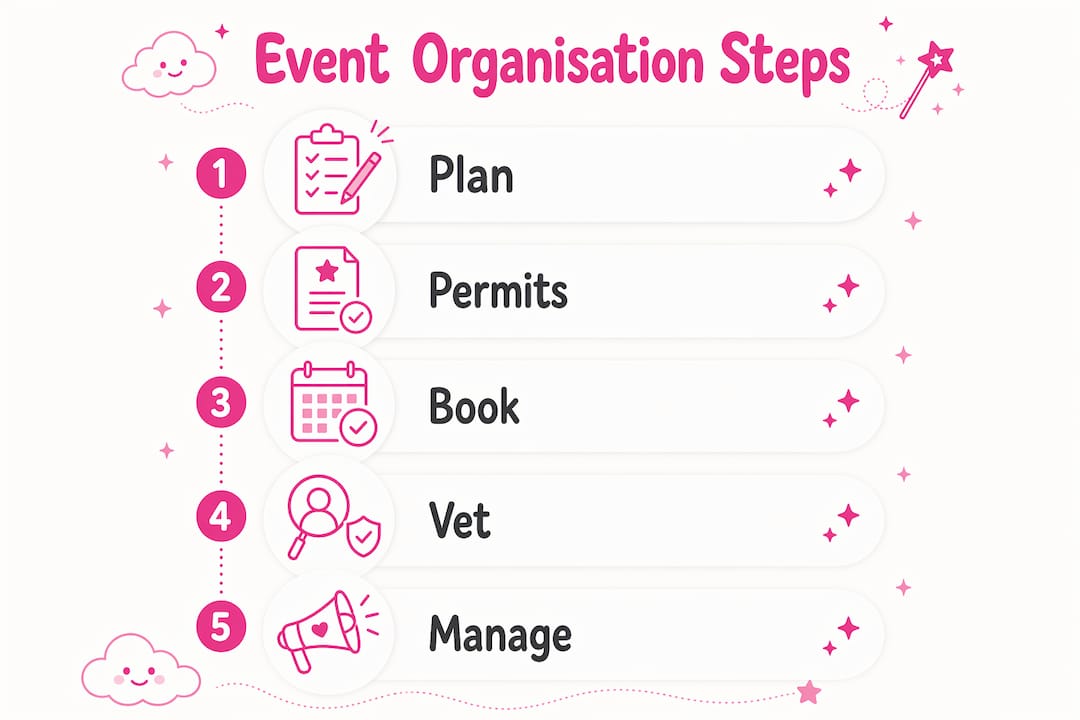
Effective school event planning follows a clear sequence. Skipping steps, particularly early ones, creates problems that no amount of onsite improvisation can fix.
- Set your objectives first. Define what success looks like. Is the goal fundraising, student wellbeing, community building, or celebration? Your objective determines your entertainment format, your budget, and your venue.
- Set a realistic budget early. Cost drivers include entertainment duration, equipment hire, travel for providers, and any bundled services. Get three quotes for each entertainment category and compare inclusions, not just price.
- Secure permits before booking entertainment. Confirm your permit requirements with the council before you commit to any provider. Booking a DJ for an outdoor event and then discovering you need a noise permit you cannot get in time is an avoidable problem.
- Manage contracts carefully. Every provider agreement must include cancellation terms, compliance obligations, and a clear scope of services. Never accept a verbal agreement.
- Communicate with all stakeholders. Brief your staff, your principal, and your parent community well before the event. Share the programme, the risk management plan, and the emergency contacts.
Onsite, assign a dedicated staff member to each entertainment zone. That person is responsible for student supervision, provider liaison, and incident reporting in their area. A single event coordinator cannot manage the whole site effectively without zone leads.
Common mistakes to avoid:
- Booking entertainment fewer than four weeks out, which limits your provider options significantly.
- Ignoring local council noise restrictions, which vary across Melbourne and can result in complaints or enforcement action.
- Failing to complete a school-specific risk assessment that covers individual student needs alongside the provider’s documentation.
- Overlooking contingency plans for weather, provider cancellation, or equipment failure.
For events in specific parts of Melbourne, Dreamscape covers western suburbs school events and central Melbourne bookings with local knowledge of venues and logistics.
Key takeaways
Organising school event entertainment in Melbourne requires permits, provider vetting, and a school-owned risk management plan that no external provider can replace.
| Point | Details |
|---|---|
| Permits come first | Confirm POPE, council, and music licence requirements before booking any entertainment. |
| Match entertainment to age group | Primary students respond to magic and characters; secondary students engage with DJs and interactive performances. |
| Vetting is a formal audit | Confirm insurance, WWCC, and event-specific risk assessments for every provider. |
| Duty of care stays with the school | Provider documents supplement but never replace the school’s own risk management obligations. |
| Bundle services to save budget | Combining entertainment types with a single provider reduces cost and simplifies logistics. |
What I’ve learned from planning school events in Melbourne
After years of watching school events succeed and fail, the pattern is clear. The events that go wrong almost always share one trait: the organiser treated compliance as a box-ticking exercise rather than a genuine planning discipline.
The most common mistake I see is schools assuming that because a provider has insurance, the school’s responsibility ends there. It does not. A provider’s paperwork covers their liability. The school’s duty of care to every individual student, including those with medical conditions or behavioural needs, requires a separate, school-authored risk assessment every single time.
The other thing I have noticed is that proactive communication with your local council almost always pays off. Councils respond well to organisers who contact them early, ask the right questions, and submit complete applications. The schools that wait until two weeks before the event and then scramble for permits are the ones who end up with restrictions or refusals.
On the entertainment side, the biggest shift I have seen is the move toward experience-based activities over passive performances. Students at every age level engage more when they are doing something, not just watching. Balloon twisting, interactive science shows, and character meet-and-greet stations consistently outperform sit-down performances in student satisfaction. Plan your entertainment around participation, and the energy takes care of itself.
- Lauren
Dreamscape’s school entertainment services for Melbourne schools
Dreamscape has delivered school entertainment across Melbourne for over 25 years, working with primary schools, secondary colleges, and early childhood centres. Every Dreamscape entertainer holds a current Working With Children Check, carries public liability insurance, and arrives with a provider-specific risk assessment ready for your records. That means less paperwork chasing for you and a faster vetting process.
The Dreamscape catalogue covers character performers, magic shows, interactive activities, and themed experiences suited to school fairs, end-of-year events, and fundraisers. Packages are priced transparently, with all inclusions listed upfront. For schools planning events across Melbourne, Dreamscape’s kids’ entertainment options are available with flexible booking and direct consultation to match the right act to your event format and student age group.
FAQ
What is a POPE permit and when does a school need one?
A POPE permit is required for events on public or council land that involve temporary infrastructure, amplified sound, or attendance over 500. School events held entirely on private school grounds typically do not require one, but confirming with your local council is the safest approach.
Does a school need a music licence for a school formal?
A music licence through OneMusic Australia is required if the event is ticketed or open to the public. Most school formals held on private school premises for enrolled students fall outside this requirement, but checking directly with OneMusic Australia for your specific event is recommended.
Can a provider’s risk assessment replace the school’s own risk management?
No. Schools retain primary duty of care regardless of what documentation a provider supplies. The school must complete its own risk assessment covering individual student needs that a provider cannot know or address.
How far in advance should you book school entertainment in Melbourne?
Booking at least six to eight weeks before the event gives you the best provider options and enough time to complete permit applications. Popular dates, particularly end-of-year and school fair periods, book out faster than most administrators expect.
What compliance documents should every entertainment provider supply?
Every provider must supply a current certificate of public liability insurance, evidence of Working With Children Check status for all attending staff, and an event-specific risk assessment naming your school and the activity. Quotes that omit these details signal a provider who is not ready for school engagements.
Recommended
Planning a Melbourne party?
We will get right back to you.