
Explore 10 engaging princess crafts kids will love! Spark creativity and fine motor skills with easy, fun activities for ages 3-12.
Princess crafts kids will love: 10 fun ideas
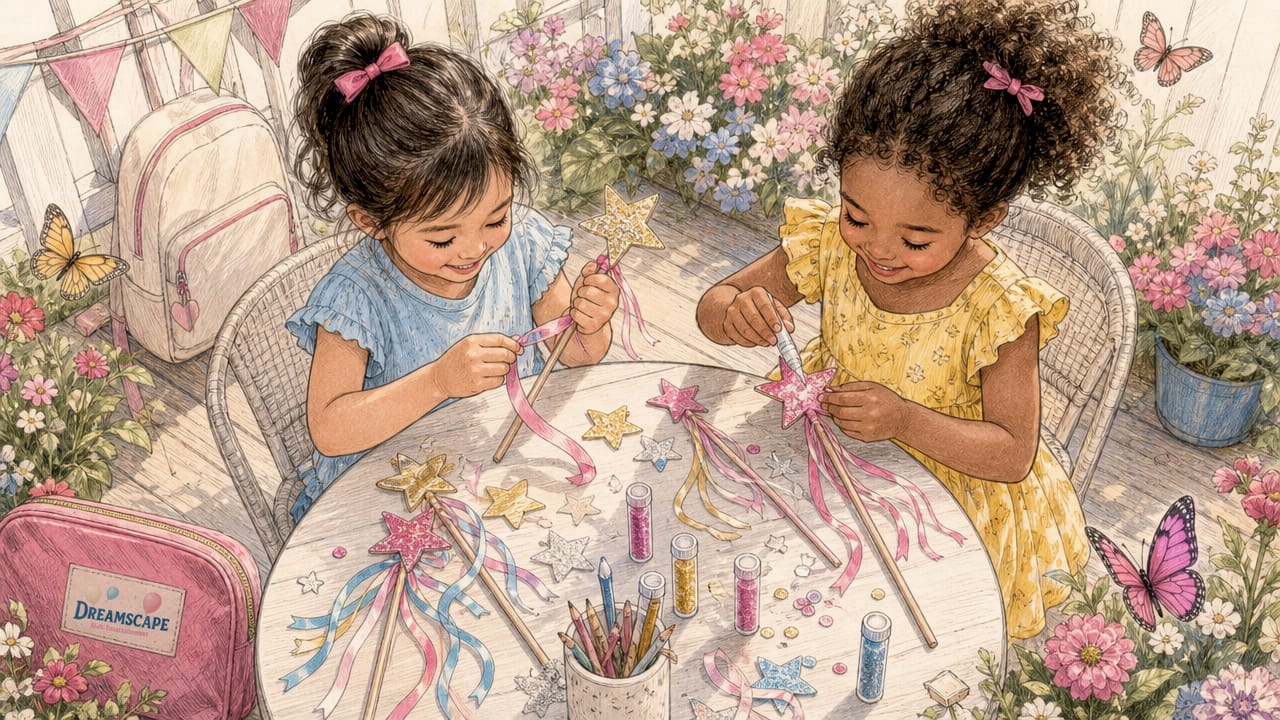
Princess crafts are creative, themed activities that build fine motor skills, spark imaginative play, and give children a satisfying hands-on experience. They suit children aged roughly 3-12, work equally well at home or at a party, and require materials most families already own. The best princess craft ideas combine accessibility with genuine developmental value, making them far more than just a fun way to pass an afternoon.
1. What are the best princess crafts for preschoolers?
Simple princess crafts for preschoolers succeed when they need almost no instruction and finish in a single sitting. Crafts like decorating crowns or paper masks work perfectly for this age group. Children stay engaged, feel proud of a finished product, and avoid the frustration that comes with multi-step assembly.
Good preschool options include:
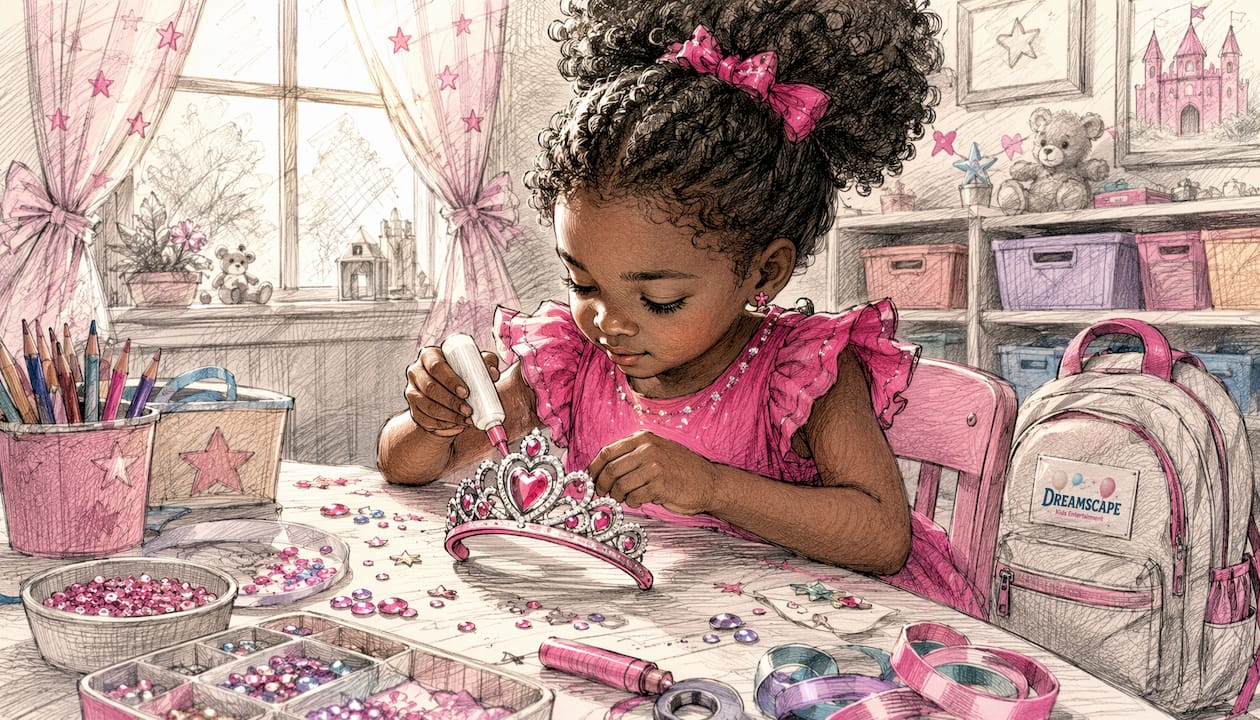
- Sticker crown decorating. Pre-cut card crowns let children place foam gems and star stickers wherever they like. No scissors needed.
- Paper plate masks. A pre-cut eye hole and a pile of stickers, glitter glue, and feathers give toddlers total creative control.
- Wand decorating. Wooden craft sticks with a pre-cut star shape become a royal wand once children add ribbon and sequins.
- Tissue paper flowers. Scrunching and layering tissue paper builds grip strength and produces a beautiful result with zero cutting.
Each of these takes 20-30 minutes, which matches a preschooler’s attention span well. Keep materials in small zip-lock bags so children can open their own kit and feel independent from the start.
Pro Tip: Prepare one spare kit for every five children at a party. Small pieces go missing quickly, and having extras on hand means no child sits idle while you hunt for a lost gem.
2. Which crafts build fine motor skills in older children?
Artistic activities enhance fine motor skills, problem-solving, and vocabulary in children across all ages. For children aged 8-12, the craft needs more complexity to hold their interest and deliver real developmental benefit.
Strong options for this age group include:
- Princess poke art. Children use a pin tool to poke patterns through card stock, creating delicate lace-effect gowns and crowns. This builds hand-eye coordination and patience.
- Paper flower making. Cutting, folding, and layering paper petals develops planning skills and fine grip. Using recycled magazines adds a sustainability angle children find genuinely interesting.
- Air-dry clay tiaras. Structured craft workshops using air-dry clay are popular enough to require bookings, which signals how much children value tactile, skill-based making. Clay work builds hand strength and teaches children to plan before they act.
- Fabric-ruffled dress figures. Wrapping small foam princess figures in fabric scraps and ribbon teaches children about texture, proportion, and patience.
Adapting difficulty is straightforward. Younger children in this range use pre-scored fold lines; older children score their own. The key is giving each child a version of the same project that sits just beyond their current comfort level.
Pro Tip: Avoid giving children a finished example to copy. Open-ended craft design produces more creative thinking and personal expression than template-matching does.
3. How to set up a princess craft party that actually works
A successful princess craft party starts with the workspace, not the craft itself. A dedicated craft corner with a wipe-clean tablecloth, sorted materials in small trays, and a recycling bin nearby sets children up to create without chaos. Pre-planning the craft space with household items like paper rolls and cereal boxes also keeps costs low without reducing the fun.
Follow these steps to keep the session running smoothly:
- Sort materials before guests arrive. Divide supplies into individual trays or bags. Children spend time creating, not rummaging.
- Set a clear start activity. Place one simple task on each seat, such as a crown to decorate. Children who arrive early have something to do immediately.
- Prepare for kit drift. Extra sticks and simpler figures help manage the inevitable lost pieces and keep every child engaged throughout.
- Allow mess within limits. Lay a drop sheet under the table and tell children the craft area is the “messy zone.” This sets expectations and reduces anxiety for parents.
- Build in a display moment. At the end of the session, ask each child to hold up their creation. This brief sharing moment builds confidence and gives every child a sense of completion.
Managing expectations matters as much as managing materials. A child whose crown looks different from their neighbour’s has not made a mistake. They have made a choice.
Pro Tip: Set a timer for the final five minutes and announce a “finishing touches” phase. Children who are still deep in creating get a gentle signal to wrap up, which avoids abrupt endings and meltdowns.
4. What are the top 5 princess-themed crafts to try today?
These five projects cover a range of ages, skill levels, and budgets. Each one works at home or as a princess party craft activity.
Decorate-your-own crown
Materials: Pre-cut card crowns, foam gems, stickers, glitter glue. Age: 3 and up. Benefit: Builds fine motor control and colour recognition. Children wear the finished crown immediately, which gives instant reward.
DIY gem tiara
Materials: Plastic headbands, craft wire, adhesive gems, ribbon. Age: 6 and up. Benefit: Wrapping wire around a headband develops hand strength and spatial reasoning. Tiaras double as party take-home gifts.
Paper flower bouquet
Materials: Recycled magazines or coloured paper, pipe cleaners, scissors. Age: 7 and up. Benefit: Fine arts activities support early literacy by helping children express complex ideas through making before they can write them down. Flower making also teaches symmetry and sequencing.
Princess mask with colouring
Materials: Pre-cut card masks, elastic, markers, stickers. Age: 3 and up. Benefit: Colouring within the mask shape builds pencil grip and focus. Children can wear the mask for imaginative play after the craft session ends.
Fabric princess figure
Materials: Foam princess shapes, fabric scraps, ribbon, craft glue. Age: 8 and up. Benefit: Selecting and attaching fabric develops decision-making and aesthetic judgement. The finished figure works as a bookmark or room decoration.
| Craft | Age range | Key skill | Time needed |
|---|---|---|---|
| Decorate-your-own crown | 3 and up | Fine motor, colour | 15-20 minutes |
| DIY gem tiara | 6 and up | Hand strength, spatial | 25-30 minutes |
| Paper flower bouquet | 7 and up | Sequencing, literacy | 20-30 minutes |
| Princess mask | 3 and up | Pencil grip, focus | 15-20 minutes |
| Fabric princess figure | 8 and up | Decision-making | 30-40 minutes |
5. How do fairy tale crafts support social development?
Collaborative art activities develop social skills like sharing, empathy, and teamwork. This is one of the strongest arguments for running princess craft activities in a group setting rather than solo at home. When children work side by side, they negotiate over the gold glitter, admire each other’s choices, and learn to ask before borrowing the scissors.
Group fairy tale crafts work best when children share a central supply tray rather than having completely individual kits. This small structural choice forces positive interaction. A child who wants the purple ribbon has to ask the child currently using it. That exchange builds communication skills no worksheet can replicate.
Crafting also supports literacy emergence by giving children a way to express meaning before writing skills develop. A child who decorates their crown with “a sun because the princess is brave” is practising narrative thinking. That thinking transfers directly to storytelling and reading comprehension later on.
6. Budget-friendly princess craft ideas using recycled materials
Recycled materials produce some of the most creative princess crafts. Paper towel rolls become castle towers. Cereal box card becomes a tiara base. Old magazines provide colour and texture for paper flowers. None of these cost anything, and children often engage more deeply with materials they recognise from home.
The trick is to prepare recycled materials before the session. Tear out magazine pages with strong colours and stack them in piles. Cut paper rolls to consistent heights. Pre-score cereal box card so children can fold it cleanly. This preparation takes 15 minutes and removes the friction that slows a craft session down.
Combining recycled materials with a small number of bought supplies, such as adhesive gems or glitter glue, gives children the best of both worlds. The recycled base keeps costs low. The bought embellishments give children the sparkle that makes a princess craft feel special.
Key takeaways
Princess crafts deliver the most value when they are open-ended, age-appropriate, and set up with enough spare materials to handle the unexpected.
| Point | Details |
|---|---|
| Match craft to age | Preschoolers need minimal instruction; children aged 8-12 benefit from multi-step projects. |
| Prepare spare materials | Extra supplies prevent disruption when pieces go missing during party sessions. |
| Use open-ended design | Child-led choices build problem-solving and creativity more than copying a template does. |
| Include a group element | Shared supply trays encourage communication, sharing, and empathy between children. |
| Recycle to reduce cost | Household items like paper rolls and cereal boxes make excellent craft bases at no extra cost. |
Why I think we underestimate what princess crafts actually do
Most parents see a crown-decorating activity and think “cute distraction.” I used to think the same thing. After watching hundreds of children work through craft sessions, I changed my mind completely.
The moment a five-year-old decides to put the blue gem next to the pink one “because they’re friends,” she is making a narrative decision. She is building a story. That is the same cognitive process behind reading comprehension, and it happens naturally when children have materials and freedom. Open-ended crafts encourage deeper learning than strict templates do, and the research backs up what I have seen in practice.
The other thing I have noticed is that parents who focus on the finished product miss the real action. The child who scraps her first tiara and starts again is not failing. She is testing a hypothesis, rejecting it, and trying a new approach. That is exactly the kind of thinking we want children to practise. A messy craft table is often a sign that real learning is happening.
My honest advice: resist the urge to tidy up mid-session or redirect a child toward a “neater” version of their work. The process is the point. The crown they wear home is just the souvenir.
- Lauren
Princess party entertainment with Dreamscape
Planning a princess party involves more than picking the right craft. The atmosphere, the character, and the flow of the session all shape how children experience the day.
Dreamscape has delivered princess party entertainment across Melbourne for over 25 years, with more than 1,900 five-star reviews from families who wanted a celebration that felt genuinely magical. Their professional entertainers handle the energy, the engagement, and the creative activities, so you can enjoy the party rather than manage it. Every entertainer holds a Working With Children Check, and the full range of party themes covers everything from princesses to fairies and beyond. Get in touch with Dreamscape to find the right fit for your child’s next celebration.
FAQ
What age group suits princess crafts best?
Princess crafts work well for children aged 3-12. Simpler projects like crown decorating suit preschoolers, while older children enjoy multi-step crafts like clay tiaras or fabric figures.
How long should a princess craft activity take at a party?
Most princess party craft activities work best when they run for 20-30 minutes. This matches the attention span of younger children and gives older children enough time to complete a satisfying project.
Do princess crafts need expensive materials?
No. Recycled household items like paper rolls, cereal boxes, and old magazines form excellent craft bases. A small number of bought embellishments, such as adhesive gems, add sparkle without significant cost.
How do I keep children engaged during a group craft session?
Prepare individual material kits before guests arrive, keep spare supplies on hand, and build in a short sharing moment at the end. Group craft activities also work better when children share a central supply tray, which encourages natural interaction.
Are princess crafts educational or just fun?
Princess crafts are both. Artistic engagement builds neural connections, memory retention, and decision-making skills. They also support early literacy by giving children a way to express ideas and tell stories before writing skills develop fully.
Recommended
Planning a Melbourne party?
We will get right back to you.