

Discover how to host exciting K-pop dance games for kids, ensuring fun and safety with expert entertainers. Keep the energy high!
K-pop dance games for kids: how to run them like a pro
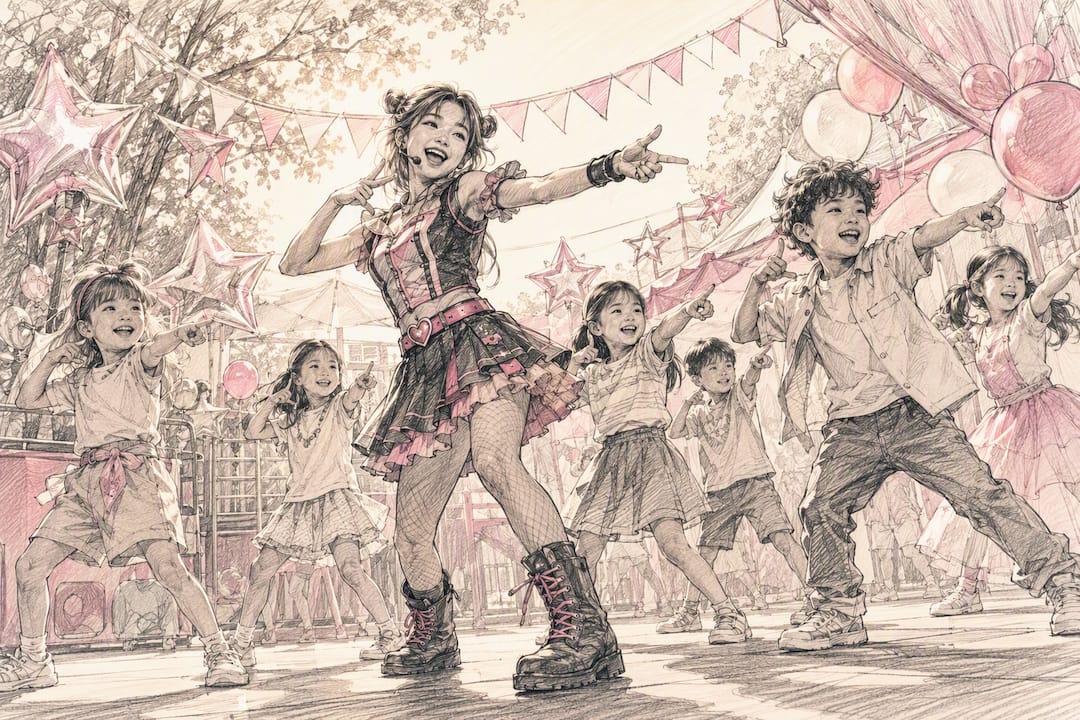
For children’s events, K-pop dance games mean live, in-person dance-along activities, not apps or console games. Hire a professional entertainer to run them. They control the crowd, simplify the choreography, and keep everyone safe on the day.
Dreamscape has spent 25+ years running kids’ entertainment across Melbourne, and two things matter most when K-pop is the theme:
- Every entertainer holds a Working With Children Check, non-negotiable for any provider you book.
- Extensive experience reading a room means an entertainer can shift energy up or down before a party tips into chaos.
Key Takeaways
Hiring a professional entertainer to run structured, chunked K-pop choreography with built-in breaks produces better outcomes than any DIY playlist-and-hope approach.
| Point | Details |
|---|---|
| Pacing beats choreography difficulty | Alternate high-energy games with calm ones every 15 to 20 minutes to avoid burnout. |
| Six core games cover most events | Dance-along, relay, freeze-dance, battles, performance finale, and bingo suit different energy levels. |
| Staffing ratio matters | Book one entertainer per 10 to 15 children for any activity involving active movement. |
| Safety checks are non-negotiable | Confirm Working With Children Checks, public liability insurance, and first-aid trained staff before booking. |
| Dreamscape delivers this as a package | Over 25 years’ experience and 1,900+ five-star reviews back their K-pop party entertainers and pricing pages. |
Table of Contents
- Six K-pop dance games you can run today
- How do you structure timing for a K-pop dance party?
- Adjusting K-pop dance games for different ages
- Why hiring a professional matters for safety and quality
- What most party guides get wrong about K-pop dance games
- Booking a K-pop dance party: what to check and what it costs
- Sources
- FAQ
Six K-pop dance games you can run today
You don’t need a choreographer or a rehearsal schedule. You need a handful of activities that scale up or down depending on the crowd, and a running order that doesn’t burn kids out by the twenty-minute mark. Here are six that work, in the order most entertainers use them.
- K-pop dance-along (20 to 30 minutes). Teach a short routine in chunks of three or four moves, repeat each chunk with the group before adding the next, and layer the full sequence over a chorus. This chunking method is standard practice among children’s dance coaches because it lets a five-year-old and an eleven-year-old learn at the same pace without either getting bored or lost.
- Copy-the-moves relay (10 to 15 minutes). Split the group into teams. One player watches a short move sequence, runs back, and teaches it to their team before the next player takes a turn. It’s noisy, it’s competitive, and it hides the fact that kids are practising the same choreography from game one.
- Freeze-dance K-pop edition (10 minutes). Classic musical statues, but the soundtrack is K-pop and the “freeze” poses can reference a favourite group’s signature stance. Low prep, high laughs, and a good palate-cleanser between bigger activities.
- Mini dance battles (15 to 20 minutes). Small groups face off performing a move they’ve just learned. Keep judging light and funny rather than competitive. This is where a good entertainer earns their fee, because pacing a battle so nobody feels singled out takes real skill.
- Choreography performance (20 to 30 minutes). Build toward a short finale routine the whole group performs together, ideally for parents or teachers watching on. Giving kids a performance to work toward, rather than just drills, keeps focus far longer, according to coaches who run these parties professionally.
- Guess the song intro / K-pop bingo. Low-energy options for mixed-age groups or a lull after lunch. Play the first few seconds of a track and let kids guess the song or tick it off a bingo card. No dancing required, which makes it useful when younger siblings need a breather.
Pro Tip: Wrap the whole session in a character or idol persona rather than treating it as a dance class. Kids who are “training as idols” for the afternoon will follow instructions they’d otherwise ignore, because the story gives the moves a purpose.
How do you structure timing for a K-pop dance party?
Energy management matters more than the games themselves. Event planners who run children’s parties for a living structure sessions so high-energy blocks are bookended by calmer ones, never stacked back to back, which is what causes meltdowns around the hour mark.
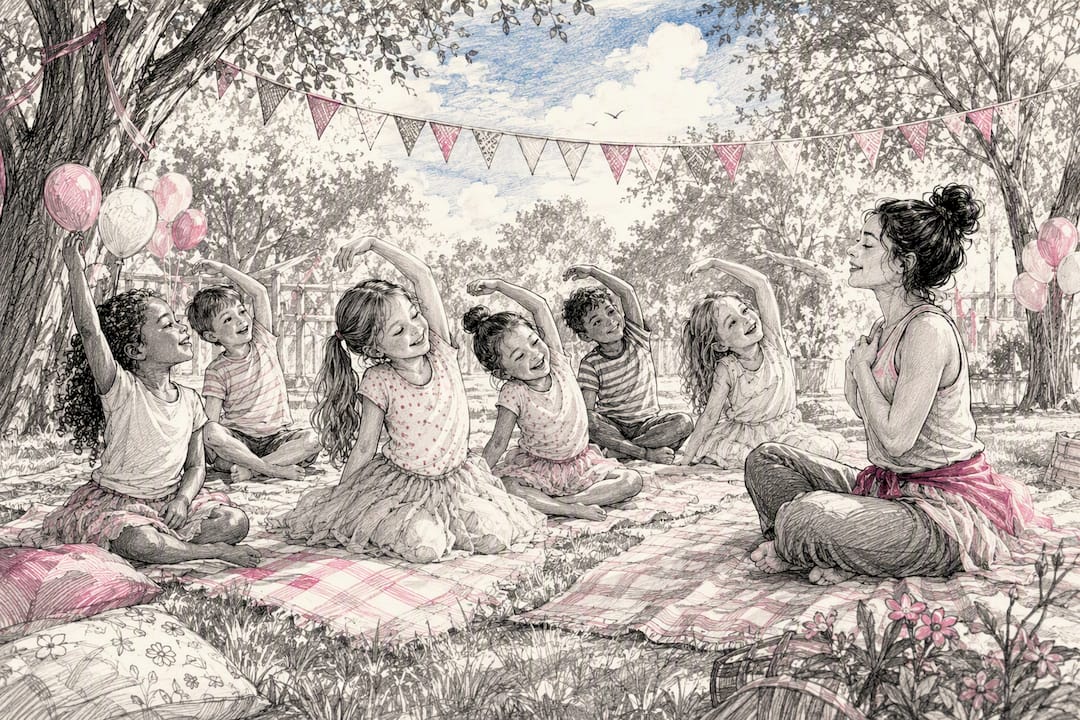
Here’s how that plays out across three common event lengths:
| Event length | Suggested flow |
|---|---|
| 30 minutes | Warm-up freeze-dance (10 min), dance-along (20 min), mini battle (15 min), calm bingo/cool-down (15 min) |
| 45 minutes | Warm-up (10 min), dance-along (25 min), short break (5 min), relay (15 min), battles (15 min), performance finale (20 min) |
| 60 minutes | Warm-up (15 min), dance-along (25 min), break (10 min), relay (15 min), battles (20 min), break (5 min), performance build (20 min), finale showcase (10 min) |
Build in a short break every 15 to 20 minutes for younger groups, even if it’s just water and a seat. Keep the equipment simple:
- A portable speaker loud enough for the venue but not so loud it drowns out instructions.
- A microphone if the group is larger than 20 or the space has poor acoustics.
- Spare batteries for both.
- Simple props such as light sticks or coloured scarves for the finale.
One entertainer per 10 to 15 children is the standard ratio for anything with active movement. Beyond that, a second entertainer isn’t a luxury, it’s what keeps the game from turning into supervised anarchy.
Adjusting K-pop dance games for different ages
Choreography that thrills a nine-year-old will bore a four-year-old and frustrate a young teenager, so the moves and the run time both need adjusting by age band.
- Ages 4 to 6: Big, simple arm and body movements, shorter bursts of activity, and lots of call-and-response rather than memorised sequences.
- Ages 7 to 9: Three to four move combinations are manageable, and this age group genuinely enjoys mini battles and relays.
- Ages 10 to 12: Full short routines with a performance goal work well here. Attention spans support longer, more structured choreography.
- Ages 13 to 14: Treat them almost like young adults. Give them ownership of a routine, let them add their own flair, and avoid anything that feels babyish.
For mixed-age parties, run stations so each age band gets a version of the game suited to them, or pair older kids as “buddies” who help teach younger ones. Younger children generally need shorter bursts, while older kids can sustain longer choreographed blocks without losing focus.
Why hiring a professional matters for safety and quality
Anyone can put on a K-pop playlist. Running a room full of excited kids safely, while keeping the choreography simple enough for everyone to follow, is a different skill entirely, and it’s where professional entertainers earn their booking fee.
Before you hire anyone, confirm three things:
- A current Working With Children Check for every entertainer attending.
- Public liability insurance covering the event venue.
- At least one staff member with basic first-aid training.
A professional brings more than a costume. They bring crowd management, the ability to simplify choreography on the fly for a group that’s less coordinated than expected, and careful stewardship of costumes and props so nothing gets damaged mid-party.
Dreamscape’s entertainers work from this exact standard, backed by 1,900+ five-star reviews and over two decades in the industry, with team member Lauren contributing to Dreamscape’s own guides on running K-pop themed party activities.
When you’re vetting a provider, ask directly: have they run a K-pop themed event before, can they share a sample run sheet, and what’s their contingency plan if the weather turns or the venue space shrinks on the day? A confident, specific answer to all three tells you far more than a glossy photo gallery.
What most party guides get wrong about K-pop dance games
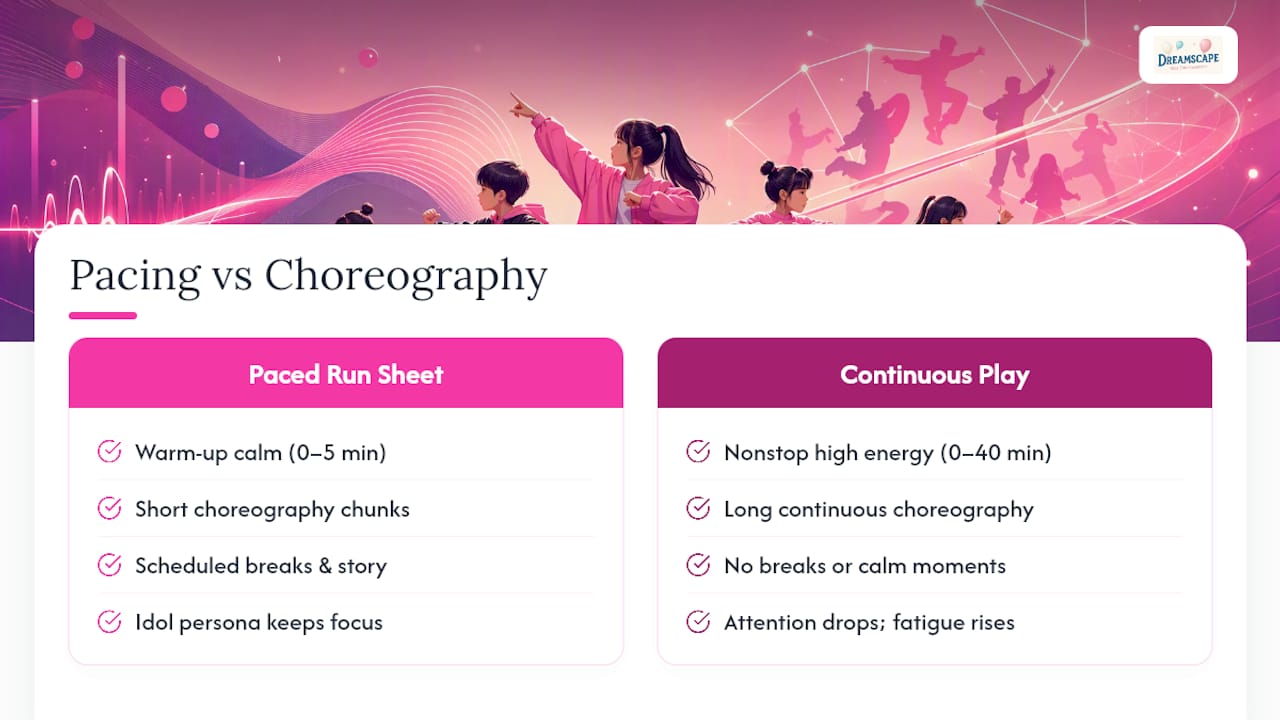
Most advice on this topic treats choreography as the hard part. It isn’t. The hard part is pacing, and that’s the piece conventional party planning articles skip almost entirely.
Give a group of eight-year-olds a great dance routine with no breaks and no calm segments, and you’ll have a meltdown by minute forty, regardless of how good the moves are. The research on children’s dance coaching backs this up: breaking choreography into small chunks and wrapping it in a character story does more for engagement than the difficulty of the moves themselves. An idol persona holds attention longer than a drill ever will.
If you take one thing from this guide, prioritise the run sheet over the routine. A mediocre dance taught well, with proper pacing and breaks, beats a brilliant routine delivered without any sense of when to slow down. That’s the gap between parties that get remembered fondly and parties that end in tears near the cake table.
Booking a K-pop dance party: what to check and what it costs
If the six games above sound like exactly what your event needs, the next step is booking someone who can run them properly rather than piecing it together yourself on the day.
Before you contact a provider, have these details ready: your date, guest numbers, age range, whether the venue has power and space for a speaker, any music preferences, and whether you want costumes or character appearances beyond the dancing. Dreamscape’s K-pop party page outlines exactly what’s included in a performer-led session, from the dance-along through to the finale.
Package shapes typically scale with party length and guest numbers, and full pricing details are laid out so you can budget before you call. Weekend dates book out fastest, so if you’re planning a birthday or a school event for a Saturday, get your enquiry in early. School coordinators and corporate family-day planners have dedicated booking pages too, tailored to those settings rather than a one-size-fits-all party package.
If a straight dance party isn’t quite the fit, providers like Archers Battlefield run active-game stations that pair well alongside a shorter K-pop dance segment for larger events.
Ready to lock in a date? Check Dreamscape’s pricing page or reach out directly for availability, your entertainer will already know how to run every game in this guide.
Sources
- K‑Pop Demon Hunters Kids Birthday Dance Parties - Dance for your Life
FAQ
What Are K-Pop Dance Games for Kids’ Parties?
They’re live, in-person dance-along activities such as choreographed routines, relays, and freeze-dance run by an entertainer at a children’s event, not video games or apps.
How Long Should a K-Pop Dance Activity Run?
Most single activities run 10 to 30 minutes depending on the game and the age group, with breaks scheduled every 15 to 20 minutes for younger children.
How Many Entertainers Do I Need for a K-Pop Party?
One entertainer per 10 to 15 children is standard for active dance games, with a second entertainer recommended for larger groups.
What Safety Checks Should I Confirm Before Booking?
Ask for a current Working With Children Check for each entertainer, proof of public liability insurance, and confirmation that staff have first-aid training.
Can K-Pop Dance Games Suit Mixed Age Groups?
Yes, using station rotations or buddy pairings lets younger and older kids each get age-appropriate versions of the same game, and providers like Dreamscape build this into their run sheets as standard.
Recommended
Planning a Melbourne party?
We will get right back to you.