Transform any party into a superhero training camp with eight engaging obstacle course ideas that keep kids active and entertained.
Superhero obstacle course ideas for parties: 8 stations
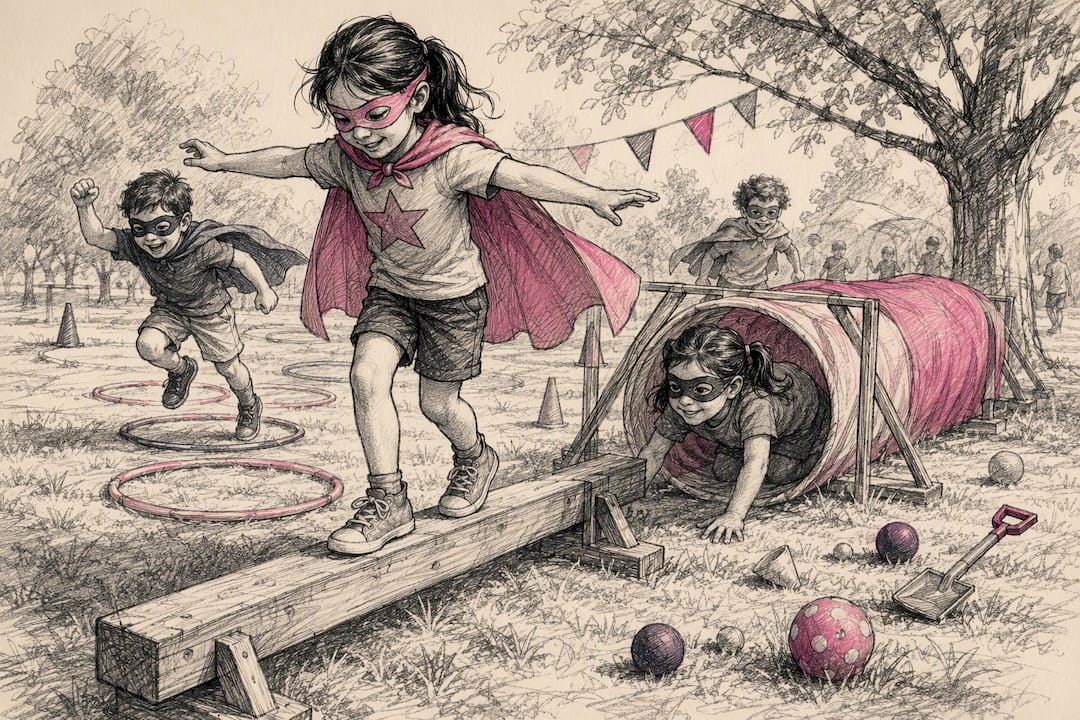
Eight stations, thirty minutes, zero specialist gear: that’s the fastest path to a superhero training camp that actually holds a group of kids’ attention. Set them up in a loop and you get a full session; pick four to six and you’ve got a tight 30 to 45 minute party block.
- Balance beam - walk the “power line” (a plank or chalk line) without wobbling
- Crawl tunnel - army-crawl under a “laser grid” of string or a taped-up box tunnel
- Jump zone - leap between “rooftops” (cushions or hula hoops)
- Carry mission - transport a “rescue package” (weighted bag or stuffed toy) to base
- Stealth crawl - sneak past the “villain’s lair” without knocking over cans
- Speed dash - sprint the “escape route” between two cones
- Rescue station - free a trapped toy from under a cushion pile
- Puzzle lock - solve a simple code or match shapes to “disarm the villain’s trap”
Run the full eight in sequence and you’re looking at roughly 20 to 30 minutes for a group of eight kids, plus a few minutes of instructions at each. For a shorter party slot, cut it back to four or six stations and loop the group through twice for a race format.
Key Takeaways
A superhero obstacle course built from eight simple stations, run with active supervision and a quick pre event safety check, delivers both a fun party and real developmental benefits.
| Point | Details |
|---|---|
| Start with eight stations | Balance, crawl, jump, carry, stealth, speed, rescue and puzzle cover a full 20 to 30 minute loop. |
| Prep beats equipment | A pre-event freeze check for trip hazards matters more than any prop you buy. |
| Match supervision to group size | Aim for one adult per two to three stations, tighter for groups over ten kids. |
| Scale by age, not extra gear | Adjust obstacle height, time limits and helper support rather than buying separate equipment sets. |
| Hire it out when time is short | Dreamscape’s superhero entertainers run the course, safety checks and all, for parents who’d rather not DIY. |
Table of Contents
- Quick setup checklist: space, props, supervision and layout
- Detailed superhero obstacle station ideas by challenge type
- Game formats: races, relays and team missions
- How safe is a DIY superhero obstacle course?
- How do I adjust the course for different ages?
- Where to source props without blowing the budget
- Why obstacle courses help kids develop skills, not just burn energy
- Prefer to hand the whole thing over? Book a superhero entertainer instead
- Sources
- FAQ
Quick setup checklist: space, props, supervision and layout
You need less room than you think. A backyard, garage, or a cleared lounge room roughly four metres by four metres will fit six stations if you run them in a loop rather than a straight line. Check the surface first: no loose rugs, exposed roots, or slippery tiles near jump or balance stations.
Three layout options work well:
- Linear - stations in a single line, good for small groups and narrow spaces
- Circuit - a loop returning to start, ideal for relays and repeat runs
- Parallel lanes - two identical station sets side by side for racing pairs
For props, raid the house before you buy anything: couch cushions, cardboard boxes, string, chalk, and masking tape build most of the obstacle course ideas below. Pack-down is just as easy since nothing needs assembly tools.
Supervision matters more than equipment. Aim for one adult per two to three stations for groups under 12, and one per station for larger groups.
Pro Tip: Have a helper “launch” each station for the first few minutes, demonstrating the rules before letting kids run it unsupervised. It cuts confusion and stops kids inventing their own, less safe version of the challenge.
Detailed superhero obstacle station ideas by challenge type
Each station below takes two to five minutes to set up and can flex up or down depending on who’s playing.
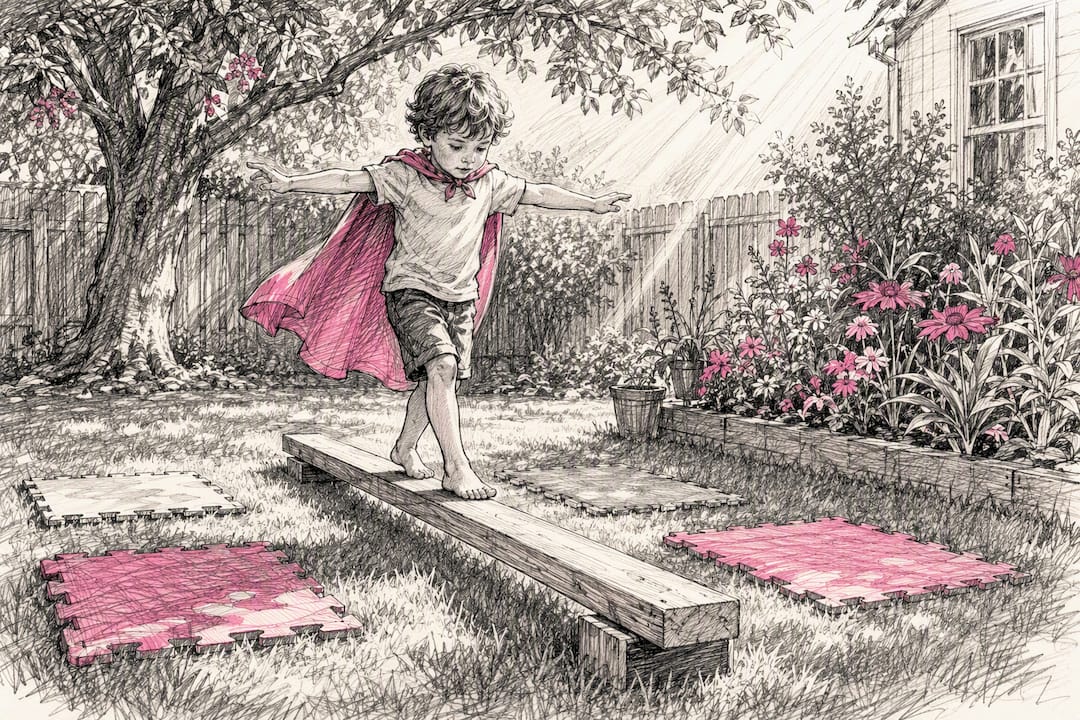
Balance beam (“power line”): a plank, a length of rope, or a strip of chalk on concrete. Toddlers walk it holding a helper’s hand; school-age kids try it heel-to-toe or carrying a “power orb” (a small ball) without dropping it.
Crawl tunnel: string a “laser grid” between chair legs, or tape two large boxes end to end. Preschoolers go under on hands and knees; older kids army-crawl to keep it a genuine challenge.
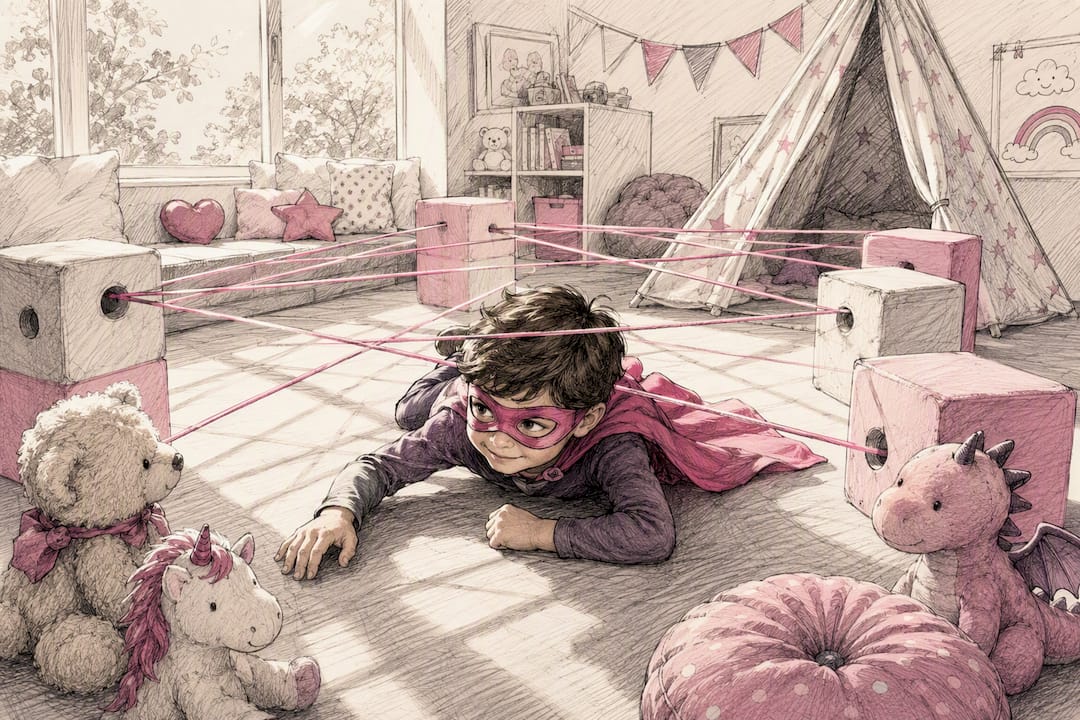
Jump zone: hula hoops or couch cushions spaced as “rooftops” to leap between. Shrink the gaps for little legs, widen them for a proper test with school-age groups.
Carry mission: a backpack, bucket, or stuffed toy carried from one point to another as a “rescue package.” Add a wobble by asking kids to carry it on a tray or balanced on their head.
Stealth crawl: line up empty cans or plastic cups as the “villain’s alarm system” and have kids sneak through without a sound or a tumble.
Speed dash: two cones and open space. Simple, but it’s the station kids replay the most, so put it near the end of the loop.
Rescue station: bury a plush toy under cushions or a pile of soft blankets for kids to dig out and “save.”
Puzzle lock: a padlock with a written code, or shapes to match, framed as disarming a villain’s trap. This one slows the pace and gives faster kids a mental breather.
Two easy story hooks tie it together: frame the whole run as a “rescue mission” to save a trapped hero, or add a returning “villain” (a puppet or costumed adult) who resets a station if kids get too fast. Short, themed storytelling like this keeps attention locked on the mission rather than the exercise.
Game formats: races, relays and team missions
The same eight stations support very different vibes depending on your group.
- Timed solo runs - kids race the clock, not each other, good for mixed ages
- Relays - teams tag in and out, best for groups of 12 to 24
- Team rescue missions - teams cooperate to free a “captured” toy or teammate before time runs out
- Cooperative “defeat the villain” mode - no winners or losers, the whole group beats a shared challenge together
For 6 to 12 kids, a simple loop with one or two repeats works fine. For 12 to 24, split into two teams and run parallel lanes or a relay. Past 25, consider running two full loops simultaneously with separate supervisors, since a single queue that long kills momentum fast.
Pro Tip: Play upbeat music between stations and drop in a costumed “villain” for thirty seconds at the busiest point. It resets energy without adding a single extra prop.
How safe is a DIY superhero obstacle course?
It’s as safe as the prep work you put in before kids arrive. Run a quick “freeze check” walk-through first: scan for loose flooring, sharp furniture edges, or unstable decorations near jump and balance stations, and fix or remove anything that could trip a running child.
Active, visible supervision is your biggest safety lever, more than any single piece of equipment. Assign one adult to watch the busiest two or three stations and another to float, and treat that as non-negotiable for groups over ten.
- Check surfaces for grip, especially outdoors after rain
- Remove or pad sharp-cornered furniture near obstacles
- Watch for signs of overheating on hot days
- Keep a basic first-aid kit within reach of the play area
On heat, SafeWork NSW’s event guidance recommends changing plans or moving activities indoors once temperatures climb toward the high thirties. For bigger events with hired equipment or a large guest list, it’s worth checking whether your homeowner’s insurance covers injury claims, since legal guidance on kids’ parties notes hosts can face financial liability from an injury on their property.
Pro Tip: Do the freeze check with a coffee in hand, five minutes before guests arrive. It takes less time than it sounds and catches the hazards you stop noticing once you’ve walked past them ten times setting up.
How do I adjust the course for different ages?
Three rough age bands cover most party guest lists.
For toddlers (0 to 3), keep obstacles low, hold hands through balance and crawl stations, and expect attention spans of two to three minutes per station. For preschoolers (4 to 6), add mild time pressure and let them attempt stations solo with a helper nearby. For school-age kids (7 to 11), add real timing, harder balance challenges, and let them run stations back to back with minimal help.
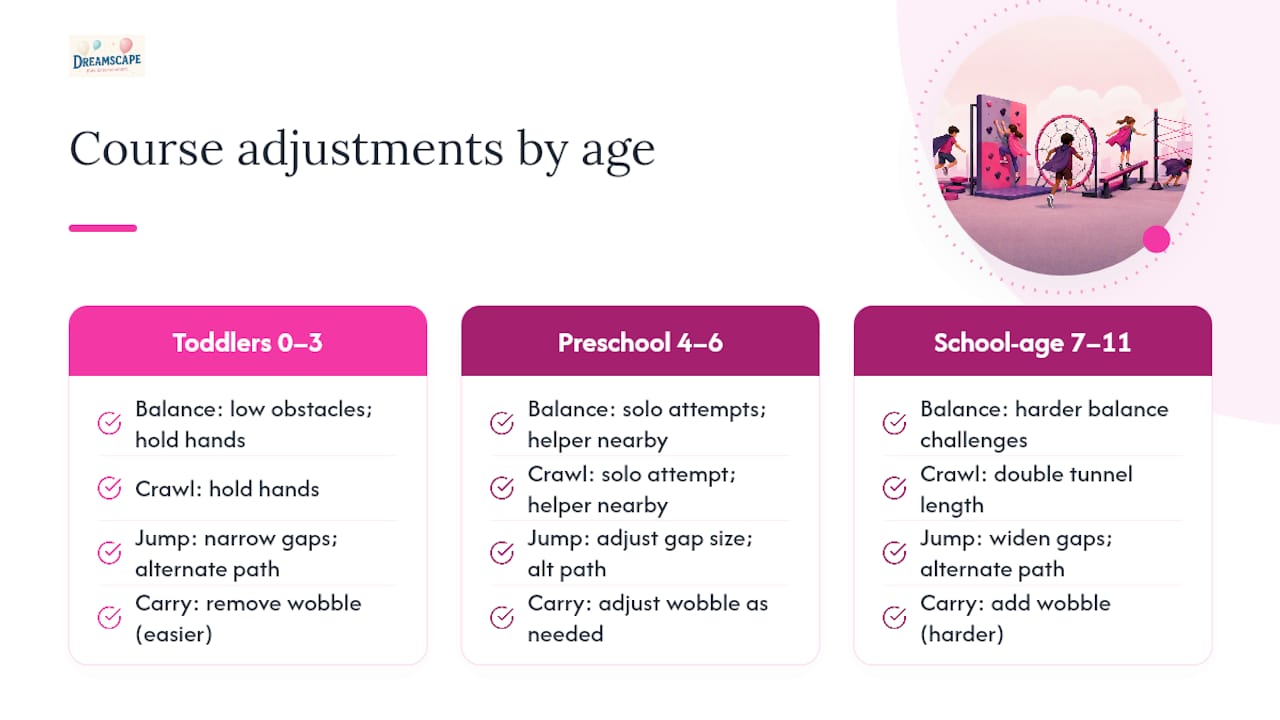
To include kids with different mobility or sensory needs, offer an alternate path around any crawl or jump station and let quieter kids skip the noisy stealth challenge if it overwhelms them. Quick difficulty swaps cost nothing: widen or narrow jump gaps, add or remove a wobble to carry stations, or double the crawl tunnel length for older kids without buying a single new prop.
Where to source props without blowing the budget
Most of this course lives in your cupboard already. Balance needs planks, rope, or chalk. Crawl needs boxes, string, or a spare sheet draped over chairs. Jump needs cushions or hula hoops. Carry needs a backpack, bucket, or soft toy. Target and stealth stations need cans, cups, or bean bags.
For anything you don’t own, party stores, dollar shops, and sports stores cover the gaps cheaply, hoops, cones, and soft balls especially. Avoid anything with small detachable parts for stations aimed at kids under five, and skip glass or hard plastic near jump zones.
Pack everything into one labelled tub after the party. It halves next time’s setup and means the whole course, built from household items, is ready to go again in minutes.
Why obstacle courses help kids develop skills, not just burn energy
Obstacle play builds more than tired legs. Balance stations sharpen coordination, carry stations build strength, and puzzle stations force forward planning under mild time pressure. Team formats add cooperation and turn-taking that a solo activity can’t teach.
Therapists describe carrying, pushing, and pulling movements, known as “heavy work,” as sensory input that helps many children feel calmer, more organised, and more ready to engage with what comes next.
That’s worth remembering if you’ve got a mixed group with a few kids who struggle to settle. A carry station early in the loop can genuinely change how the rest of the party goes.
Pro Tip: Ask the birthday kid to help name each station the week before. A five-minute planning chat gets them invested and usually produces better villain names than anything an adult comes up with.
A party-planner’s take on running superhero training camps
Every course I’ve watched succeed had one thing in common: clear rules explained once, calmly, before the chaos starts. Pace stations loosely rather than by strict script, and let a wobbly plan beat a perfect one that nobody enjoys.
Prefer to hand the whole thing over? Book a superhero entertainer instead
Building your own course is genuinely rewarding, but it’s also a Saturday morning of setup, supervision juggling, and hoping nobody trips on the tunnel tape. Dreamscape is the alternative to DIY for a superhero party: professional entertainers arrive with structured games already planned, run the safety side themselves, and free you up to actually enjoy the party instead of managing it.
Every entertainer holds a Working With Children Check, and the team behind Dreamscape has been running Melbourne kids’ parties for more than 25 years, backed by over 1,900 five-star reviews. Browse the superhero party entertainer options or check pricing and packages to see what a fully run superhero session costs compared to a DIY setup, then head to the kids’ party entertainment page to check a date.
Sources
- Obstacle courses supporting development through play | Firstchance
- Superhero activities for preschoolers: Play, create and learn | ChildCareEd
- Balloons, cake… and liability: the hidden risks at kids’ parties | Schultz Law
FAQ
What are some cool obstacle course ideas?
A superhero training loop with a balance beam, crawl tunnel, jump zone, carry mission, stealth crawl, speed dash, rescue station, and puzzle lock covers most age groups with household props alone.
What are some fun activities for Super Hero Day?
Pair a short obstacle course with a costume parade, a villain-chase game, and a group “power pose” photo moment, or book a themed entertainer through Dreamscape’s superhero party service to run it all for you.
What are some examples of obstacle courses?
Common formats include a linear station line, a looping circuit for relays, and parallel lanes for head-to-head races, all built from the same core stations of balance, crawl, jump, and carry.
What should I put in my obstacle course?
Cover at least one balance, crawl, jump, carry, and target or stealth station, using cushions, boxes, string, and chalk as your main props before buying anything new.
Recommended
Planning a Melbourne party?
We will get right back to you.