Discover balloon twisting techniques with our beginner's guide for Australians. Create fun shapes like dogs and flowers, and impress at events!
Balloon twisting: a beginner’s guide for Australians
What is balloon twisting and how do you start?
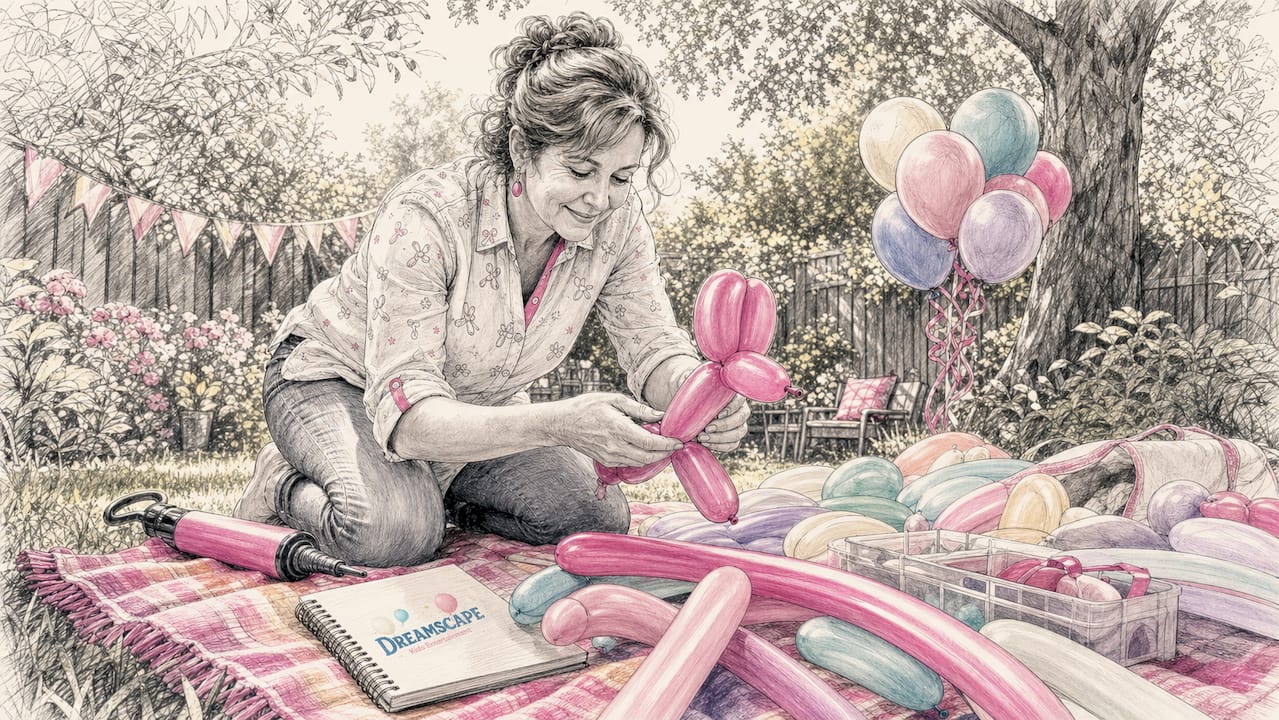
Balloon twisting is the craft of shaping long, flexible modelling balloons into animals, weapons, flowers, and figures by inflating, twisting, and locking sections together - a skill often featured in Henna for Fun Services - Henna Parties, Workshops & Events to enhance entertainment experiences. The balloons used are not standard party balloons. They are thin, stretchy tubes designed specifically to hold a twist without popping.
Most beginners start with three shapes: the balloon dog, the sword, and a simple flower. These cover the core techniques you need before anything else.
A few terms worth knowing before you pick up your first balloon:
- Bubble: any inflated section between two twists
- Pinch-twist: a small bubble twisted back on itself to lock a joint in place
- Lock twist: joining two bubbles by twisting them together so neither unravels
- Knot: tied at the nozzle end to seal the balloon after inflation
- Uninflated tip: the small section left at the end of the balloon to allow air to shift as you twist
Adult supervision is required whenever children are involved. Latex balloons are a choking hazard for children under 8, so keep broken pieces off the floor immediately.
Table of Contents
- Choosing the right balloon twisting supplies in Australia
- Step-by-step beginner balloon twisting tutorials
- Advanced balloon twisting techniques
- Safety and professional tips for balloon twisting in Australia
- How to set up your workspace for a balloon twisting session
- Dreamscape brings professional balloon artistry to Melbourne parties
- Key takeaways
- FAQ
Choosing the right balloon twisting supplies in Australia
The single biggest reason beginners quit is popping. Cheap balloons pop constantly, and that is almost always a materials problem, not a skill problem. High-quality twisting balloons hold air longer, twist more reliably, and let you attempt complex designs that inferior latex simply cannot handle.
Two balloons dominate the market for good reason:
- Tuftex 260: Known for consistent wall thickness and strong latex. The “260” means 2 inches wide and 60 inches long when fully inflated. A favourite among Australian entertainers.
- Kalisan 260: Slightly softer feel, popular for colour range and biodegradability. Both Tuftex 260 and Kalisan 260 are available through Australian balloon supply retailers and online stores.
Other supplies worth having:
- Hand pump: A double-action pump inflates on both the push and pull stroke, which saves your lungs during long sessions. Electric pumps suit high-volume events.
- Scissors: For safe deflation and trimming.
- Marker pens: Non-toxic, for drawing eyes and details.
- Carry bag or apron: Keeps balloons organised and accessible during parties.
For storage, keep balloons in a cool, shaded spot away from direct sunlight. Heat degrades latex quickly and causes premature popping before you even begin twisting.
Pro Tip: Buy a mixed colour pack of 260s to start. You will learn which colours are most requested at parties (red, blue, and yellow go fastest) and can restock those specifically.
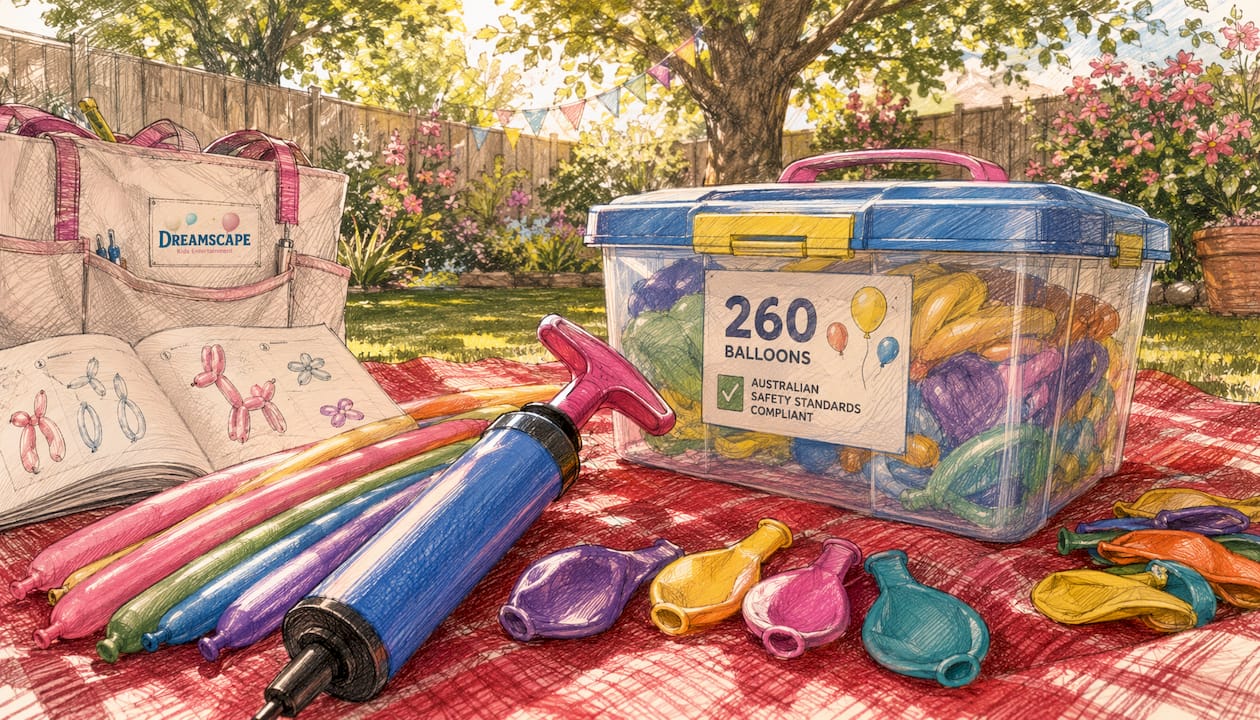
The Australian Balloon Association is a good starting point for finding reputable suppliers and connecting with the local balloon community.
Step-by-step beginner balloon twisting tutorials
Pre-inflating your balloons before a teaching session lets you focus entirely on the twisting mechanics rather than fighting with inflation. Inflate to about 80% capacity and leave a 5-8 cm uninflated tip at the end.
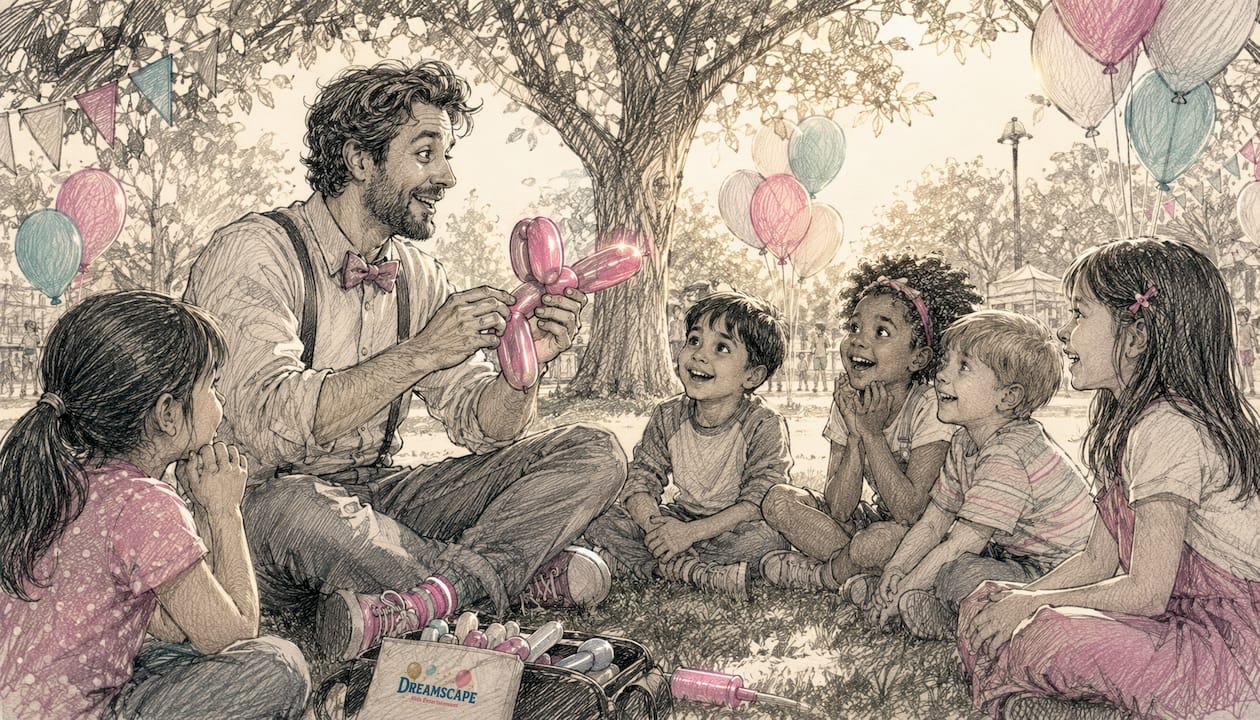
and secure twisting are what keep a sculpture from unravelling. Always twist in the same direction (most people go clockwise) and hold completed twists in place until you have locked them with a second twist.
| Shape | Bubbles needed | Approximate time |
|---|---|---|
| Sword | 2 | 1 minute |
| Dog | 7 | 2-3 minutes |
| Frog | - | 3-4 minutes |
| Tiger | - | 4-5 minutes |
| Penguin | - | 4-5 minutes |
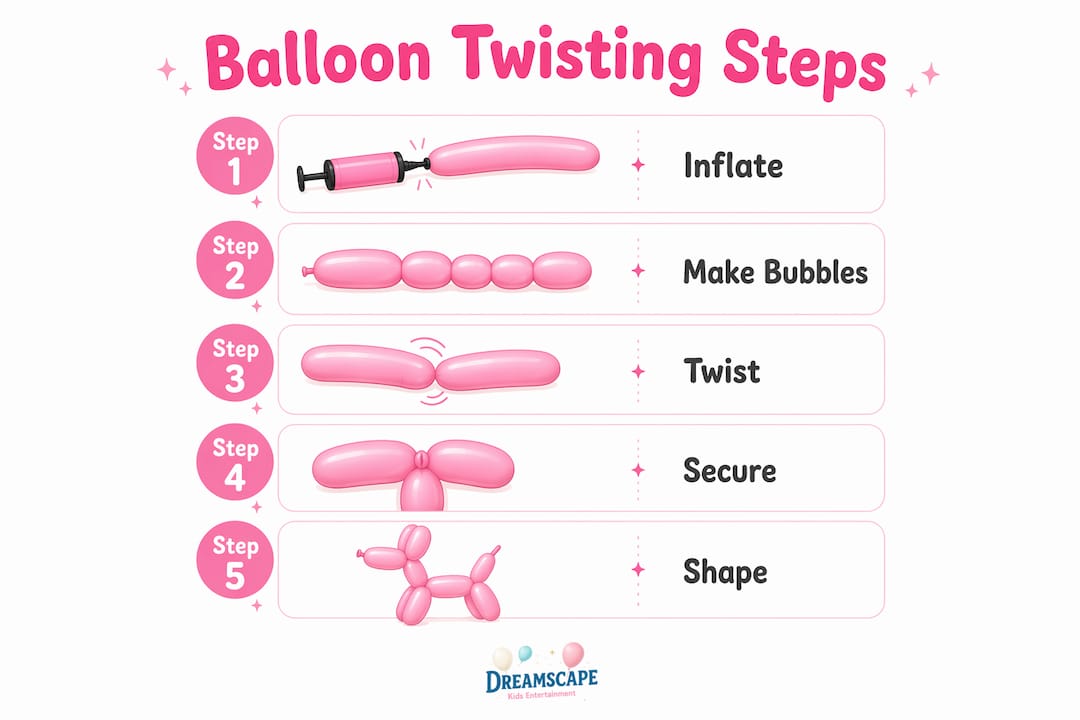
Balloon dog (step by step):
- Inflate, leaving a 5 cm tip. Tie the knot.
- Twist a small bubble for the nose (about 3 cm).
- Make two equal ear bubbles and lock-twist them together.
- Twist two equal neck bubbles and lock-twist for the front legs.
- Make one larger body bubble.
- Repeat the leg lock-twist for the back legs.
- The remaining balloon forms the tail.
Common beginner mistakes to avoid:
- Inflating too fully (no room for air to shift when you twist)
- Releasing twists before locking them (the sculpture unravels)
- Twisting in alternating directions (bubbles loosen)
- Using cold balloons straight from storage (warm them in your hands first)
Advanced balloon twisting techniques
Once the basic shapes feel comfortable, the real fun starts. Advanced balloon artistry relies on four techniques that open up a much wider range of designs.
- Pinch-twist: Fold a small bubble back alongside the balloon and twist it at the base. This creates ears, noses, and joints that sit at angles rather than in a straight line.
- Curves and bends: Partially inflate a balloon and bend it before the latex sets. Curved sections make wings, tails, and body shapes that look far more natural.
- Multiple balloon combinations: Tie two or more balloons together at the knot end to build larger sculptures like unicorns, motorcycles, or character figures.
- Air pressure control: Squeeze air from one section into another to adjust bubble size after inflation. This is how professionals fine-tune proportions without starting over.
For events, professional balloon artists typically manage 20-30 simple sculptures per hour, which means keeping designs to one or two balloons for queue management. Save the elaborate multi-balloon builds for display pieces or slower settings.
Colour choice matters more than most beginners expect. A tiger needs orange and black. A parrot needs green, red, and yellow. Building a small colour library of 260s lets you match requests on the spot rather than improvising.
Safety and professional tips for balloon twisting in Australia
Child safety is the non-negotiable foundation of any balloon twisting session. Latex balloons cause more choking deaths than balls, marbles, or toy parts in children under 8. Every broken piece must be collected and discarded immediately.
Key safety rules for Australian balloon artists:
- Never leave a child under 8 alone with uninflated or broken balloons.
- For parties with toddlers, use foil balloons where possible. They do not shatter into small pieces when they fail.
- Check for latex allergies before any session. Modelling balloons are latex, and reactions can range from skin irritation to anaphylaxis.
- Deflate unwanted balloons safely by cutting a small hole near the knot. This releases air slowly and quietly rather than producing a startling pop and flying latex fragments.
- All entertainers working with children in Australia must hold a current Working With Children Check.
Safety callout: The ACCC requires choking hazard warnings on all balloon packaging sold in Australia. This warning applies at every event, not just in retail settings.
Professional credibility in Australia also comes from industry engagement. The Australian Balloon Association offers training sessions ranging from three-hour evening classes to full-day workshops and the biannual Balloon Camp, a three-day convention featuring leading local and international artists.
How to set up your workspace for a balloon twisting session
A well-organised workspace makes the difference between a smooth session and a chaotic one. Set up before guests arrive, not during.
Lay out your balloons sorted by colour in a bag or apron with easy-access pockets. Keep your pump within arm’s reach. Have a small bin or bag nearby for broken pieces and off-cuts so debris never sits on the floor near children.
Lighting matters. Work in a well-lit area so you can see the balloon wall thickness as you twist. Thin spots show up as lighter patches and warn you before a pop happens.
If you are running a workshop rather than performing at a party, pre-inflate balloons for participants beforehand. This removes the frustration of inflation for beginners and lets everyone focus on the twisting itself.
For outdoor sessions, avoid direct sun and wind. Sun heats latex and makes it brittle. Wind carries broken pieces away before you can collect them, which creates a safety risk around young children. A shaded, enclosed space is always the better choice.
Dreamscape brings professional balloon artistry to Melbourne parties
Learning balloon twisting yourself is genuinely rewarding. But when you want a professional to handle the entertainment at your child’s party, Dreamscape is a trusted option with many years of experience and numerous five-star reviews.
Dreamscape’s balloon twisters are professional entertainers, not hobbyists. Every one of them holds a current Working With Children Check, and the team brings their own quality supplies, manages the queue, and keeps children engaged from start to finish. You get the finished sculptures, the happy kids, and none of the setup stress.
Dreamscape also pairs balloon twisting with face painting and other entertainment for parties that need more than one activity running at once. Transparent pricing means no surprises. Head to Dreamscape’s party entertainment page to check availability and book for your next Melbourne event.
Key takeaways
Balloon twisting is a learnable craft where quality materials, correct technique, and Australian safety standards determine how quickly you progress and how safely you can perform.
| Point | Details |
|---|---|
| Start with the right balloons | Tuftex 260 and Kalisan 260 are the go-to choices for durability and design range. |
| Master the lock-twist first | Every sculpture depends on bubbles that stay locked; practise this before attempting full figures. |
| Follow ACCC safety rules | Latex balloons are a choking hazard for children under 8; clean up broken pieces immediately. |
| Build skills through training | The Australian Balloon Association offers classes from beginner evenings to the biannual Balloon Camp. |
| Balloon twisting services cost | Professional balloon artists typically charge $100-$200 per hour in Australia, depending on location and design complexity. |
FAQ
What is balloon twisting called professionally?
Balloon twisting is also known as balloon sculpting or balloon modelling. Professional practitioners are called balloon artists or balloon sculptors.
How do you twist a balloon without it popping?
Leave a 5-8 cm uninflated tip at the end of the balloon before tying the knot, and always twist in the same direction. Quality 260 balloons like Tuftex or Kalisan are far less prone to popping than standard party balloons.
How much do balloon twisting services cost in Australia?
Professional balloon artists typically charge $100-$200 per hour in Australia, factoring in materials, labour, and transportation costs for profitability.
How many balloon sculptures can an artist make per hour?
Simple one-balloon designs like swords and dogs take one to two minutes each, allowing an artist to serve around 20-30 children per hour. Complex multi-balloon figures take five to ten minutes and reduce that throughput considerably.
Recommended
Planning a Melbourne party?
We will get right back to you.